
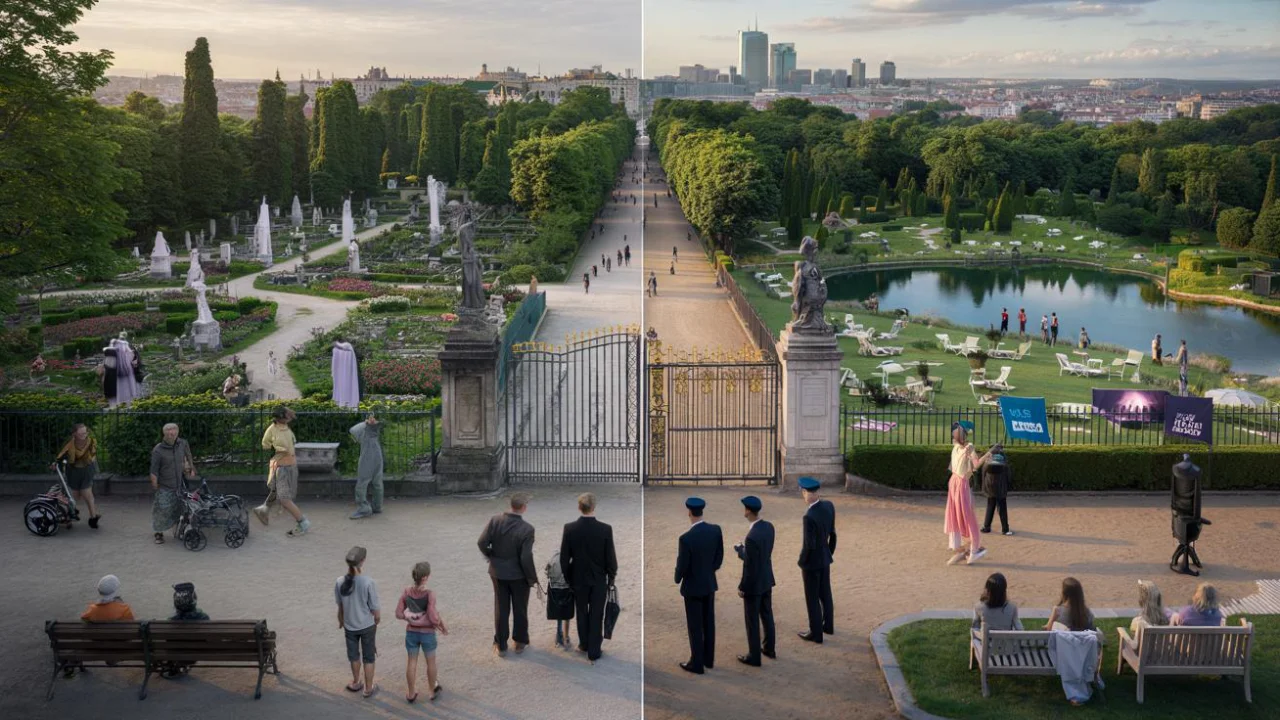
Maria had been walking through Riverside Park with her grandmother every Sunday for thirty years. The ritual never changed: they’d feed the ducks, sit on their favorite bench overlooking the pond, and share stories about the week. Last Sunday, a security guard politely informed them that their usual spot was now part of a “premium wellness zone” requiring an hourly fee. Maria’s grandmother, who survived the war and raised five children in this neighborhood, looked at the guard with confusion that slowly turned to anger. “I’ve been coming here since before you were born,” she said. “Now you’re telling me I need to pay to sit under a tree?”
That conversation, repeated in variations across the city, captures the heart of one of the most divisive municipal decisions in recent memory. When the city sells parks to private investors, the ripple effects touch every family, every morning jog, every childhood memory tied to public green space.
Why a European City Sold Its Soul for Survival
The numbers tell a brutal story. With a budget deficit approaching €200 million and creditors circling, city officials faced an impossible choice: default on municipal bonds or find immediate cash through asset sales. The parks, gardens, and cemeteries represented the city’s most valuable untapped resource—prime real estate worth an estimated €800 million.
“We had three weeks before technical bankruptcy,” explained Deputy Mayor Klaus Brennan in a leaked audio recording. “The payroll alone was eating us alive. Sometimes you have to choose between keeping the lights on today and preserving ideals for tomorrow.”
The foreign investment consortium, led by Nordic Green Holdings, offered a 75-year concession deal worth €320 million upfront. In exchange, they gained management rights over twelve major parks, four historic gardens, and three municipal cemeteries. The city retains ownership on paper but loses control over access, pricing, and daily operations.
What Actually Changes When Private Companies Take Over Public Space
The transformation happens gradually, then suddenly. Here’s what residents are experiencing in the first six months after the city sells parks to investors:
| Area | Before Sale | After Sale | Impact on Residents |
|---|---|---|---|
| Main Park Entrance | Free, open 24/7 | €3 daily fee, closed 10pm-6am | Excludes low-income families, restricts shift workers |
| Wedding Venues | €150 permit fee | €800-2,500 packages | Prices out middle-class celebrations |
| Sports Fields | Book weekly, €20/hour | Season memberships, €300-500 | Youth leagues struggle to afford access |
| Cemetery Visits | Free, own maintenance | Free basic access, €50/month premium care | Creates two-tier system for honoring the dead |
| Dog Walking Areas | Designated zones, free | Licensed areas, €15/month pass | Pet owners seek alternatives outside city limits |
The investors argue these changes improve services and maintain facilities that the cash-strapped city couldn’t properly fund. “We’ve invested €12 million in the first year alone,” says Nordic Green’s local manager, Christina Holberg. “New playground equipment, restored fountains, professional landscaping. Quality costs money.”
The Human Cost of Privatized Public Space
But statistics don’t capture the emotional weight of losing public space. Senior citizens who spent decades building community around park benches now face entrance fees they can’t afford. Young families discover that birthday parties in “their” local park require expensive permits.
The cemetery sales hit particularly hard. Families visiting loved ones’ graves now navigate corporate policies about flowers, decorations, and visiting hours. Some burial plots come with “maintenance packages” that family members never consented to but must now pay to avoid neglect.
- Homeless individuals lose safe spaces for daytime rest
- Community groups can’t afford venue rental for local events
- School field trips require budget line items that many schools lack
- Cultural festivals face prohibitive insurance and permit costs
- Free outdoor exercise classes become premium fitness programs
“My kids learned to ride bikes in that park,” says local resident Anna Kowalski. “Now my grandchildren need a day pass to play on the same swings. It breaks something fundamental about what community means.”
Two Sides of a Desperate Decision
The debate splits along unexpected lines. Progressive councilors who typically oppose privatization find themselves defending the park sales as the least harmful option available. Conservative business leaders, usually supportive of private ownership, worry about precedent and public backlash.
Supporters point to immediate benefits: the city avoided bankruptcy, maintained essential services, and secured investment in deteriorating green infrastructure. Critics see a dangerous precedent where public goods become private profit centers, creating two-tier access based on ability to pay.
“Sometimes the choice isn’t between good and bad,” reflects urban planning professor Dr. Sarah Mitchell. “It’s between bad and catastrophic. A privately managed park that exists is arguably better than a public park that can’t be maintained because the city is bankrupt.”
The controversy extends beyond local politics. Similar budget crises are hitting municipalities across Europe and North America. When a city sells parks, gardens, and cemeteries to stay afloat, it raises fundamental questions about what public institutions owe their citizens and what happens when those obligations become financially impossible.
Looking Ahead: Rescue or Robbery?
Six months after the sale, the verdict remains split. Park facilities have improved noticeably—fresh paint, working fountains, trimmed hedges. But usage has dropped by an estimated 40% as fees exclude many regular visitors.
The foreign investors maintain they’re preserving green space that would otherwise deteriorate from neglect. Local activists argue they’re profiting from desperation, turning public heritage into private commodity.
What’s certain is that this won’t be the last cash-strapped city facing similar choices. As municipal budgets tighten worldwide, the question becomes: where’s the line between necessary pragmatism and selling your community’s soul?
FAQs
Can residents still visit the parks and cemeteries?
Yes, but access now includes fees for many areas and activities that were previously free.
How long do the foreign investors control these spaces?
The concession agreement runs for 75 years, though the city technically retains ownership.
What happens to the money the city received from the sale?
Most funds go toward covering existing debts and maintaining current municipal payroll and operations.
Could the city buy back the parks in the future?
Theoretically yes, but the buyback clause requires paying market value plus improvements, making it financially unlikely.
Are similar sales happening in other cities?
Several European and North American municipalities are exploring similar asset sales as budget pressures intensify.
What rights do residents have regarding changes to park access?
Limited legal recourse exists since the sales were approved through proper municipal channels, though community advocacy groups continue organizing opposition.


