
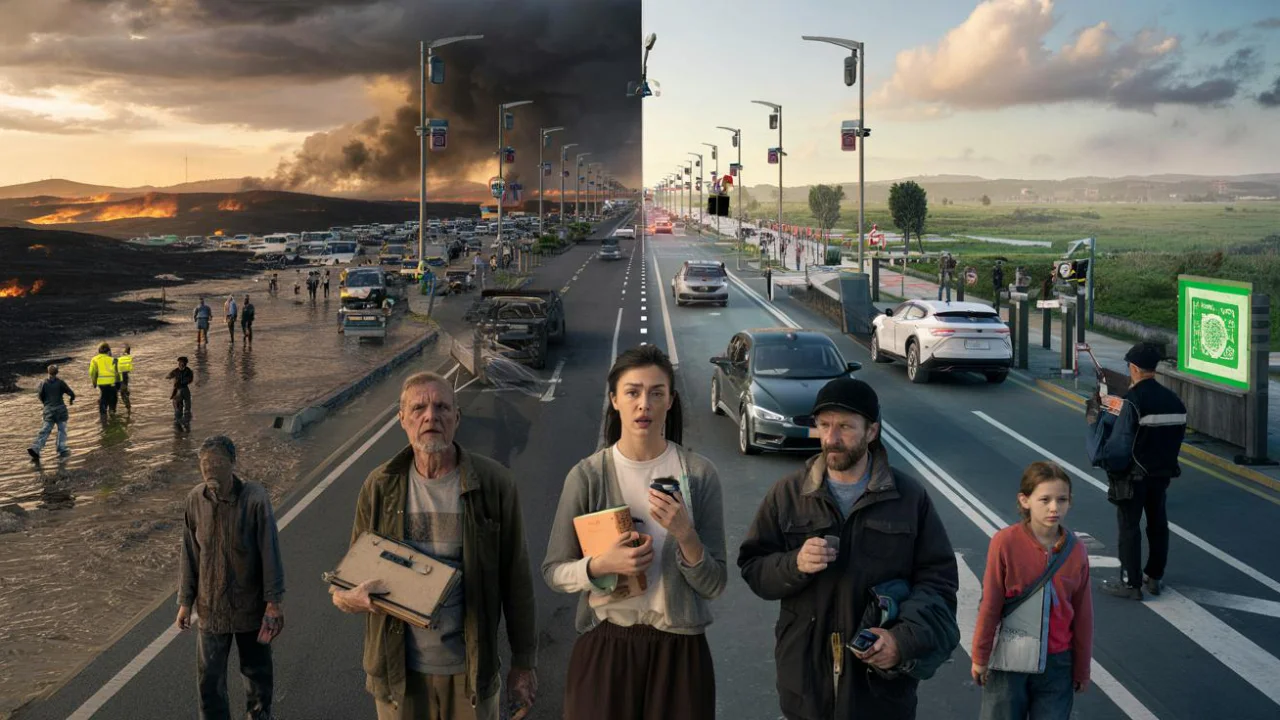
Sarah Martinez was scrolling through her phone during lunch when she stumbled across a heated debate in her neighborhood Facebook group. Someone had posted about the city’s new carbon tracking app, calling it “the beginning of the end of our freedom.” Within an hour, the comments exploded into a war zone.
“It’s just helping people understand their footprint,” one neighbor wrote. “Wake up! This is how they control every aspect of our lives,” another fired back. Sarah closed the app, feeling that familiar knot in her stomach. How did tracking emissions become about government control?
This scene plays out thousands of times daily across social media, coffee shops, and dinner tables. Climate alarmism has become the flashpoint where environmental science meets conspiracy theories, creating a toxic brew that’s tearing communities apart.
The rise of the “green elite” narrative
Climate alarmism isn’t just about polar bears anymore. It’s morphed into something much more complex and politically charged. At its core lies a growing suspicion that climate policies serve as cover for a broader agenda of social control.
Dr. Michael Chen, a political scientist at Stanford University, explains: “People are seeing rapid changes in their cities and communities, often without feeling they had a voice in those decisions. When that happens, climate policy stops looking like environmental protection and starts looking like social engineering.”
The “green elite” theory suggests that wealthy, educated urbanites are using climate fears to impose their lifestyle preferences on everyone else. Low-emission zones that push out older cars owned by working families. Carbon taxes that hit rural drivers hardest. Meat restrictions that favor expensive plant-based alternatives.
Each policy, viewed through this lens, becomes evidence of a class war disguised as environmental protection.
Breaking down the climate control conspiracy
The climate alarmism debate reveals several key fault lines in modern society. Understanding these helps explain why environmental issues have become so politically toxic:
- Economic inequality: Climate policies often cost more upfront, hitting lower-income families hardest
- Urban vs rural divide: City dwellers see bike lanes, rural residents see loss of mobility
- Information bubbles: Different groups consume completely different “facts” about climate science
- Trust in institutions: Declining faith in experts makes any official recommendation suspicious
- Speed of change: Rapid policy shifts feel imposed rather than democratically chosen
| Climate Policy | Supporters See | Critics See |
|---|---|---|
| Carbon tracking apps | Personal awareness tool | Government surveillance |
| Low-emission zones | Cleaner air for kids | Discrimination against the poor |
| Meat reduction campaigns | Health and environmental benefits | Attack on cultural traditions |
| 15-minute cities | Walkable neighborhoods | Movement restrictions |
Environmental lawyer Rebecca Torres observes: “The speed at which these policies are being implemented often outpaces public understanding. When people don’t understand the ‘why,’ they focus on the ‘who’ – and that’s where conspiracy theories flourish.”
Real people caught in the crossfire
The climate alarmism debate isn’t just philosophical – it’s hitting real families in their daily lives. Take the Dutch farmer protests that exploded across Europe in 2022. Nitrogen emission rules threatened to shut down family farms that had operated for generations.
Farmers saw themselves as stewards of the land being scapegoated by bureaucrats who’d never worked soil. Environmental groups saw necessary action to save ecosystems from collapse. Both sides had data, both sides had passion, and neither trusted the other’s motives.
Similar tensions are erupting everywhere:
- London’s Ultra Low Emission Zone expansion affecting working-class drivers
- French yellow vest protests sparked by fuel tax increases
- Canadian truckers’ convoy opposing carbon pricing
- German industrial workers worried about green transition job losses
Climate researcher Dr. Amanda Foster notes: “We’re asking people to change their lives based on long-term projections while they’re dealing with immediate economic pressures. That’s a hard sell even without conspiracy theories.”
Where science meets skepticism
Climate alarmism thrives in the gap between scientific consensus and public understanding. While 97% of climate scientists agree human activity drives global warming, public confidence varies wildly based on political affiliation, education level, and media consumption.
This creates fertile ground for alternative narratives. When people don’t trust the messenger, they question the message. When they see wealthy elites flying private jets while preaching carbon reduction, the hypocrisy undermines the entire movement.
Social media amplifies these contradictions. A single photo of Leonardo DiCaprio’s yacht can generate more engagement than a thousand peer-reviewed studies. Algorithms reward outrage over nuance, conspiracy over complexity.
Political commentator James Wright argues: “The green movement’s biggest enemy isn’t climate denial – it’s the perception that climate action is really about political control. Once you lose trust, facts don’t matter.”
The psychology behind the fear
Understanding climate alarmism requires looking beyond politics to basic human psychology. Rapid change triggers anxiety. Loss of control breeds resentment. Complex problems demand simple villains.
The “green elite plot” narrative provides all three: a clear enemy (wealthy environmentalists), a simple explanation (it’s about control, not climate), and a path to resistance (reject their policies).
This explains why climate alarmism often focuses on lifestyle restrictions rather than corporate regulations. Personal freedoms feel more tangible than atmospheric chemistry. Losing the right to drive your car hits differently than losing polar ice caps.
Cognitive scientist Dr. Lisa Park explains: “People process immediate, personal threats much more intensely than distant, abstract ones. A carbon tax feels more real than sea level rise because it hits your wallet next month, not in fifty years.”
FAQs
What exactly is climate alarmism?
Climate alarmism refers to the belief that climate change warnings are exaggerated to justify government control over personal choices and economic policies.
Who are the “green elite” that critics talk about?
This term typically refers to wealthy, educated, urban environmentalists and politicians who promote climate policies that critics see as out of touch with working-class concerns.
Are climate change concerns legitimate or exaggerated?
The scientific consensus strongly supports human-caused climate change, but public perception of urgency and appropriate responses varies significantly based on political and cultural factors.
Why do people see climate policies as control mechanisms?
Many climate policies involve lifestyle restrictions or increased costs, which can feel like social engineering, especially when implemented quickly without extensive public consultation.
How can the climate debate become less polarized?
Experts suggest focusing on local benefits, involving affected communities in policy design, and addressing economic concerns alongside environmental ones.
Is there any truth to claims about elite manipulation?
While some wealthy individuals and organizations do influence climate policy, the scientific basis for climate action exists independently of political motivations.


