
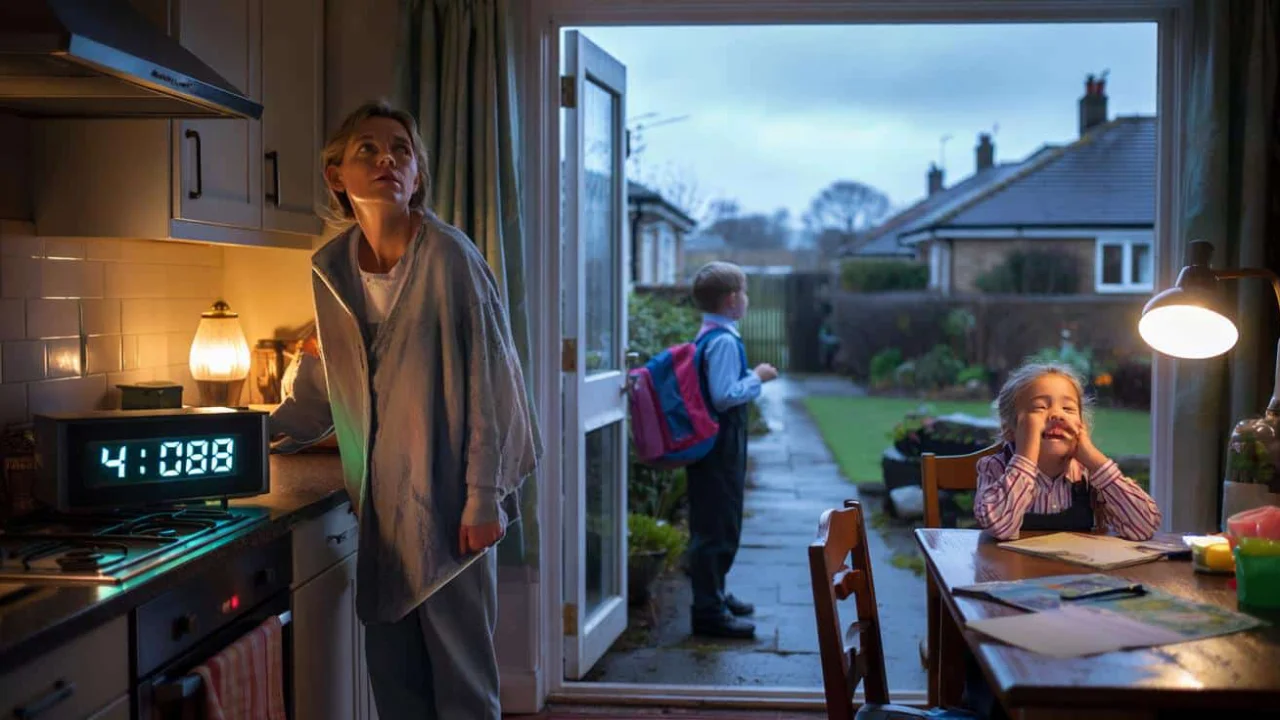
Sarah Mitchell was folding laundry in her Brighton kitchen when the street lamps flickered on. She glanced at her phone: 4:15pm. The washing basket was still half full, her youngest daughter was due home from school in twenty minutes, and the world outside looked like someone had pulled down the blinds on the day.
“This can’t be right,” she muttered, checking the time again. But it was. October had arrived with its usual trick of stealing daylight, and she wasn’t ready.
This scene plays out in millions of homes across Britain every autumn. But in 2026, families like Sarah’s are going to feel that familiar jolt even earlier and more sharply than usual. The clocks change 2026 is bringing something different to UK households – a shift in timing that will make those dark afternoons arrive sooner, catching daily routines off guard in ways people haven’t experienced before.
Why the 2026 Clock Change Hits Different
The clocks change 2026 carries an unusual twist. Due to calendar quirks, the seasonal time adjustment falls earlier than many recent years, compressing the transition between summer’s long evenings and winter’s early darkness into a tighter timeframe.
Dr. Emma Richards, a chronobiologist at Cardiff University, explains the challenge: “When daylight saving time ends earlier in the season, we’re asking people to adjust their circadian rhythms while they’re still psychologically expecting more daylight. It’s like pulling the rug out from under your body clock.”
The change itself remains the familiar “fall back” one hour. But that hour lands differently when it happens earlier in autumn. Families will find themselves plunged into 4pm darkness while their internal schedules still expect another hour of usable daylight.
Think about your typical Tuesday in late October. School pickup, grocery shopping, that quick walk around the block – all these small tasks suddenly happen under streetlights instead of natural light. The psychological impact goes beyond inconvenience.
What This Means for Daily Life Across the UK
The earlier timing of the clocks change 2026 creates a ripple effect through ordinary routines. Here’s what families can expect:
| Time | Before 2026 | After 2026 Change |
|---|---|---|
| 4:00pm | Daylight fading | Street lamps on |
| 5:00pm | Dusk settling | Full darkness |
| 6:00pm | Early evening | Night mode |
| School pickup | Natural light | Artificial lighting needed |
The most noticeable changes will hit:
- After-school activities moving indoors earlier
- Commuter journeys feeling longer and darker
- Dog walking schedules shifting dramatically
- Children’s outdoor play time shrinking
- Evening meal preparation feeling rushed
Professor James Hamilton, who studies seasonal behaviour patterns at Leeds University, notes: “We’re not just talking about switching on lights an hour earlier. We’re looking at fundamental changes to when people feel motivated to be active outdoors.”
The Psychological Impact Nobody Talks About
Beyond the practical adjustments, the earlier clocks change 2026 brings emotional consequences that catch people unprepared. That moment when you realise it’s dark outside but your brain insists it should still be afternoon creates a small but persistent sense of disorientation.
Mental health counsellor Rachel Thompson has observed this pattern in her practice: “Clients often describe feeling like they’ve ‘lost’ part of their day when the time change happens earlier. There’s a grief-like response to losing that expected hour of daylight.”
Families with young children face additional challenges. Bedtime routines rely heavily on natural light cues, and when darkness arrives earlier, children’s internal clocks struggle to adjust. Parents report more difficulty getting kids to sleep at appropriate times.
The knock-on effects reach into weekend plans too. Saturday afternoon football matches, Sunday family walks, even quick trips to the shops all feel compressed into a smaller window of daylight hours.
Preparing for the Shift
The good news? Knowing about the earlier timing means families can prepare. Sleep specialists recommend gradual adjustments starting two weeks before the clocks change 2026.
Practical strategies include:
- Investing in better indoor lighting for afternoon activities
- Shifting outdoor tasks to morning hours
- Planning indoor alternatives for children’s after-school time
- Adjusting meal times gradually before the change
Dr. Richards suggests: “The families who adapt best are those who acknowledge the change is coming and make small adjustments to their routine beforehand, rather than trying to fight the new reality.”
Some schools are already considering earlier finish times or modified after-school programs to account for the reduced daylight. Local councils are reviewing street lighting schedules and park closing times.
The earlier clocks change 2026 might feel like a small administrative detail, but it will ripple through millions of daily routines in ways that feel surprisingly personal. From that moment when the lights come on automatically in a Leeds kitchen to the realisation that the dog walk needs to happen before dinner rather than after, these changes will reshape how Britain moves through its autumn days.
Understanding what’s coming helps. But the real adjustment happens in those small moments – checking the time, looking outside, and slowly learning to live with a day that feels shorter than it should.
FAQs
When exactly do the clocks change in 2026?
The clocks will go back one hour on the last Sunday in October 2026, but the specific date falls earlier in the month than some recent years.
Will this affect my sleep pattern?
Yes, the earlier timing can disrupt sleep schedules more than usual because your body expects more daylight during the transition period.
How long does it take to adjust to the new times?
Most people adapt within 1-2 weeks, but the earlier darkness may take longer to feel normal psychologically.
Should I change my daily routine before the clocks change?
Gradual adjustments starting two weeks early can help your body clock adapt more smoothly to the new schedule.
Will this affect children differently?
Children often struggle more with the earlier darkness because their natural rhythms are more sensitive to light changes.
Is this a permanent change to when clocks change?
No, this is specific to 2026 due to calendar positioning. Future years may return to the more familiar timing.


