
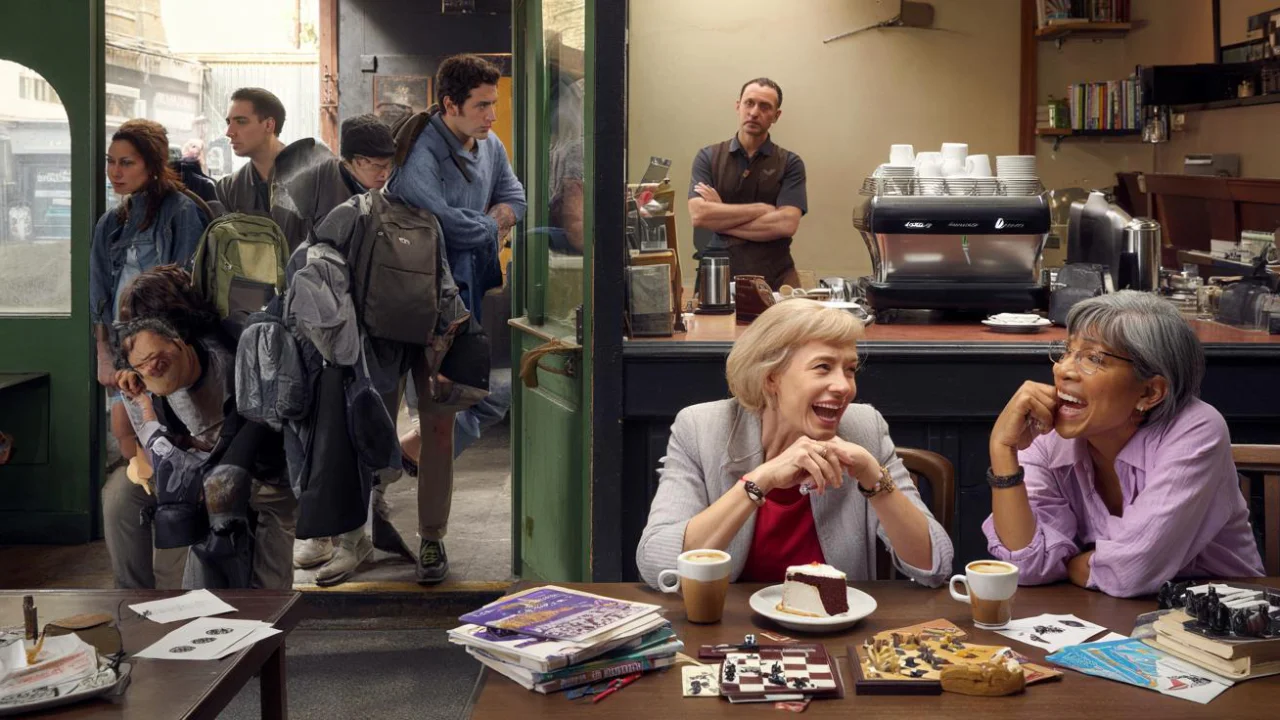
Sarah Martinez had owned her corner coffee shop for eight years when she finally snapped. It wasn’t the customer camping at table four for six hours straight on a single cappuccino that broke her. It wasn’t even the guy who brought his own power strip and turned her café into his personal charging station.
It was the silence. On a busy Tuesday morning, she looked around at twenty people sitting three feet apart, all staring at screens, all wearing headphones, all completely isolated in a room designed for connection. “This isn’t what I imagined when I opened this place,” she thought, watching two friends sit across from each other, texting instead of talking.
The next morning, Sarah taped a handwritten sign to her front door: “NO LAPTOPS ALLOWED. Let’s bring back conversation.” Within hours, her phone was buzzing with angry messages, glowing reviews, and interview requests. She had unknowingly joined a growing movement that’s quietly dividing coffee shops, neighborhoods, and generations across the country.
Why Coffee Shop Owners Are Fighting Back Against Digital Nomads
The coffee shop laptop ban is spreading faster than you might think. From Portland to Brooklyn, small café owners are reclaiming their spaces from what they see as the quiet takeover of remote work culture.
The numbers tell the story. Independent coffee shops report that laptop users occupy tables 300% longer than regular customers, often spending just $4-6 during multi-hour stays. Meanwhile, potential customers leave when they can’t find available seats, and elderly regulars feel unwelcome in spaces that have transformed into silent co-working hubs.
“I watched my neighborhood café turn into a library where nobody talks,” says Maria Rodriguez, a community organizer in San Francisco. “People used to meet there, have dates, play cards. Now it’s just rows of people avoiding eye contact.”
The laptop ban movement isn’t just about business—it’s about what public spaces are actually for. Coffee shops traditionally served as “third places,” neutral ground between home and work where communities naturally formed. But when every table becomes a desk, that social function disappears.
The Real Cost of Your Mobile Office
Here’s what most remote workers don’t realize about their café setup:
| Issue | Impact on Coffee Shops | Impact on Community |
|---|---|---|
| Table Turnover | Drops from 6-8 customers per table daily to 1-2 | Fewer seats for social meetings, dates, casual visits |
| Revenue Per Hour | Falls from $15-20 to $3-5 per occupied table | Shops struggle financially, may close |
| Noise Level | Silent typing replaces conversation buzz | Intimidates older customers, families |
| WiFi Costs | Bandwidth usage increases 400% | Higher operational costs passed to all customers |
The economics are stark. When laptop users treat coffee shops as offices, they fundamentally change the business model. A table that could serve 20 customers during lunch rush now serves two people all day.
“We’re not anti-technology,” explains David Chen, who implemented a laptop ban at his Seattle café last year. “But we realized we were subsidizing people’s work lives while losing the community connections that made this place special.”
Some shops have found middle ground with designated laptop hours or laptop-free zones. Others charge “co-working fees” after the first hour. But many owners say partial measures don’t work—the social atmosphere either exists or it doesn’t.
The Generation Gap That’s Splitting Communities
The coffee shop laptop ban reveals a deeper divide about how different generations use public spaces. For people over 50, cafés were always social spaces. For millennials and Gen Z, they’ve become extensions of home and office.
The conflict plays out daily in reviews and neighborhood Facebook groups. Older customers praise laptop bans as “bringing back real conversation.” Younger patrons call them “discriminatory against students and freelancers.” Both sides feel their needs are valid, creating an impossible choice for business owners.
“It’s not just about laptops—it’s about two different ideas of what community looks like,” says Dr. Jennifer Walsh, a sociologist studying urban social spaces. “One group wants structured interaction, the other wants parallel solitude.”
Remote workers argue they’re supporting local businesses and creating a new form of community. They point out that many small towns desperately want the economic activity that digital nomads bring. But café owners counter that revenue isn’t everything if it kills the social purpose of their space.
The battle extends beyond coffee shops to libraries, parks, and other shared spaces. Each location forces communities to decide: Should public spaces prioritize economic activity or social connection when the two conflict?
What Happens Next in the Screen Wars
Cities are starting to notice this tension. Some are creating designated co-working spaces to give remote workers alternatives. Others are supporting businesses that want to maintain social atmospheres without digital devices.
The solutions emerging include:
- Time-based laptop policies (morning work hours, afternoon social time)
- Separate areas for different activities
- Higher prices for extended stays
- Community-supported “conversation cafés”
- Municipal co-working spaces to reduce pressure on private businesses
But the deeper question remains unresolved. As remote work becomes permanent for millions of Americans, we need new models for both productivity and community. The current system asks small business owners to solve a societal problem they didn’t create.
“Every café owner I know is struggling with this,” says Lisa Park, who runs a coffee shop consulting business. “They want to serve their community, but which part of the community gets priority?”
The answer may require rethinking both work culture and community spaces. Perhaps we need more diverse options: dedicated co-working spaces, social-only cafés, and hybrid models that serve both needs without forcing one group out.
Meanwhile, Sarah Martinez reports that her laptop ban is working. Table turnover doubled, revenue increased 15%, and she’s hosting weekly community events again. But she also lost some longtime customers who needed a quiet place to work.
“I miss some of the people who used to work here,” she admits. “But I don’t miss the silence. This place feels alive again.”
FAQs
Are laptop bans legal in coffee shops?
Yes, private businesses can set policies about device usage as long as they don’t discriminate against protected classes.
How common are coffee shop laptop bans?
About 15% of independent coffee shops now have some form of laptop restriction, with the trend growing rapidly in major cities.
What alternatives exist for remote workers?
Libraries, dedicated co-working spaces, some chain cafés, and community centers often welcome laptop users.
Do laptop bans actually increase conversation?
Business owners report more social interaction, but it varies by neighborhood and customer base.
Can coffee shops survive financially without laptop users?
Many report higher revenue after bans due to increased table turnover and customers staying for social reasons rather than work needs.
What’s the best compromise between work and social needs?
Time-based policies and designated areas seem most successful, though complete bans create the strongest social atmosphere.


