
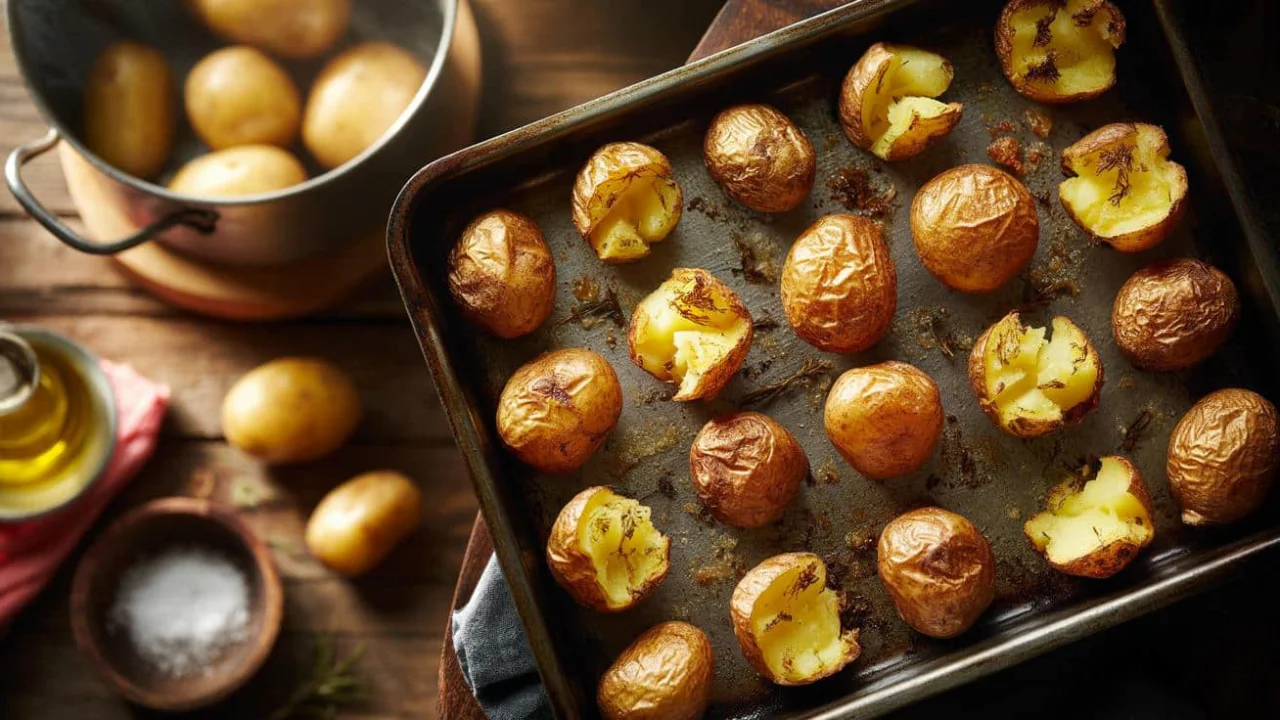
Sarah stared at the tray of potatoes cooling on her counter, feeling that familiar pang of disappointment. They looked decent enough from a distance, golden-ish and scattered with herbs. But when her fork pressed down, there was that telltale soft give instead of the satisfying crunch she’d been chasing for months.
Her dinner guests would arrive in twenty minutes, and once again, she’d be serving what could generously be called “roasted” potatoes but were really just hot, oily cubes that nobody would remember. Meanwhile, her friend Emma could somehow turn the same humble russets into restaurant-quality crispy potatoes that had people asking for the recipe.
The difference wasn’t luck or expensive equipment. It was knowing exactly what makes potatoes go from soggy disappointment to crispy perfection.
Why your crispy potatoes keep failing you
Most home cooks approach crispy potatoes like they’re making any other roasted vegetable. They chop, toss with oil, season, and hope for the best. But potatoes aren’t carrots or Brussels sprouts. They’re starchy, watery vegetables that need a completely different strategy.
“The biggest mistake I see is people treating potatoes like they’re already ready to roast,” says chef Marcus Chen, who’s spent fifteen years perfecting his restaurant’s signature crispy potatoes. “Raw potatoes are basically water bombs. You need to change their structure before they ever see the oven.”
When you put raw potato chunks straight into the oven, they steam in their own moisture. The outside might brown slightly, but it never develops that shatteringly crisp shell that makes great roasted potatoes so addictive.
The water content creates steam, which softens surfaces instead of crisping them. The starch stays locked inside instead of migrating to create that golden crust. You end up with potatoes that taste fine but lack any textural excitement.
The game-changing technique that changes everything
Perfect crispy potatoes start with a step most people skip entirely: parboiling. This isn’t just pre-cooking – it’s strategic starch manipulation.
Here’s exactly what happens when you parboil potato chunks for 8-10 minutes. The surface starches begin to break down and gelatinize. When you drain them and give them a good shake in the colander, those softened edges get roughed up, creating tons of surface area.
Those rough, fluffy edges are pure gold. They’re where the magic happens in the oven.
- Parboil chunked potatoes for 8-10 minutes until edges start to soften
- Drain thoroughly and shake vigorously in colander
- Let them sit for 2-3 minutes to steam dry
- Toss with hot fat in a preheated pan
- Roast at 425°F with plenty of space between pieces
- Don’t flip until bottoms are golden brown (15-20 minutes)
“The parboiling step is non-negotiable if you want restaurant-level results,” explains food scientist Dr. Lisa Park. “You’re essentially creating a fluffy, starch-rich surface that will crisp beautifully when it hits hot fat and high heat.”
| Temperature | Timing | Key Step |
|---|---|---|
| Parboiling | 8-10 minutes | Soften outer layer |
| Steam drying | 2-3 minutes | Remove surface moisture |
| Initial roast | 15-20 minutes | Don’t disturb, let crust form |
| Final roast | 10-15 minutes | Flip and crisp remaining sides |
The fat choice that makes or breaks your potatoes
Oil type matters more than most people realize. Olive oil might be healthy, but its relatively low smoke point means it can turn bitter at the high temperatures needed for proper crisping.
Duck fat is the gold standard – it has a high smoke point and adds incredible flavor. But vegetable oil, avocado oil, or even melted butter mixed with neutral oil will give you better results than straight olive oil.
The amount matters too. You need enough fat to coat every surface, but not so much that the potatoes swim. About 2-3 tablespoons for a pound of potatoes hits the sweet spot.
“I always heat my fat in the pan before adding the potatoes,” says chef Chen. “Cold fat on hot potatoes doesn’t create that immediate sizzle you need for the Maillard reaction to start working.”
What perfect crispy potatoes actually do for your meals
Great crispy potatoes don’t just taste better – they change how people experience your entire meal. They add textural contrast that makes other dishes shine brighter. That satisfying crunch creates a sensory experience that people remember.
Think about the last restaurant meal you truly loved. Chances are, there was some element of contrasting texture – something crispy against something smooth, something crunchy with something tender. Perfect roasted potatoes provide that contrast in the most accessible way possible.
They also solve the practical problem of making potatoes that people actually want to eat. Nobody gets excited about mushy, forgettable spuds. But golden, crackling potatoes with fluffy centers? Those disappear fast and get talked about later.
“When I finally mastered the technique, it changed how my family felt about dinner,” admits home cook Janet Rodriguez. “Suddenly my kids were fighting over the last potato instead of leaving them on their plates.”
The confidence boost is real too. Once you can consistently produce restaurant-quality crispy potatoes, you feel like you’ve unlocked some secret level of cooking. It’s a skill that translates to other dishes and gives you street cred in any kitchen.
FAQs
Can I make crispy potatoes without parboiling them first?
While possible, you’ll never achieve the same level of crispiness. The parboiling step creates the rough, starchy surface that’s essential for maximum crunch.
What’s the best potato variety for crispy roasted potatoes?
Russets and Yukon Golds work best because of their higher starch content. Waxy potatoes like red potatoes don’t crisp as well.
How do I know when my crispy potatoes are actually done?
They should sound hollow when you tap them with a fork, and the edges should be deep golden brown with visible texture.
Can I prep crispy potatoes ahead of time?
Yes! You can parboil and rough them up hours ahead, then just toss with hot fat and roast when ready to serve.
Why do my potatoes stick to the pan even when I use oil?
Either your pan isn’t hot enough when you add them, or you’re trying to flip them too early. Let them develop a proper crust before moving them.
How much space should I leave between potato pieces?
At least half an inch between pieces. Crowding creates steam, which is the enemy of crispiness.


