
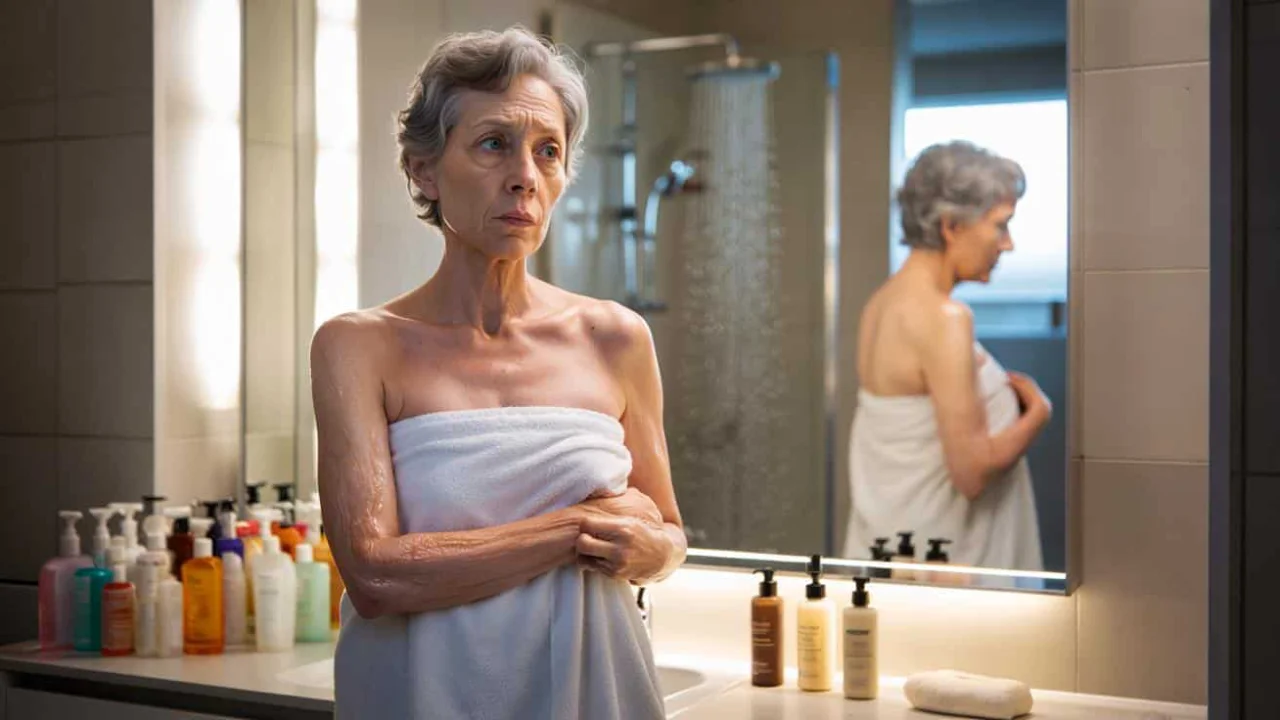
Margaret thought her daily morning shower was keeping her healthy at 78. The ritual felt sacred—hot water, lavender soap, the confidence that came with feeling fresh and clean. Her late husband always said she smelled like spring flowers, and even three years after his passing, she couldn’t bear the thought of “letting herself go.”
But something wasn’t right. Her skin had become paper-thin, tearing at the slightest bump against a doorframe. Every cold seemed to linger for weeks. The itching kept her awake at night, no matter how much lotion she applied. When her granddaughter, a nursing student, gently suggested that daily showers might be causing more harm than good, Margaret dismissed it entirely.
Then her doctor mentioned the same thing. Suddenly, Margaret realized she might be washing away more than just dirt—she could be destroying the very defenses keeping her healthy.
The Hidden Dangers of Daily Showers for Seniors
Across the country, a growing number of geriatricians and dermatologists are raising alarm bells about daily showers for seniors. The very habit that many older adults consider essential for dignity and health may actually be undermining their immune systems and leaving them vulnerable to infections, skin damage, and chronic health issues.
“I see patients every day who are over-washing their skin into a state of chronic inflammation,” explains Dr. Sarah Chen, a dermatologist who specializes in geriatric care. “They come in with recurrent skin infections, persistent itching, and weakened barriers against pathogens, all because they’re stripping away their natural protective layer.”
The problem lies in how aging skin responds to daily cleansing. As we get older, our skin produces less natural oil, becomes thinner, and loses its ability to repair itself quickly. Daily showers with hot water and harsh soaps can wash away the beneficial bacteria and natural oils that form our first line of defense against illness.
For many seniors, this revelation feels like betraying everything they were taught about proper hygiene. The generation that lived through times when daily baths were a luxury now finds themselves being told that same luxury might be harming them.
What the Science Reveals About Senior Skin Health
Recent research has uncovered startling facts about how daily showers impact senior health. The skin’s microbiome—a complex ecosystem of beneficial bacteria—plays a crucial role in preventing infections and maintaining immune function.
Here’s what happens when seniors shower daily:
- Natural protective oils are stripped away faster than they can be replenished
- Beneficial bacteria that fight harmful pathogens are washed down the drain
- Skin pH levels become imbalanced, creating an environment where infections thrive
- The skin barrier becomes compromised, allowing allergens and toxins to penetrate
- Natural moisture retention decreases, leading to chronic dryness and cracking
| Age Group | Recommended Shower Frequency | Key Risk Factors |
|---|---|---|
| Under 65 | Daily (if desired) | Generally well-tolerated |
| 65-75 | Every other day | Reduced oil production begins |
| Over 75 | 2-3 times per week | Significant barrier function decline |
| Mobility issues | As needed | Focus on essential areas only |
“The data is clear—seniors who shower every day have significantly higher rates of skin infections, eczema flare-ups, and even respiratory illnesses,” notes Dr. Michael Rodriguez, a geriatrician at a major medical center. “Yet most of my colleagues still hesitate to discuss this with patients because it challenges such a deeply held belief about cleanliness.”
Why Most Doctors Stay Silent on This Issue
Despite mounting evidence, many physicians avoid discussing shower frequency with their senior patients. The reluctance stems from multiple factors that reveal uncomfortable truths about modern medical practice.
Cultural sensitivity plays a major role. Suggesting that someone shower less frequently can feel like questioning their personal hygiene standards or implying they’re “dirty.” For seniors who take pride in their appearance and self-care routines, this advice can feel deeply personal and offensive.
Medical education also lags behind the research. Many doctors graduated when daily hygiene was considered universally beneficial. “I never learned in medical school that there could be such a thing as too much cleanliness for seniors,” admits Dr. Lisa Park, a family physician. “It took years of seeing patterns in my older patients before I started questioning conventional wisdom.”
Time constraints in medical appointments mean that shower habits rarely come up unless a patient specifically mentions skin problems. Even then, doctors often prescribe topical treatments rather than addressing the root cause of over-washing.
The medical community is slowly catching up, but change happens slowly when it challenges decades of accepted practice.
Real-World Consequences for Senior Health
The impact of daily showers on senior health extends far beyond dry skin. Families across the country are discovering that their loved ones’ commitment to daily hygiene may be contributing to serious health complications.
Take Robert, 81, whose family couldn’t understand why he kept getting urinary tract infections despite meticulous personal hygiene. His daughter even bought him expensive antibacterial body wash, thinking it would help. Instead, his infections became more frequent and resistant to treatment. Only after reducing his showers to three times per week did his chronic infections finally clear up.
The consequences include:
- Increased susceptibility to common colds and flu
- Higher rates of antibiotic-resistant skin infections
- Chronic inflammation that accelerates aging
- Sleep disruption from persistent itching
- Social isolation due to embarrassing skin conditions
- Increased healthcare costs from treating preventable conditions
For seniors living in care facilities, the problem becomes even more complex. Many facilities maintain daily shower schedules as part of their care protocols, inadvertently contributing to the health problems they’re trying to prevent.
“We’re seeing nursing homes where residents have constant skin issues, and the staff keeps increasing the frequency of baths and showers thinking it will help,” explains geriatric nurse practitioner Janet Martinez. “It’s a cycle that makes everything worse.”
Simple Changes That Can Transform Senior Health
The good news is that small adjustments to bathing routines can make dramatic improvements in senior health. The changes don’t require expensive products or major lifestyle overhauls—just a willingness to challenge long-held beliefs about cleanliness.
Seniors who reduce their shower frequency to every other day or three times per week often see improvements within weeks. Skin becomes less irritated, infections decrease, and overall immune function improves.
The key is focusing on cleansing only the areas that truly need daily attention—hands, face, underarms, and genital areas—while giving the rest of the body’s natural protective systems time to maintain themselves.
For seniors concerned about social acceptability, the transition can be gradual. Starting with every other day showers while maintaining daily cleansing of essential areas often provides the perfect balance between health and social comfort.
FAQs
How often should seniors really shower?
Most experts recommend 2-3 times per week for seniors over 75, with daily cleansing of face, hands, and private areas as needed.
Will reducing showers make seniors smell bad?
No, when done properly with spot cleaning of necessary areas, reducing full-body showers doesn’t cause odor problems for most seniors.
What about seniors with incontinence issues?
Seniors with incontinence should clean affected areas as needed while still limiting full-body showers to prevent over-washing unaffected skin.
Are there warning signs that daily showers are causing problems?
Yes, persistent itching, frequent skin tears, recurrent infections, and chronic dryness despite moisturizing are all red flags.
Should seniors use special soaps when they do shower?
Gentle, fragrance-free cleansers with minimal ingredients work best, avoiding antibacterial soaps that strip beneficial bacteria.
How can families discuss this sensitive topic with senior loved ones?
Focus on health benefits rather than hygiene criticism, and suggest consulting their doctor about the best bathing routine for their specific health needs.


