
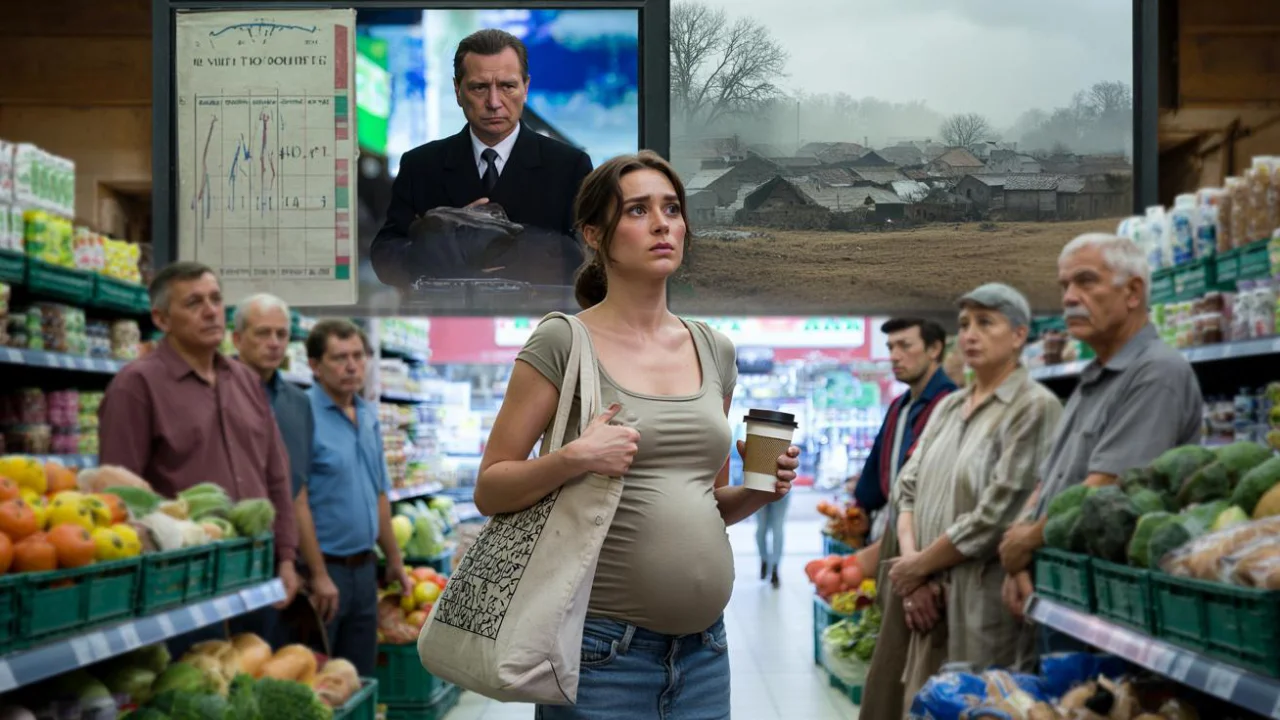
The first time they called her a “traitor to the nation,” she was just buying lentils. A woman in her late thirties, canvas tote bag, reusable coffee cup, the kind of person who knows the names of trees and actually sorts her recycling.
Her name is Lara. At 24, after reading every climate report she could get her hands on, she decided not to have children. Not out of hatred for babies, but out of a kind of fierce, anxious love for a planet on fire.
Ten years later, as her small Eastern European country hits record-low birth rates and politicians talk of demographic suicide, those same people who once rolled their eyes have found a new word for her. Enemy.
When Personal Choices Become National Emergencies
On TV, the minister’s voice is calm, almost gentle, as he lists the numbers. Births at a 40-year low. Rural schools closing for lack of students. Entire villages graying out like a black-and-white photograph.
Then he says the phrase that sticks: “self-inflicted demographic suicide.” No one is named, but everyone knows who they’re talking about. People like Lara. Educated, urban, earning enough to raise kids, and still refusing “to do their part.”
Dr. Elena Marchetti, a demographer at the University of Rome, explains the harsh reality: “When birth rates drop below replacement level for extended periods, countries face what we call demographic suicide. The social and economic fabric begins to unravel in ways that are difficult to reverse.”
In the supermarket the next day, an older man looks at Lara’s flat stomach, then at the newspaper headline on the rack, and shakes his head. The judgment lands heavier than the groceries in her bag.
The Numbers Behind the Panic
Demographers have a way of turning heartbreak into graphs. They show charts where each generation is smaller than the last, like a staircase going down into fog.
The stark reality facing many developed nations becomes clear when you look at the data:
| Country Type | Birth Rate (per woman) | Replacement Level | Population Trend |
|---|---|---|---|
| Eastern Europe Average | 1.3 | 2.1 | Declining |
| Urban, Educated Women | 0.8-1.2 | 2.1 | Rapidly Declining |
| Rural Areas | 1.6 | 2.1 | Slowly Declining |
In Lara’s country, the fertility rate has dropped well below the 2.1 children per woman considered replacement level. Among women with higher education in big cities, it’s often closer to one. One child, sometimes none.
The consequences are already visible:
- One in four elementary schools has closed in the past decade
- Healthcare systems struggle with aging populations and fewer young workers
- Pension systems face collapse as fewer workers support more retirees
- Rural communities become ghost towns as young people move to cities and don’t reproduce
Professor Michael Hansen, who studies population dynamics at Stockholm University, notes: “What we’re seeing isn’t just about numbers. It’s about the complete restructuring of society when the pyramid of ages inverts.”
The Environmental vs. National Duty Conflict
Politicians talk of empty pension funds, hospitals without nurses, factories without workers. Conservative commentators go further, accusing childfree environmentalists of being “useful idiots” helping rival nations gain an advantage.
Suddenly, a purely personal decision starts to sound like a national security threat.
For Lara and thousands like her, the choice seemed logical at the time. Climate change reports painted a grim future. Why bring children into a world of rising seas, extreme weather, and resource scarcity?
“I thought I was being responsible,” Lara says, stirring sugar into her coffee at a café where she’s become a regular. “I thought I was preventing suffering.”
But environmental psychologist Dr. Sarah Chen sees the deeper conflict: “We’re asking individuals to make impossible choices between personal ethics and collective survival. The guilt works both ways – have children and feel guilty about the planet, don’t have them and feel guilty about society.”
Who Really Controls the Future?
The blame game has become vicious. Governments offer financial incentives for families, sometimes targeting specific groups. Tax breaks for parents. Penalties for the childless. Housing subsidies that favor families with multiple children.
Some countries have gone further. Hungary offers lifetime tax exemptions for mothers of four or more children. Poland provides monthly payments that increase with each child. The message is clear: your reproductive choices are no longer entirely your own.
Lara receives letters now. Not hate mail, exactly, but something close. “You are stealing the future from children who will never exist,” one reads. Another: “Your plants won’t take care of you when you’re old.”
The irony isn’t lost on her. She chose not to have children to protect the future. Now she’s blamed for destroying it.
Child psychology expert Dr. James Morton argues: “We’re essentially asking people to have children as a civic duty rather than out of love and desire. That’s a dangerous precedent that affects the quality of parenting and childhood experiences.”
The Human Cost of Demographic Pressure
The pressure isn’t abstract anymore. At family gatherings, relatives corner Lara with statistics about national decline. Friends distance themselves, choosing sides in a culture war she never meant to join.
Her mother, who once supported her environmental activism, now leaves parenting magazines on the kitchen counter during visits. “I just want grandchildren,” she says, as if it’s that simple.
But for Lara, it isn’t simple. The same reports that convinced her not to have children now show the planet warming faster than expected. Arctic ice disappearing ahead of schedule. Species dying off at unprecedented rates.
“How do you choose between two different versions of the apocalypse?” she asks. “Environmental collapse or societal collapse?”
The question hangs in the air, unanswered and perhaps unanswerable. In her small Eastern European country, demographic suicide isn’t just a phrase politicians throw around anymore. It’s becoming a lived reality, one personal choice at a time.
And Lara, buying her lentils and living her quiet life, has become an unlikely symbol of a dilemma facing the entire developed world: who gets to decide what the future of humanity should look like, and what price we’re willing to pay for those decisions.
FAQs
What exactly is demographic suicide?
Demographic suicide occurs when a country’s birth rate falls so low that the population cannot replace itself, leading to societal and economic decline over time.
Why are environmentalists choosing not to have children?
Many environmentally conscious individuals avoid having children due to concerns about climate change, resource scarcity, and bringing children into an uncertain future.
How low can birth rates go before it becomes a crisis?
Experts consider birth rates below 2.1 children per woman problematic, but rates below 1.5 create serious long-term challenges for society and the economy.
Are governments trying to force people to have children?
While not directly forcing reproduction, many governments offer significant financial incentives for larger families and sometimes penalties for remaining childless.
Can countries recover from very low birth rates?
Recovery is possible but difficult, typically requiring sustained policy efforts, cultural changes, and often immigration to supplement declining native populations.
Is this problem only affecting Eastern Europe?
No, demographic suicide concerns affect many developed countries including Japan, South Korea, Italy, and parts of Germany, each facing similar challenges.


