
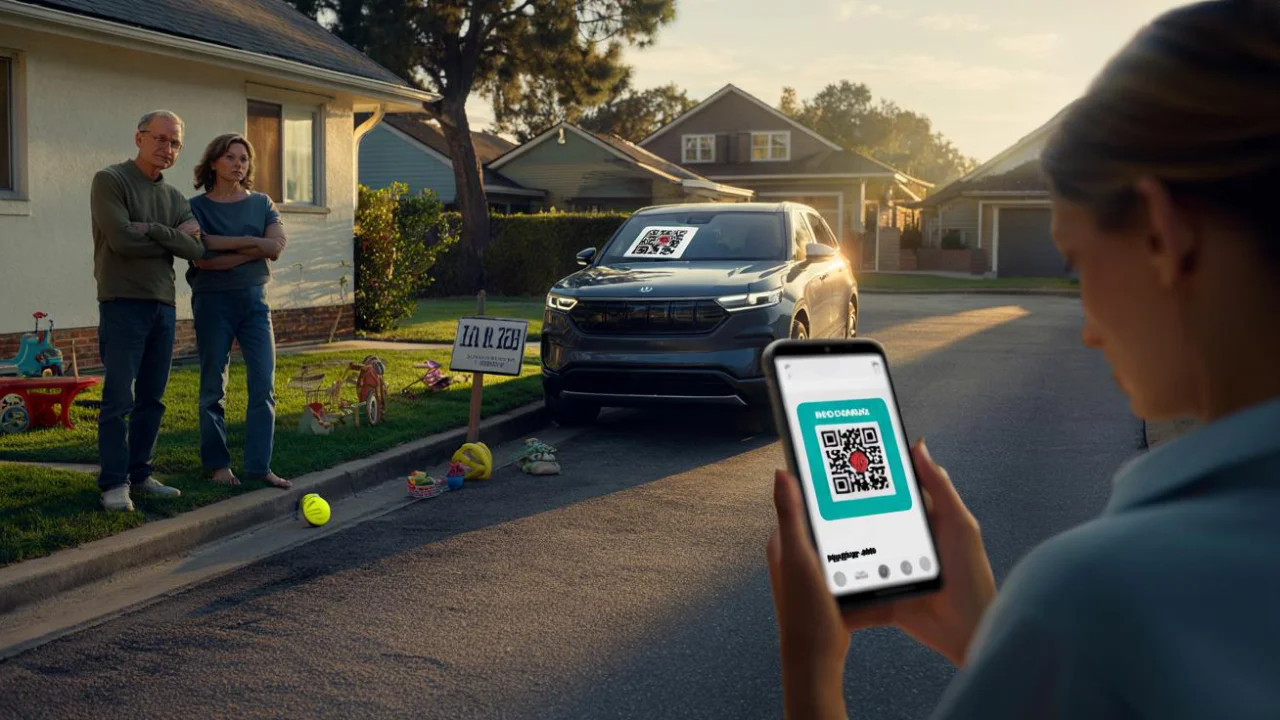
Sarah first noticed the cars on a Tuesday morning. Three different vehicles had parked in the Miller’s driveway across the street since dawn, each staying exactly two hours before leaving. By Thursday, she’d counted eight different license plates. The Millers weren’t running a business—at least, not the kind with employees or inventory.
They were renting their driveway.
“At first I thought maybe they were having work done,” Sarah recalls. “Then I saw the little QR code sign by their mailbox. That’s when it hit me—they’re making money off that concrete pad while we’re all struggling to pay our own bills.”
Your empty driveway is worth more than you think
Driveway parking rental has quietly become one of the most accessible side hustles in America. While you’re at the office, your empty parking spot could be earning $15-50 per day in the right location. Apps like JustPark, Neighbor, SpotHero, and ParkingPanda have made it ridiculously simple: snap a photo, set your price, and watch strangers pay to use the space you’re not using anyway.
“Most people don’t realize their driveway is sitting there as unused real estate,” explains Mark Rodriguez, a parking consultant who’s studied the residential rental market. “In dense cities, that little strip of concrete can generate more monthly income than some people’s savings accounts.”
The math is straightforward. A driveway near a hospital, university, or downtown area can easily earn $200-600 monthly. Even suburban driveways near shopping centers or transit stations pull in $50-150 per month during busy periods.
Consider this breakdown for different locations:
| Location Type | Daily Rate | Monthly Potential | Peak Seasons |
|---|---|---|---|
| Downtown/Medical District | $15-40 | $300-800 | Year-round |
| Near Airports | $8-25 | $200-500 | Summer, holidays |
| University Areas | $5-20 | $100-400 | School year |
| Stadium/Event Venues | $20-60 | $100-300 | Event days only |
| Suburban Shopping | $3-12 | $50-200 | Holidays, weekends |
The process couldn’t be simpler. Most platforms handle payments, insurance, and customer service. You just decide when your space is available and set your rates. Some people rent out their spots while they’re at work during the day. Others focus on evenings when they’re home but don’t need their driveway.
Why this splits neighborhoods down the middle
The controversy isn’t about the money—it’s about everything else that comes with it. Drive through any neighborhood where driveway parking rental is popular, and you’ll find two camps with completely different perspectives.
The supporters see practical survival. “With grocery prices and rent going crazy, I’m not going to judge someone for using what they own to make ends meet,” says Jennifer Walsh, who lives next to a rental driveway in Portland. “It’s their property, their choice.”
The critics see something closer to commercialization creeping into residential spaces. Common complaints include:
- Increased traffic from strangers constantly coming and going
- Cars blocking sidewalks or partially hanging into the street
- Noise from car doors, engines, and GPS-confused drivers
- Property value worries if the area starts feeling “commercial”
li>Safety concerns about unknown people in quiet neighborhoods
“It’s death by a thousand cuts,” explains neighborhood association leader Tom Peterson. “One driveway rental isn’t a big deal. But when three houses on the same block are doing it, suddenly your quiet street feels like a parking lot with mailboxes.”
Legal experts point out that most driveway parking rental falls into a regulatory gray area. “If you own the space and local zoning doesn’t specifically prohibit it, you’re generally in the clear,” notes real estate attorney Lisa Chen. “But homeowner associations and some municipalities are starting to push back.”
The real winners and losers in this parking game
Success with driveway parking rental depends heavily on location and timing. The biggest winners live near places where parking is both scarce and expensive—think hospitals, airports, universities, or downtown areas where meter rates run $3-8 per hour.
Emily Rodriguez has been renting her Phoenix driveway for two years. “I live ten minutes from the airport, and business travelers love having guaranteed parking that costs less than the airport deck,” she explains. “I make about $400 a month, which covers my car payment.”
But the model doesn’t work everywhere. Rural areas, suburbs with abundant street parking, or neighborhoods where most people work from home see little demand. “I listed my driveway for six months and got maybe three bookings,” admits suburban Houston resident Mike Thompson. “Turns out nobody needs to pay for parking when every street has empty spaces.”
The platforms themselves take different approaches to neighborhood concerns. Some require insurance verification and background checks. Others focus purely on payment processing. Most take 10-30% of rental fees as their cut.
Renters benefit too, especially in cities where parking violations carry heavy fines. A $20 daily driveway rental beats a $75 parking ticket any day. Many regular users are healthcare workers, college students, or people with jobs in dense areas where employee parking is limited or expensive.
“I pay $25 a day to park in someone’s driveway near the hospital where I work,” says nurse practitioner David Kim. “The hospital wants $180 a month for staff parking, and street parking means risking tickets. This saves me money and stress.”
What’s next for neighborhood parking wars
The driveway rental trend shows no signs of slowing down. As housing costs continue rising and traditional side hustles like rideshare become oversaturated, more homeowners are looking at their unused spaces as untapped income sources.
Some cities are starting to regulate. Seattle requires permits for residential parking rentals. San Francisco limits the number of hours per day you can rent residential spaces. Other municipalities are watching and waiting to see how neighborhoods adapt.
“We’re probably five years away from clearer rules nationwide,” predicts urban planning researcher Dr. Amanda Foster. “Right now, it’s the Wild West—legal in most places, but creating social friction that communities are still figuring out how to handle.”
Homeowner associations are also getting involved. Some are updating their covenants to restrict or ban driveway rentals. Others are embracing them as a way to help residents cope with rising costs.
For now, the split remains. Every new QR code sign in a driveway brings the same neighborhood divide: half the street seeing resourcefulness, half seeing intrusion. The concrete stays the same, but the community around it keeps changing.
FAQs
Is renting out my driveway legal?
In most places, yes, as long as local zoning laws and homeowner association rules don’t prohibit it. Check with your city and HOA before starting.
How much money can I realistically make?
It depends on location, but most successful hosts earn $50-400 monthly. Urban areas near hospitals, airports, or universities typically see higher rates.
What if someone damages my property while parked?
Most platforms offer insurance coverage, but policies vary. Read the terms carefully and consider adding coverage to your homeowner’s insurance.
Can my neighbors stop me from renting my driveway?
Neighbors can’t directly stop you, but they can file complaints with local authorities or homeowner associations if rules are being violated.
Do I need to pay taxes on driveway rental income?
Yes, rental income from your driveway is taxable. Keep records of earnings and any related expenses for tax purposes.
What happens if a renter refuses to leave?
Most platforms have 24/7 customer service to handle disputes. You can also contact local law enforcement if someone refuses to vacate your property.


