
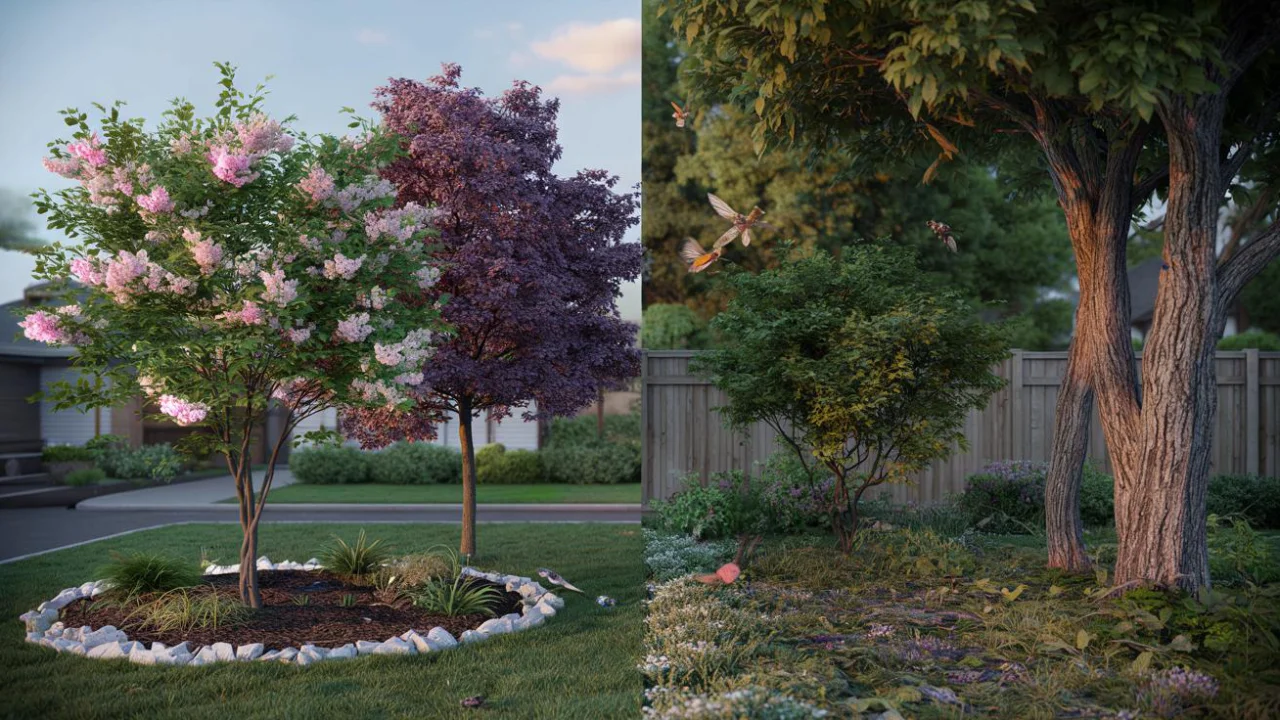
Sarah stood in her driveway last Tuesday, admiring the pristine Japanese maple she’d planted three years ago. The burgundy leaves caught the morning light perfectly, and her Instagram post had already earned dozens of likes. “Finally creating my dream eco garden,” she’d captioned it, feeling proud of her environmental contribution.
But as she sipped her coffee, something nagged at her. The old, messy oak tree her neighbor had recently removed used to buzz with life every morning. Birds chattered, insects hummed, and squirrels played aerial tag between its branches. Her beautiful maple? Silent as a sculpture.
Sarah’s story isn’t unique. Millions of well-meaning homeowners are unknowingly creating eco gardens that look sustainable but function like green deserts. The three most popular “eco-friendly” trees are actually starving the very wildlife they’re supposed to support.
Your Picture-Perfect Eco Garden Might Be an Ecological Dead Zone
Walk through any modern subdivision and you’ll spot them immediately: the holy trinity of contemporary landscaping. Purple-leaf Japanese maples standing like burgundy umbrellas. Ornamental cherry trees that explode in cotton-candy blooms each spring. Columnar maples lined up like green soldiers along driveways.
These trees check every box on paper. They’re gorgeous, Instagram-ready, and marketed as environmentally conscious choices. Garden centers promote them as “eco-friendly alternatives” to maintenance-heavy lawns.
“The problem isn’t that these trees are bad,” explains Dr. Jennifer Martinez, an urban ecology researcher at Colorado State University. “It’s that we’ve been sold a beautiful lie about what makes a garden truly ecological.”
The harsh reality? Most ornamental trees offer about as much ecological value as plastic plants. They might photosynthesize and provide shade, but they fail at the fundamental job of supporting local wildlife.
Consider this stark comparison: a mature native oak can support over 500 species of caterpillars, which feed countless birds during nesting season. Your decorative Japanese maple? Maybe 15 species, if you’re lucky.
The Three Popular Trees That Are Quietly Failing Your Local Wildlife
Let’s examine the biggest culprits in modern eco garden design and understand why they’re creating beautiful but biologically barren landscapes.
| Tree Type | Wildlife Species Supported | Native Alternative | Wildlife Species Alternative Supports |
|---|---|---|---|
| Japanese Maple | 5-15 species | Red Maple | 285+ species |
| Ornamental Cherry | 10-20 species | Wild Cherry | 450+ species |
| Columnar Norway Maple | 8-12 species | Sugar Maple | 300+ species |
Japanese Maples: Beautiful but Biologically Barren
These stunning trees have captured hearts with their delicate leaves and spectacular fall colors. Garden centers can’t stock them fast enough. But here’s the problem: Japanese maples evolved in Asia, thousands of miles away from North American insects and birds.
Local caterpillars can’t digest their leaves. Native birds don’t recognize their seeds as food. Even the few insects that might nibble on them provide inadequate nutrition for baby birds.
Ornamental Cherries: Pretty Flowers, Empty Promises
Those Instagram-worthy spring blossoms hide a cruel irony. Most ornamental cherries are bred for double flowers, which produce little to no nectar. Bees and other pollinators fly right past them, searching for actual food sources.
“I call them ‘hunger pains trees,'” says Mark Thompson, a wildlife biologist with 20 years of urban ecosystem experience. “They advertise food to insects but deliver nothing nutritious in return.”
Columnar Maples: Green Walls with No Wildlife Value
These space-saving trees are marketed as perfect for modern eco gardens where space is limited. They grow straight up, cast neat shadows, and look professionally landscaped. What they don’t do is feed anything.
Most columnar varieties are sterile clones that produce no viable seeds. Their uniform genetics and compact growth offer minimal nesting sites. They’re essentially living fence posts that happen to photosynthesize.
What This Means for Your Neighborhood’s Ecosystem
The consequences of these eco garden choices ripple far beyond individual yards. When entire neighborhoods choose the same ornamental trees, they create what scientists call “ecological deserts” – areas that look green but support virtually no wildlife.
Bird populations suffer first. Species that depend on caterpillars to feed their chicks – including beloved songbirds like chickadees and wrens – find fewer food sources each year. A single pair of breeding chickadees needs to collect over 6,000 caterpillars during nesting season. Good luck finding those on ornamental cherries.
Pollinator populations crash next. Native bees, butterflies, and beneficial insects that evolved alongside local plants can’t survive on exotic ornamentals. The decorative flowers might fool homeowners, but they don’t fool hungry pollinators.
Here’s what happens in practice:
- Suburban bird diversity drops by 30-50% compared to areas with native trees
- Beneficial insect populations decline, leading to pest problems
- Local plant communities become fragmented and isolated
- Children grow up in neighborhoods with little visible wildlife
“We’re creating suburbs that look like nature but function like parking lots,” warns Dr. Martinez. “Kids today might never see a caterpillar or hear the morning bird chorus that previous generations took for granted.”
Simple Swaps That Actually Create Eco Gardens
The good news? Fixing your eco garden doesn’t require ripping out everything and starting over. Small, strategic changes can dramatically increase your yard’s wildlife value.
Instead of that Japanese maple, consider a native red maple or sugar maple. They offer equally stunning fall colors while supporting hundreds of native species. Your yard will transform from silent sculpture garden to bustling wildlife hub.
Swap ornamental cherries for wild cherry or serviceberry trees. These natives provide spring flowers that actually feed pollinators, followed by berries that feed dozens of bird species. Plus, you might get to enjoy the fruit yourself.
Replace columnar Norway maples with native alternatives like American hornbeam or red oak varieties. These trees offer structure and shade while creating complex ecosystems in your front yard.
“The most sustainable eco garden isn’t necessarily the most Instagram-worthy,” notes Thompson. “But once you start seeing all the life it supports, it becomes beautiful in ways that ornamental trees never could be.”
Even small additions make huge differences. Plant native understory shrubs beneath existing trees. Add native wildflowers in unused corners. Choose plants that evolved in your specific region rather than generic “eco-friendly” options.
Your neighbors might initially prefer their perfectly manicured ornamental landscapes. But when your yard fills with butterflies, birds, and the gentle buzz of beneficial insects, they’ll start asking for your gardening secrets.
FAQs
Can I keep my Japanese maple if I add native plants around it?
Absolutely! Adding native understory plants and shrubs can dramatically increase your garden’s ecological value, even with ornamental trees present.
Are all ornamental trees bad for wildlife?
Not all, but many popular varieties offer minimal ecological benefits. Research trees that are native to your specific region for the best wildlife support.
How long does it take for native trees to attract wildlife?
You’ll often see increased bird and insect activity within the first growing season, with more dramatic changes over 3-5 years as trees mature.
Do native trees require more maintenance than ornamentals?
Actually, native trees typically require less water, fertilizer, and pest control since they’re adapted to local conditions.
Where can I find native trees for my area?
Contact your local extension office, native plant societies, or search online databases like the National Wildlife Federation’s native plant finder.
Will switching to native plants increase my property value?
Studies show that mature native landscaping often increases property values more than ornamental alternatives, especially as buyers become more environmentally conscious.


