
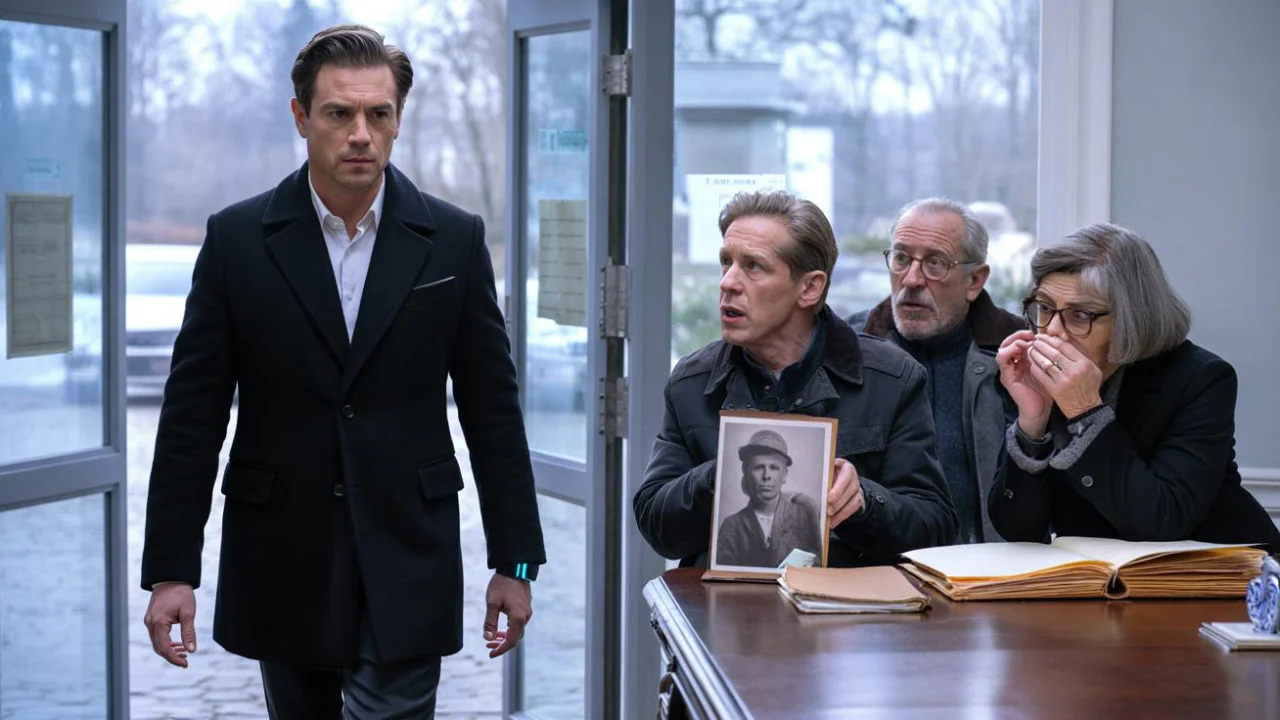
Maria stared at her coffee cup, hands trembling slightly. Her brother Tom sat across from her in the law office waiting room, neither of them speaking. They’d buried their father last month, settled his affairs, and thought the hardest part was over.
Then their grandfather walked in.
Not a frail 93-year-old man. Not even someone who looked like he’d lived through the 1950s. A man who appeared younger than both of them, with smooth skin and bright eyes, claiming he was ready to collect his eternal life inheritance.
When Forever Comes Knocking at Your Door
The eternal life inheritance case has shattered everything we thought we knew about family, mortality, and money. In 1974, a man named Robert Chen made a choice that seemed impossible: he abandoned his wife and two young children to join an experimental longevity program overseas.
His family grieved. His neighbors whispered. His children grew up fatherless, married, had kids of their own, and eventually died of old age.
Robert Chen? He returned in 2024, looking exactly like he did when he left fifty years ago.
“The science of extreme life extension has moved from theory to reality,” explains Dr. Sarah Martinez, a bioethicist at Stanford University. “But nobody prepared us for the legal nightmares that come with people outliving their own great-grandchildren.”
Chen’s case isn’t unique anymore. Similar eternal life inheritance disputes are emerging across three continents, as people who participated in early longevity experiments return to claim assets from families who buried them decades ago.
The Legal Mess Nobody Saw Coming
Here’s what makes these eternal life inheritance cases so complicated:
- Legal death declarations were filed after 7-10 years of absence
- Estates were distributed to surviving family members
- Property was sold, businesses were dissolved, and new families were built
- The “deceased” person never actually died
- Current inheritance laws don’t account for extreme longevity
The financial implications are staggering. Chen’s grandchildren had inherited and managed a family business worth $2.3 million. They’d reinvested profits, expanded operations, and built their own retirement plans around these assets.
Now Chen wants his share back, plus fifty years of compound interest.
| Year | Event | Financial Impact |
|---|---|---|
| 1974 | Robert Chen disappears | Family business valued at $45,000 |
| 1984 | Declared legally dead | Estate distributed to wife and children |
| 2024 | Chen returns | Claims inheritance worth $2.3 million |
“These people chose immortality over family,” says family law attorney James Park, who’s handling three similar cases. “They can’t just walk back into lives they destroyed and expect everything to be waiting for them.”
The Human Cost of Playing God
The emotional damage goes far deeper than money. Chen’s granddaughter Emma refuses to speak to him. His grandson Mark had a panic attack when Chen showed up at the family business, demanding access to financial records.
These families thought they’d healed from abandonment. They’d processed grief, built new traditions, and moved forward. Seeing their supposedly dead relative looking younger than them has reopened wounds that never fully closed.
“Imagine your grandfather showing up at your door looking like your son,” explains trauma counselor Dr. Lisa Wong. “The psychological impact is devastating. These families are grieving people who are standing right in front of them.”
The longevity industry promises extended lifespans, but nobody talks about the social consequences. When someone chooses eternal life over family relationships, what happens when they change their mind?
Chen claims he underwent experimental treatments in a private facility in Switzerland. He says he was told he couldn’t contact his family for security reasons. He insists he always planned to return.
His family calls that explanation convenient lies.
What This Means for Everyone Else
The eternal life inheritance crisis is forcing lawmakers to rewrite fundamental legal concepts. Several countries are drafting new legislation to handle these cases, but the solutions aren’t simple.
Some proposed changes include:
- Extended waiting periods before declaring someone legally dead
- New categories for “life extension absence”
- Inheritance clawback protections for families
- Mandatory disclosure requirements for longevity participants
“We’re dealing with people who are functionally immortal showing up to reclaim assets from their own descendants,” notes legal scholar Professor David Kim. “Traditional inheritance law assumes people die in predictable patterns. That assumption is breaking down.”
The technology exists to extend human lifespans dramatically. Several companies now offer treatments that can slow or reverse aging. But the legal and social framework to handle these advances doesn’t exist yet.
For families like the Chens, that gap between scientific possibility and social reality creates devastating conflicts with no clear resolution.
The Questions Nobody Wants to Answer
Chen’s case raises uncomfortable questions about family, responsibility, and the price of immortality. If someone chooses eternal life over their relationships, do they forfeit their right to family wealth?
Should families have to return inherited assets to relatives who abandoned them decades ago? What about the emotional damage of these sudden returns from the dead?
“These people made their choice fifty years ago,” argues bioethicist Dr. Martinez. “They chose individual immortality over family bonds. They don’t get to undo that decision when it becomes financially convenient.”
But Chen’s lawyers argue differently. They claim he never legally died, so his inheritance rights remained intact. They’re demanding not just his original share, but decades of investment returns and compound growth.
The court case begins next month. The ruling could set precedent for hundreds of similar eternal life inheritance disputes worldwide.
For now, families dealing with these returns from the dead face an impossible choice: fight expensive legal battles against people who should be gone, or surrender assets they’ve built their lives around to relatives who abandoned them generations ago.
The promise of eternal life comes with a price. For the Chen family, that price might be everything they thought they knew about death, family, and forgiveness.
FAQs
Can someone who was declared legally dead reclaim their inheritance?
Yes, if they can prove they never actually died and their legal death declaration was made in error, though this creates complex legal battles.
How common are these eternal life inheritance cases?
Currently rare but increasing, with about 30 documented cases worldwide as longevity treatments become more accessible.
Do families have to return inherited assets to these returning relatives?
It depends on local laws, but many courts are now requiring mediation and often split decisions between original heirs and returning relatives.
What happens if someone participates in life extension treatments?
There’s no legal requirement to inform family members, though some experts recommend creating legal documentation to prevent future inheritance disputes.
How long do courts typically wait before declaring someone legally dead?
Usually 7-10 years of absence, but some jurisdictions are extending this period due to longevity technology advances.
Can families protect themselves from these inheritance claims?
Some legal experts recommend specific trust structures and documentation, but definitive legal protections are still being developed as laws catch up to technology.


