
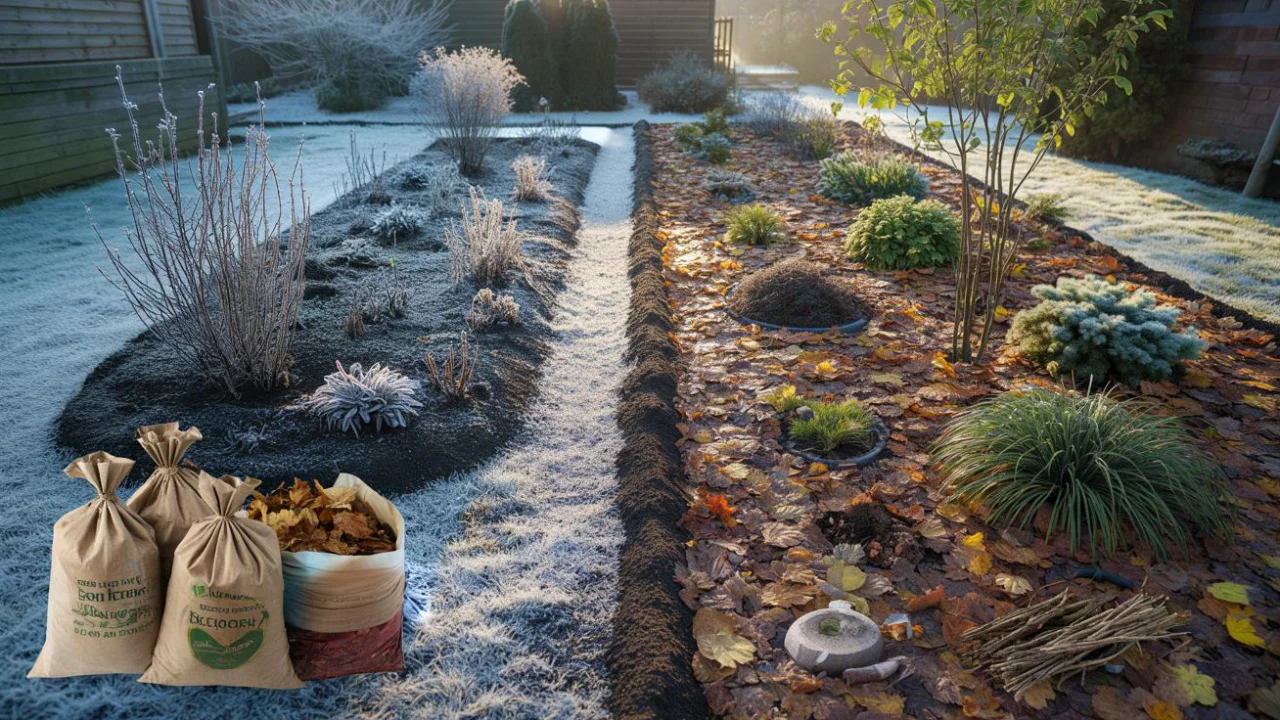
Last winter, I watched my neighbor Sarah rake up every single leaf from her pristine garden beds, stuffing them into countless brown bags for the municipal pickup. By February, she was crying over her dead rosebushes and ordering expensive winter protection gear online.
Meanwhile, my “messy” garden – the one she’d politely called “rustic” – was thriving under a thick blanket of fallen leaves. My tender perennials emerged in spring healthier than ever, and I hadn’t spent a penny on winter protection.
That’s when I realized what many gardeners are missing: the very “waste” we’re desperate to clean up each autumn is nature’s perfect winter insurance policy.
Why Your “Clean” Garden Is Setting Plants Up to Fail
Walk through any suburban neighborhood in November and you’ll see the same scene repeated on every block. Lawns raked to perfection, flower beds scraped clean, every leaf banished to the curb. We’ve been trained to think this tidiness equals good gardening.
But here’s what’s really happening when we strip away all that organic matter: we’re exposing our plants’ root systems to winter’s worst punishment.
In nature, you’ll never find bare soil. Forest floors stay cushioned with fallen leaves year-round. Prairie grasses keep their protective thatch of old growth. That organic layer isn’t mess – it’s a survival system that’s evolved over millions of years.
“When gardeners remove all the fallen leaves and plant debris, they’re essentially stripping away the plant’s natural winter coat,” explains Dr. Jennifer Walsh, a soil ecologist at Colorado State University. “It’s like making someone go outside in January wearing just their underwear.”
Without this protective covering, winter weather hits the soil directly. Rain pounds the surface, breaking down soil structure and washing nutrients away. Frost penetrates deeper, forming ice crystals that can literally tear apart delicate root tissues.
The Hidden Fortune You’re Throwing Away Each Fall
Every bag of leaves heading to the municipal dump represents a small fortune in garden gold. Those leaves didn’t just fall randomly – they’re the result of an entire growing season of the tree working as a nutrient-mining operation.
Tree roots reach deep into the subsoil, pulling up minerals that shallow-rooted garden plants can’t access. Potassium, calcium, magnesium, and trace elements all get concentrated in the foliage throughout the summer. When autumn arrives, those leaves become a slow-release fertilizer delivered right to your doorstep.
Here’s what you’re actually discarding when you bag up fallen leaves:
- Natural soil conditioner worth $15-20 per cubic yard if purchased
- Slow-release organic fertilizer containing essential plant nutrients
- Free mulch that would cost $40-60 per cubic yard at garden centers
- Natural habitat for beneficial insects and soil organisms
- Carbon-rich material perfect for composting
“The average suburban yard generates enough leaf material each fall to replace expensive store-bought mulch for the entire property,” notes master gardener Tom Rodriguez, who’s been teaching organic gardening techniques for over two decades.
| Leaf Type | Decomposition Time | Best Garden Use | Nutrient Value |
|---|---|---|---|
| Oak | 12-18 months | Acid-loving plants | High calcium |
| Maple | 6-12 months | General mulching | Balanced NPK |
| Birch | 6-8 months | Quick soil improvement | High nitrogen |
| Elm | 8-12 months | Vegetable gardens | High potassium |
How Fallen Leaves Mulching Transforms Your Winter Garden
The magic of fallen leaves mulching isn’t complicated science – it’s simply mimicking what forests have done successfully for millennia. When you leave those leaves in place or redistribute them strategically around your plants, you create a natural protection system that works on multiple levels.
First, there’s the insulation factor. Leaves trap air between their surfaces, creating tiny pockets of still air that act like bubble wrap for your soil. This buffer zone moderates temperature swings, keeping soil warmer in winter and preventing deep frost penetration that can damage root systems.
The moisture regulation is equally important. A leaf mulch layer absorbs rainfall gradually, reducing erosion and preventing that hard-pan effect that comes from rain hitting bare soil directly. During dry spells, it reduces evaporation, keeping soil moisture more consistent.
But the real transformation happens below ground. As leaves gradually decompose, they feed an entire ecosystem of beneficial organisms. Earthworms, beneficial bacteria, and mycorrhizal fungi all thrive in this organic-rich environment, creating the kind of living soil that produces healthier, more resilient plants.
“I’ve seen perennial beds go from struggling every winter to thriving year after year, just by implementing a consistent leaf mulching program,” says landscape designer Maria Santos. “The soil improvement is dramatic within just two seasons.”
The Simple Strategy That Saves Plants and Money
Converting to fallen leaves mulching doesn’t require any special equipment or expertise. The most effective approach is surprisingly straightforward.
Start by raking leaves off your lawn – grass does need light and air circulation. But instead of bagging them up, redistribute this bounty around your garden beds, especially around tender perennials, roses, and newly planted trees and shrubs.
Create a layer 3-4 inches thick, but keep the mulch a few inches away from plant stems to prevent moisture problems and pest issues. For vegetable gardens, you can either mulch the paths between beds or create dedicated composting areas where leaves can break down for next season’s soil amendments.
The timing works perfectly with nature’s schedule. By the time spring arrives and you’re ready to see new growth, much of the leaf layer will have settled and partially decomposed, creating rich organic matter that integrates naturally with your existing soil.
Don’t worry about achieving perfect aesthetic standards. “A slightly messy garden in winter often means a much healthier garden come spring,” explains organic gardening expert David Chen. “Those leaves aren’t hiding problems – they’re preventing them.”
Real Results From Gardeners Who Made the Switch
The proof comes from gardeners who’ve experienced the transformation firsthand. After years of winter plant losses and expensive replacement costs, many are discovering that their solution was literally falling from the sky each autumn.
Jennifer Morrison from Portland, Oregon, stopped removing leaves from her perennial borders three years ago. “I used to lose at least a quarter of my plants every winter,” she reports. “Last spring, I had 100% survival rate for the first time ever, and the soil is so much richer and easier to work.”
The economic benefits add up quickly. The average homeowner spends $200-400 annually on mulch, soil amendments, and replacement plants for winter casualties. Fallen leaves mulching can eliminate most of these costs while actually improving results.
Urban gardeners are finding this approach particularly valuable. “In the city, good organic matter is hard to come by and expensive to transport,” notes community garden coordinator Lisa Park. “Teaching people to value their leaf ‘waste’ has transformed how our gardeners think about resources.”
Even neat-and-tidy gardeners can adapt the system. Rather than leaving leaves exactly where they fall, you can rake them into more organized patterns around plant groupings, creating natural-looking mulched areas that still provide all the protective benefits.
FAQs
Will leaving leaves on my garden beds attract pests?
A moderate layer of leaves actually supports beneficial insects and spiders that control garden pests. Just keep mulch a few inches away from plant stems.
What about diseased leaves – should I compost those too?
Avoid composting leaves with obvious disease symptoms like black spot or powdery mildew. These can go in municipal composting where high-heat processing kills pathogens.
How thick should my leaf mulch layer be?
Aim for 3-4 inches thick when freshly applied. This will settle to about 2 inches over winter, which is perfect for plant protection without smothering growth.
Can I use any type of fallen leaves for mulching?
Most leaves work well, but avoid thick, waxy leaves like magnolia that mat down too densely. Shredding large leaves helps them integrate better.
When should I remove the leaf mulch in spring?
You don’t need to remove it completely. Just pull it back from emerging plants and let it continue decomposing as a natural soil amendment.
Will this approach work in very cold climates?
Yes, colder climates actually benefit most from leaf insulation. The protective layer is especially crucial where soil freezing penetrates deeply.


