
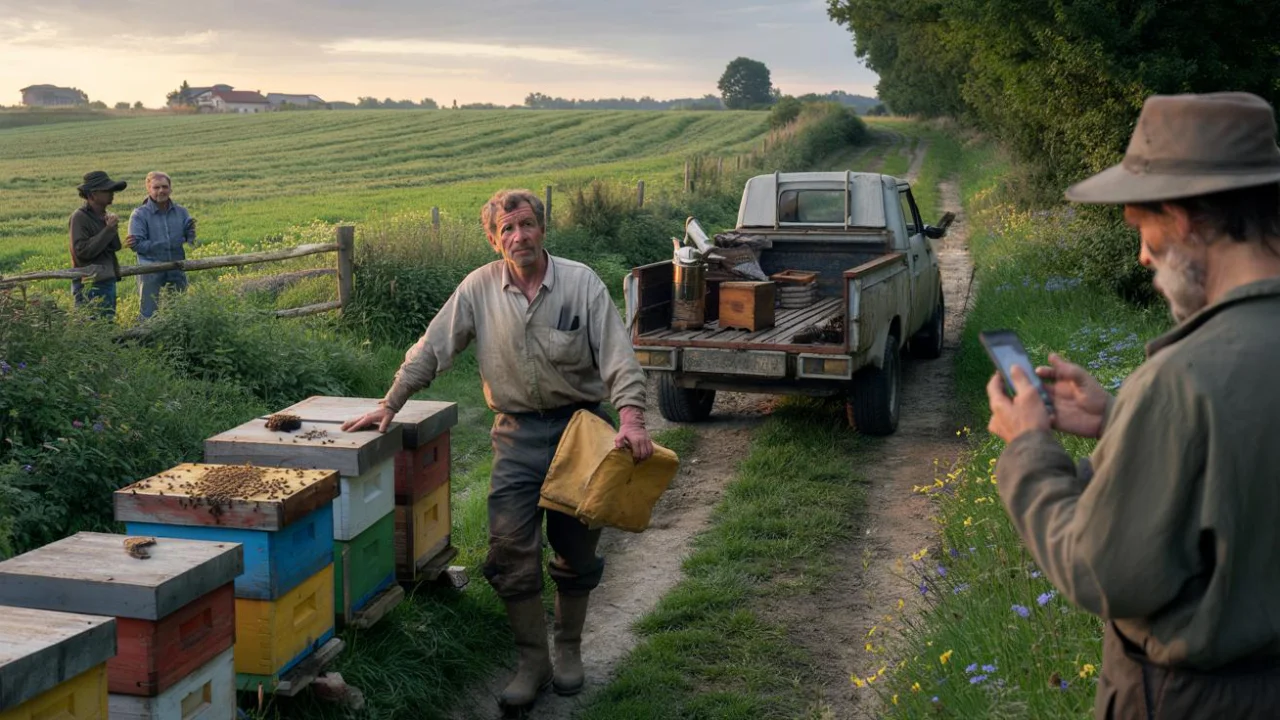
Sarah stared at the brown envelope for twenty minutes before opening it. She’d seen her neighbor Paul get the same kind of letter three weeks ago, and watched him pace his kitchen afterward like a caged animal. Now it was her turn. Inside, the council’s assessment felt like a slap: her little patch of meadow where she kept three hives was suddenly worth triple what she’d paid for it. The farm tax bill made her stomach drop.
She’d never sold a single jar of honey. Every drop went to friends, family, or anyone who’d helped with the hives. But apparently, that didn’t matter anymore.
This is the reality hitting beekeepers across rural communities where helping bees has become an expensive hobby that local authorities now see as a business opportunity.
When Good Intentions Meet Government Revenue
Paul Henderson has been tending his slice of countryside for over a decade. What started as abandoned pasture is now a thriving ecosystem of native plants, wildflowers, and dozens of bee colonies. He doesn’t harvest honey for profit – it all gets given away to neighbors or used for his own family.
The land transformation happened gradually. Native hedgerows replaced broken fencing. Clover and thistle grew where soil had been compacted and bare. Wild carrot and meadowsweet created natural corridors for insects.
“I thought I was doing something good for the environment,” Henderson says, standing beside his wooden hives on a crisp morning. “Turns out the council sees it differently.”
The new farm tax assessment arrived without warning. The council’s logic was straightforward: managed land that produces something valuable counts as agricultural activity. Whether Henderson profits or not doesn’t change their classification.
His annual tax bill jumped from £800 to £3,400 overnight. For someone who’s never earned a penny from his bees, it’s financially crushing.
The Numbers Behind the Backlash
Henderson’s case isn’t isolated. Local tax offices across the country are reassessing land used by hobby beekeepers, often with dramatic results:
| Activity Type | Previous Tax Rate | New Tax Rate | Average Increase |
|---|---|---|---|
| Hobby beekeeping | £12-15 per acre | £45-60 per acre | 300-400% |
| Wildlife meadows | £8-12 per acre | £35-50 per acre | 350-400% |
| Community gardens | £10-18 per acre | £40-55 per acre | 300-350% |
The increases affect different types of land management:
- Beekeeping operations, regardless of profit status
- Wildflower meadows maintained for wildlife
- Community growing spaces
- Conservation grazing projects
- Restored wetlands and pond systems
Agricultural economist Dr. Margaret Thornley explains the shift: “Councils are under enormous budget pressure. They’re looking at land that’s clearly being managed and improved, asking why it should get residential tax rates when it’s functioning as agricultural space.”
The new assessments typically consider several factors: land improvement activities, presence of agricultural structures like hives or sheds, regular maintenance schedules, and any output or production, even if given away freely.
Community Split Over Fairness
The policy change has divided rural communities. Some see hobby beekeepers as tax dodgers hiding behind environmental good intentions. Others view them as essential allies in supporting declining pollinator populations.
“These people are getting agricultural benefits without agricultural costs,” argues local farmer David Brennan. “If you’re managing land and it’s producing value, you should pay agricultural rates. Simple as that.”
Brennan points out that commercial farmers face extensive regulations, paperwork, and tax obligations that hobby operations avoid. He sees the new assessments as leveling the playing field.
But beekeeper advocacy groups disagree strongly. Emma Richardson from the Regional Beekeepers Association calls the farm tax increases “counterproductive environmental policy.”
“We’re talking about people who spend their own money and time supporting biodiversity,” Richardson says. “Punishing them with massive tax bills will just force them to give up. Then we all lose the environmental benefits.”
The debate reflects broader tensions about rural land use. Traditional farmers often struggle with profitability while dealing with complex regulations. Meanwhile, newcomers with environmental goals but no commercial pressure can seem like they’re getting unfair advantages.
Real Consequences for Bee Conservation
The financial impact goes beyond individual beekeepers. Environmental groups worry the tax changes could reverse years of progress in pollinator conservation.
Many hobby beekeepers are already considering selling their land or abandoning their hives. Henderson estimates that in his area alone, twelve beekeeping operations might close due to the new farm tax assessments.
Each operation typically supports 20-50 colonies. The loss could mean thousands fewer bee colonies in the region, along with the wildflower meadows and hedge plantings that support them.
“We’re pricing out exactly the kind of small-scale conservation work that makes a real difference,” warns Dr. James Crawford, who studies pollinator populations at the local university. “These aren’t big operations, but collectively they create vital habitat networks.”
The timing seems particularly unfortunate. Recent studies show wild bee populations stabilizing in areas with high densities of managed hives and diverse flowering plants – exactly what hobby beekeepers provide.
Some councils are reconsidering their approach after seeing the backlash. A few have introduced exemptions for operations that can prove no commercial activity. But the process requires extensive documentation and legal costs that many hobby beekeepers can’t afford.
For now, people like Henderson face an impossible choice: pay taxes they can’t afford on income they don’t receive, or abandon conservation projects that took years to establish.
The brown envelopes keep arriving. And each one represents not just a financial burden, but a potential loss for the countryside’s struggling ecosystems.
FAQs
Why are hobby beekeepers suddenly facing higher farm tax bills?
Councils are reclassifying managed land as agricultural, regardless of whether owners profit from it. They argue that improved, productive land should pay agricultural tax rates.
Does giving honey away instead of selling it make a difference?
Not according to most tax assessments. Councils focus on land management and production activities rather than commercial sales when determining tax rates.
How much are the tax increases?
Most hobby beekeepers are seeing increases of 300-400%, with annual bills jumping from hundreds to thousands of pounds depending on land size.
Can beekeepers appeal these new assessments?
Yes, but appeals require documentation proving no commercial activity and often involve legal costs that exceed what many hobby operations can afford.
Are commercial farmers supporting these changes?
Many are, arguing that people managing productive land should face the same tax obligations and regulations as traditional agricultural operations.
What happens if hobby beekeepers can’t pay the new farm tax bills?
Many are being forced to sell their land or abandon their hives, potentially reversing years of conservation work that supports pollinator populations.


