
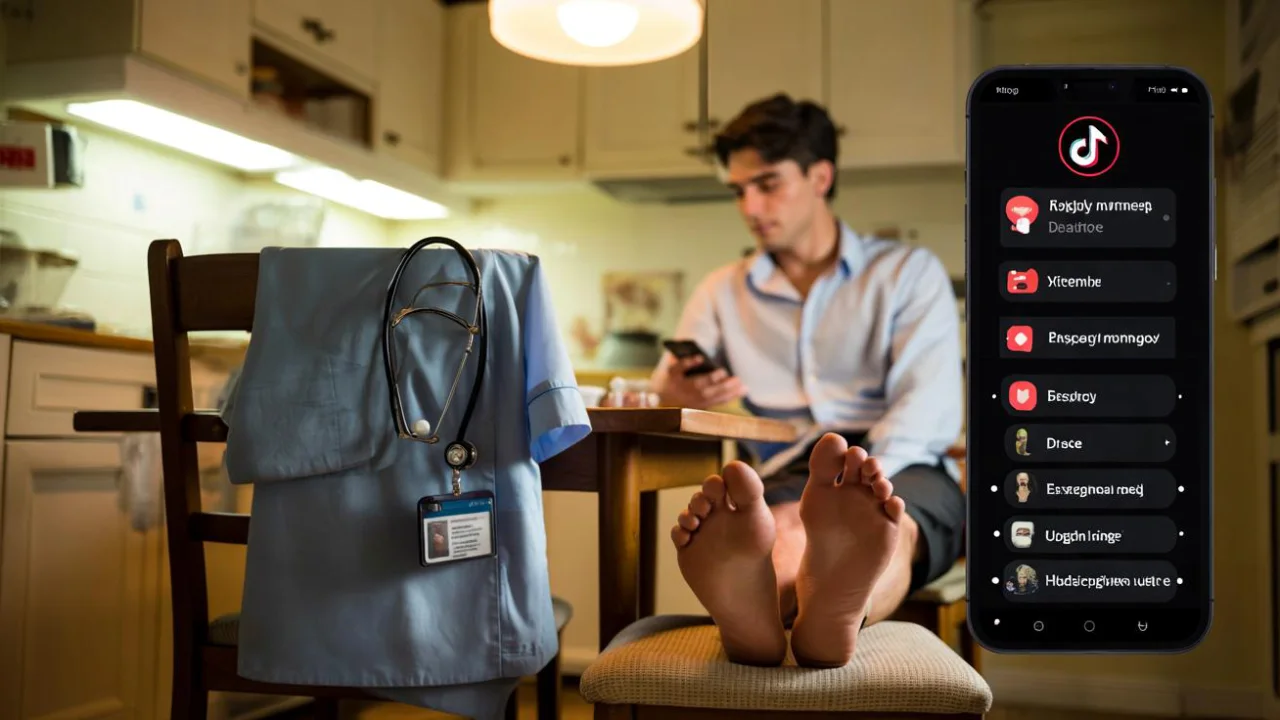
Sarah stares at her phone screen, watching her 22-year-old son count hundred-dollar bills like he’s dealing cards. The video has 2.3 million views. In the background, you can see her nursing uniform draped over a chair – the same uniform she’s worn through twelve-hour shifts for the past fifteen years. Her son made more money this month selling photos of his feet than she earned all year saving lives.
The comment section is brutal. “Your mom wasted her life,” one user writes. “Feet pics > healthcare,” says another. Sarah closes the app and goes back to preparing for her night shift. The irony isn’t lost on her – she’ll spend tonight on her feet so her son can profit from his.
This isn’t just one family’s story anymore. It’s becoming the new reality for thousands of families across the globe.
The Rise of Foot Photo Commerce
What started as a niche fetish market has exploded into mainstream social media commerce. Young TikTok creators are discovering they can earn thousands of dollars monthly by feet selling photos to anonymous buyers on various platforms.
The process is surprisingly simple. Creators post innocent foot-related content on TikTok – maybe painting their nails or showing off new shoes. Then the direct messages start flowing. “How much for custom pics?” “Do you have a paid platform?” What begins as curiosity quickly transforms into a profitable business model.
One UK-based creator recently revealed he earned £5,500 (approximately $7,000) in a single month from foot content alone. His mother, working as a registered nurse in the NHS, makes roughly £28,000 annually – meaning her son’s monthly foot photo income nearly matches her quarterly salary.
“It’s just easy money,” he told his followers with a casual shrug. But behind that nonchalant attitude lies a family struggling to understand how the world suddenly flipped upside down.
The Numbers That Don’t Add Up
The financial disparity between essential workers and content creators has reached staggering proportions. Here’s how the earnings compare across different scenarios:
| Profession/Activity | Average Monthly Income | Annual Income |
|---|---|---|
| Registered Nurse (US) | $6,200 | $75,000 |
| Nursing Assistant | $2,800 | $34,000 |
| Top Foot Content Creator | $15,000+ | $180,000+ |
| Average Foot Content Creator | $3,500 | $42,000 |
The market demand for feet selling photos has created an entirely new economy. Popular creators report earning between $2,000 to $15,000 monthly, with some top earners claiming six-figure annual incomes.
Key factors driving this market include:
- Low barrier to entry – anyone with a phone can start
- Anonymous transactions protect buyer privacy
- Social media algorithms promote this content
- Economic pressures push young people toward quick income
- Normalized discussion of alternative income streams
“We’re seeing a complete shift in how young people view traditional career paths,” explains digital economy researcher Dr. Maria Rodriguez. “Why spend four years in nursing school when you can potentially earn more in a month selling photos?”
When Family Values Meet Internet Reality
The emotional toll on families extends far beyond dinner table conversations. Parents who dedicated their lives to service professions now watch their children earn more money in weeks than they make in months.
Take Jennifer, a 45-year-old emergency room nurse from Ohio. Her 19-year-old daughter started feet selling photos after seeing TikTok success stories. Within three months, the daughter’s income surpassed Jennifer’s nursing salary.
“I’m proud she’s financially independent,” Jennifer says carefully. “But I wonder what message we’re sending about the value of helping people versus… this.”
The psychological impact varies across family members:
- Parents: Feel devalued and question their career choices
- Siblings: Experience jealousy mixed with embarrassment
- Creators: Face family judgment despite financial success
- Extended family: Struggle with changing social norms
Social worker Lisa Chen has counseled several families dealing with this exact situation. “Parents feel like their life’s work has been diminished,” she notes. “Meanwhile, their kids are just responding to market opportunities. Both perspectives are valid, which makes it harder to resolve.”
The generational divide becomes particularly stark when considering long-term consequences. Healthcare workers have job security, benefits, and retirement plans. Content creators face algorithm changes, market saturation, and uncertain futures.
The Broader Cultural Shift
This phenomenon reflects deeper changes in how society values different types of work. Traditional “noble” professions – teaching, nursing, social work – are being economically outpaced by digital entrepreneurship.
The implications extend beyond individual families:
- Healthcare systems struggle with recruitment as young people pursue more lucrative online opportunities
- Parents question whether encouraging children toward service careers is fair
- Educational institutions grapple with students abandoning traditional programs
- Society debates what work deserves financial reward
“We’re witnessing a fundamental shift in the relationship between effort, skill, and compensation,” observes economist Dr. Robert Kim. “The internet has created markets that completely bypass traditional value systems.”
Some creators acknowledge the complexity. One TikToker who earns $8,000 monthly from foot content recently posted about his mother’s reaction to his income. “She’s happy I’m not struggling financially,” he shared. “But I can see it hurts her that twelve years of nursing school and experience can’t compete with my phone camera.”
The comment responses revealed the cultural divide. Younger viewers celebrated his success and criticized outdated career expectations. Older commenters expressed concern about societal priorities and long-term consequences.
Yet underneath the viral videos and shocking income comparisons, real families are navigating uncharted territory. They’re trying to balance financial pragmatism with personal values, individual success with family harmony, and present opportunities with future stability.
The nurse’s badge still hangs on that kitchen chair. But now it represents more than just a profession – it symbolizes a generation trying to understand how the world changed so quickly, and whether easy money is worth the complicated emotions it brings to family dinner tables.
FAQs
How much can someone actually earn selling feet photos?
Earnings vary widely, from a few hundred dollars monthly for casual sellers to $15,000+ for top creators, with most averaging $2,000-5,000 per month.
Is selling feet photos legal?
Yes, selling feet photos is legal as long as creators are adults and follow platform terms of service and tax requirements.
Why do people buy feet photos when free content exists online?
Buyers often seek personalized, custom content and direct interaction with creators, which free content doesn’t provide.
How are families coping with these income disparities?
Families are using open communication, family counseling, and focusing on long-term financial planning to navigate these challenges.
Could this trend impact healthcare staffing?
Some healthcare systems are concerned about recruitment challenges as young people pursue more lucrative online opportunities instead of traditional careers.
What are the long-term risks of relying on content creation income?
Risks include algorithm changes, market saturation, lack of benefits, and no guaranteed income stability compared to traditional employment.


