
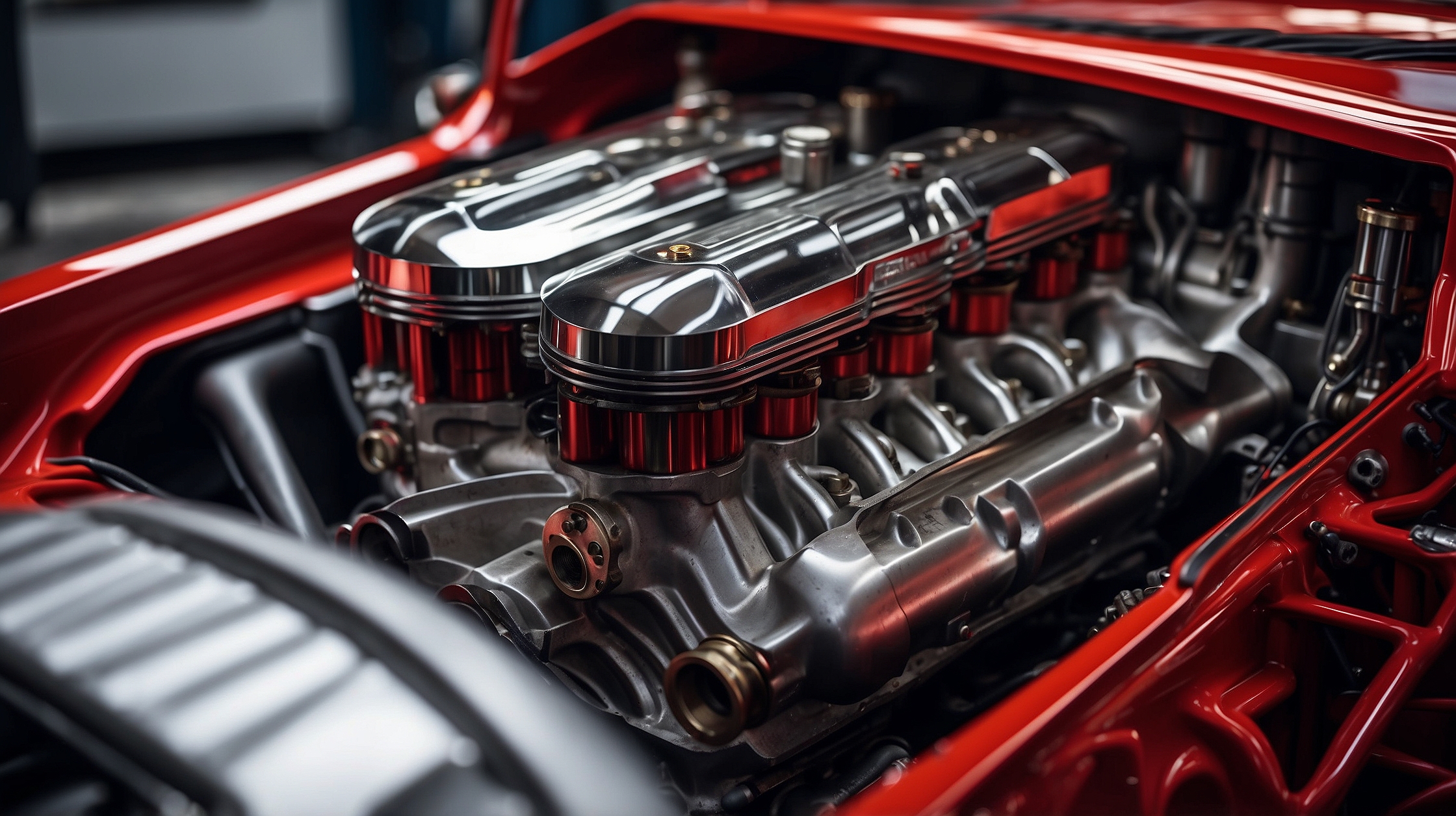
Ferrari, a brand emblematic of Italian automotive excellence, is rewriting the rules of internal combustion with a radical new development: the **oblong piston engine**. Unlike anything the automotive industry has seen before in a production-ready sports car, this initiative represents a seismic shift in engine design that could redefine what it means to drive a high-performance vehicle. Not only does this groundbreaking invention promise a notable **boost in power and efficiency**, it also offers a glimpse into the future of sustainable motoring without compromising on Ferrari’s racing DNA.
The iconic marque has long been synonymous with V12s and V8s that scream across racing circuits and winding mountain roads. Yet, as environmental regulations tighten and electrification gains ground, Ferrari is carving a third path: radically updating the internal combustion engine itself. The oblong piston concept, according to early specifications and simulations, could lead to engines that are lighter, more powerful, and significantly more efficient than their conventional counterparts. This opens opportunities not only in racing, where every gram and kilowatt counts, but also in consumer vehicles eager for novelty and performance.
What makes Ferrari’s oblong piston engine different?
| Feature | Oblong Piston Engine |
| Piston Shape | Oblong/Elliptical |
| Thermal Efficiency | Potential increase of up to 15% |
| Power Output | Estimated 8–12% increase |
| Weight Distribution | More balanced due to reduced component mass |
| Performance Application | High-performance sports cars, F1-inspired road models |
| Technology Maturity | Prototype development phase |
Reengineering the piston: Why oval wins over round
The heart of Ferrari’s new architecture lies in the **geometry of the piston**. Traditional engines have relied on circular pistons largely due to machining simplicity and component harmonization dating back over a century. However, Ferrari’s engineers found that by reshaping the piston into an oblong or oval form, they could significantly alter combustion characteristics in their favor. This revised shape allows a better surface-to-volume ratio in the combustion chamber, leading to more complete fuel burns.
Furthermore, the oblong pistons provide a **larger surface area at top dead center**, aiding in increased force application without increasing the engine bore unduly. This opens the door to slimmer, lighter engine blocks, lower internal friction, and higher RPM ceilings — all of which echo strongly in the high-performance environment.
Engineering benefits and performance potential
The experimental engines currently fitted with oblong pistons have returned extremely promising results in test benches. Ferrari’s simulations suggest up to a **15% increase in thermal efficiency**, alongside as much as a **12% boost in horsepower** from similarly sized conventional engines. Coupled with advanced variable valve timing, electronically controlled oil flow, and hybrid compatibility, this new powerplant could become Ferrari’s standard going forward — especially as weight efficiency becomes critical in high-performance hybrid platforms.
Analysts also point out the **structural benefits** of an oblong piston. Reduced piston slap — the undesired lateral motion that causes wear and noise — is easier to manage due to the elongated guide paths. Moreover, the unique shape helps optimize air-fuel swirl in the chamber, contributing to cleaner emissions and lowered knock potential.
We’re not just evolving the internal combustion engine—this could redefine it. The oblong piston is more compact, more power-dense, and infinitely more exciting than anything in a traditional format.
— [Placeholder], Ferrari Powertrain Engineering Lead
Why this innovation could matter far beyond racing
While it’s tempting to assume this innovation only benefits elite-level racing or ultra-expensive supercars, the ripples could reach far wider. Should Ferrari license or share the technology across the Stellantis group, the applications could enter **performance sedans, sports crossovers, and luxury vehicles**. Furthermore, even mainstream automakers will be watching with interest; any technology that boosts power while downsizing displacement could be vital in an emissions-restricted world.
Moreover, the geometry-centric approach doesn’t require an overhaul of the entire engine system — **key components like the cylinder head, fuel injectors, and crankshafts** may need only moderate adjustments, making future mass adoption more feasible than it may seem today.
Challenges and skeptics
This revolutionary concept isn’t without hurdles. Designing and machining an oblong piston is considerably more complex and expensive than its circular counterpart. Engineers must contend with **increased thermal stresses at non-uniform areas**, potential friction hotspots, and unique challenges in sealing and lubrication. Additionally, new materials and production methods may be required to provide durability equal to — or exceeding — that of current setups.
There’s also skepticism among industry veterans who remember Yamaha’s own experimentation with oval pistons in MotoGP during the 1980s — highly complex engines that were ultimately scrapped for being unviable in production form. However, advances in **CAD simulation, CFD analysis, and metal 3D printing** may give Ferrari an edge that wasn’t available decades ago.
The concept isn’t new — but the tools we have now make it newly viable. If anyone can make it work on road cars, it’s Ferrari.
— [Placeholder], Automotive Engineering Analyst
When to expect it in production
While full release schedules are speculative, internal sources suggest Ferrari aims for a **limited production concept vehicle by late 2025**, potentially as a next-gen V6-based platform. This would allow for validation while granting Ferrari a bold halo project. After proving success, adaptations for V8s and hybrid powertrains could follow within a few years.
Ferrari remains secretive about CAD images and prototype appearances, but insiders whisper that mule cars already outfitted with the new engine design exist and are undergoing durability testing under camouflage. With growing pressure from electrification mandates, Ferrari’s timing for this innovation could be impeccable.
Winners and losers from the oblong piston design
| Winners | Losers |
| Ferrari’s high-performance lineup | Traditional piston manufacturers |
| Performance-focused hybrid systems | Conservative drivetrain OEMs |
| Fans of ICE innovation | Legacy thermodynamic theorists |
| Low-emissions supercar seekers | Low-cost engine producers |
Short FAQs on Ferrari’s oblong piston engine
What is an oblong piston engine?
An oblong piston engine uses elliptical rather than round pistons to improve combustion efficiency, increase power output, and enhance engine performance.
Why is Ferrari developing this technology?
Ferrari is looking to extend the lifespan and relevance of internal combustion engines by innovating their core components while adhering to stricter emissions standards.
How does it boost efficiency?
Oblong pistons improve surface-to-volume ratios, offer better combustion dynamics, and reduce thermal and mechanical losses within the engine.
Will this replace Ferrari’s current V8s or V12s?
Not immediately. Ferrari may start with niche or limited-production models before expanding to broader segments.
Is this a new concept in the automotive world?
No. Oval pistons were previously explored in MotoGP, but Ferrari is reviving and modernizing the idea with new tech capabilities.
When will we see it in a production car?
Ferrari is aiming for concept demonstration by late 2025, with broader production potentially in the years following.
Could it enter mass-market application?
It’s possible, depending on manufacturing feasibility and licensing. For now, it’s likely limited to high-performance sectors.
Does this mean Ferrari will avoid full electrification?
No. Ferrari is also committed to hybrid and EV routes but wants to keep combustion alive with meaningful innovations.


