
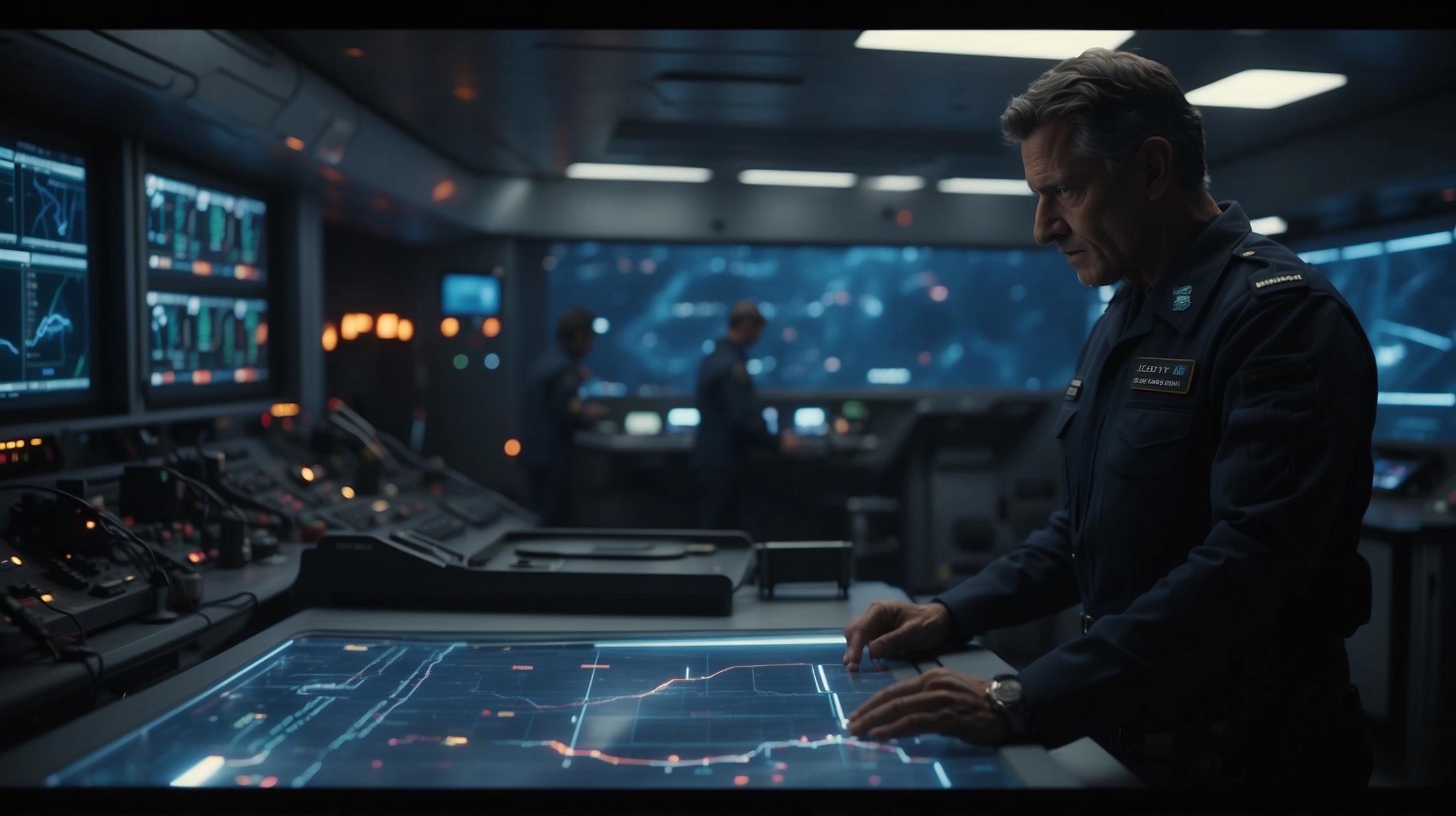
With the global security landscape rapidly evolving, advanced technologies such as Artificial Intelligence (AI) are playing a critical role in reshaping modern warfare. In a striking demonstration of this shift, **France has officially stepped in to support the United Kingdom in the development of AI-enabled mine warfare systems**, marking a pivotal moment for European military cooperation and next-generation defense strategies. This collaboration signals a deeper alignment between two of Europe’s foremost military powers, aimed at countering the emerging threat posed by smart naval mines in contested waters.
This partnership arrives at a significant time, as global maritime domains are increasingly viewed as future flashpoints for geopolitical confrontation. Both France and the UK possess strong naval traditions, but the complexity of identifying and neutralizing modern naval mines—some designed to mimic civilian objects or remain dormant for years—has escalated beyond traditional human and mechanical capabilities. Leveraging AI in mine detection and disposal not only carries the potential to enhance operational safety but also drastically improve efficiency and signal intelligence capabilities in maritime warfare.
Strategic partnership for future-proof defense
| Aspect | Details |
|---|---|
| Countries Involved | France, United Kingdom |
| Project Focus | AI-led mine warfare system development |
| Initiative Type | Bilateral defense cooperation |
| Technology Utilized | Artificial Intelligence, Autonomous Systems, Naval Robotics |
| Main Objective | To enhance mine detection and neutralization using AI and reduce human risk |
| Expected Deployment | Within the next 3–5 years |
| Key Beneficiaries | Naval forces, defense contractors, military AI research units |
Why France’s involvement changes the equation
France’s entry into the co-development of AI-enabled mine countermeasure (MCM) systems is not just about resource sharing. It brings **strategic naval innovation**, decades of mine warfare expertise, and established defense-industrial capabilities into the UK’s unfolding defense modernization agenda. This move streamlines efforts between both nations within frameworks such as the **Lancaster House Treaties**, which formalize defense and security partnerships and collaborative R&D efforts.
The joint program is expected to result in systems that are not only smarter but also capable of being integrated with existing allied fleets without extensive retrofitting. France’s inclusion amplifies the potential for **standardized, interoperable systems** across NATO-aligned forces, thereby serving broader collective security interests in the North Atlantic and beyond.
How AI is reshaping mine warfare
Conventional naval mines are relatively simple to understand but incredibly difficult to defeat. They can be moored, floating, or even buried, posing serious threats to both naval and civilian vessels. AI, however, offers a comprehensive way to revolutionize this paradigm. From **image recognition** of underwater threats to real-time **data fusion** across sonar arrays and autonomous underwater vehicles (AUVs), AI introduces a level of precision and speed previously unachievable.
These AI-powered systems will likely feature **active learning capabilities**, enabling them to evolve based on operational experience. They will be trained on large datasets generated through simulations and actual reconnaissance missions. Combining this with **robotic swarming tactics**, these systems can not only detect but also identify and, if necessary, disarm or neutralize mines without exposing human lives to imminent danger.
We’re looking at a future where dangerous mine detection doesn’t need to risk any sailor’s life. This is a big leap forward.
— Rear Admiral (Ret.) David Knowles, Naval Warfare Analyst
Who benefits the most from this breakthrough project
| Winners | Why |
|---|---|
| United Kingdom | Gains advanced AI capability without bearing full R&D cost |
| France | Strengthens military-industrial footprint and strategic influence |
| NATO | Potential for standardized systems across alliance |
| Civilian shipping | Improved sea lane security and quicker response to emerging threats |
| Losers | Why |
| Adversarial naval forces | Will face more difficulty in mine deployment |
| Legacy systems manufacturers | Traditional mine detection hardware may become obsolete |
The timeline from development to deployment
Though still in development stages, officials from both France and the UK have indicated that **early field trials** could begin within the next 18 to 24 months. Full-scale deployment across fleets is anticipated within **three to five years**, depending on testing outcomes and funding cycles.
The system’s architecture will be **modular and scalable**, allowing it to be retrofitted onto existing platforms or deployed in unmanned modular vehicles. Early iterations are expected to focus on areas with a high risk for mine activity, such as the **Baltic Sea** or strategic chokepoints like the **Gulf of Aden**.
This isn’t just about keeping pace—it’s about setting the pace in undersea warfare.
— Marie-Claire Dusautoy, AI Research Lead, French Ministry of Defence
Security and ethical dimensions of AI-enabled warfare
While the technology is promising, its deployment raises important **ethical and legal concerns**. Autonomous weapons, even in mine warfare, must adhere to international humanitarian laws. Questions around **accountability, targeting errors, and data privacy** need robust standards and governance frameworks.
Officials have consistently stressed the system’s design will prioritize **human supervision at critical decision-making stages**, especially when actual disarmament or destruction is involved. Developing explainable AI algorithms—the kind that offer transparency in action—will also be a major focus moving forward.
A new benchmark for European defense innovation
This AI-enabled mine warfare effort is just one step in an expanding collaboration between Western European military powers. Emphasis on **interoperability and joint defense R&D** is becoming a cornerstone in coping with the complexity of modern hybrid threats—from cyber operations to space-based warfare assets. Experts predict that if this project proves successful, it could become a **template for future AI-augmented warfare programs** involving more countries and different military domains.
We are witnessing the birth of a new standard in naval warfare, one where AI plays a quietly dominant role.
— Professor Julian Hobbs, Department of Security Studies
Frequently asked questions
What is the goal of the UK-France AI mine warfare collaboration?
The primary goal is to jointly develop an AI-enhanced system that can detect, classify, and neutralize naval mines more effectively, reducing risks to human personnel and increasing mission efficiency.
When will the AI mine warfare system be ready?
Field trials are expected within the next 18–24 months, with broader deployment projected within 3–5 years.
What technologies are used in these systems?
The system will integrate AI, machine learning, autonomous underwater vehicles (AUVs), sonar imaging, and data fusion technologies to optimize detection and response capabilities.
How does France benefit from partnering with the UK?
France strengthens its defense innovation credentials, shares R&D costs, and gains potential access to standardized systems usable across multiple NATO fleets.
Could this system be used by other allied nations?
Yes, the long-term vision involves standardizing the system architecture so it can be adopted by other NATO and allied navies.
What are the ethical concerns of AI in mine warfare?
Concerns include ensuring human oversight, preventing misidentification, and maintaining compliance with international law. Explainable AI and ethical frameworks are key focal points in the project.
Will the approach replace human divers entirely?
While it significantly reduces the need for human exposure in minefields, human oversight and intervention will remain integral parts of the system’s operation.
What makes AI better than traditional mine detection methods?
AI can process vast datasets quickly, recognize patterns, learn from experience, and make real-time decisions with greater accuracy than traditional tools operated solely by humans.


