
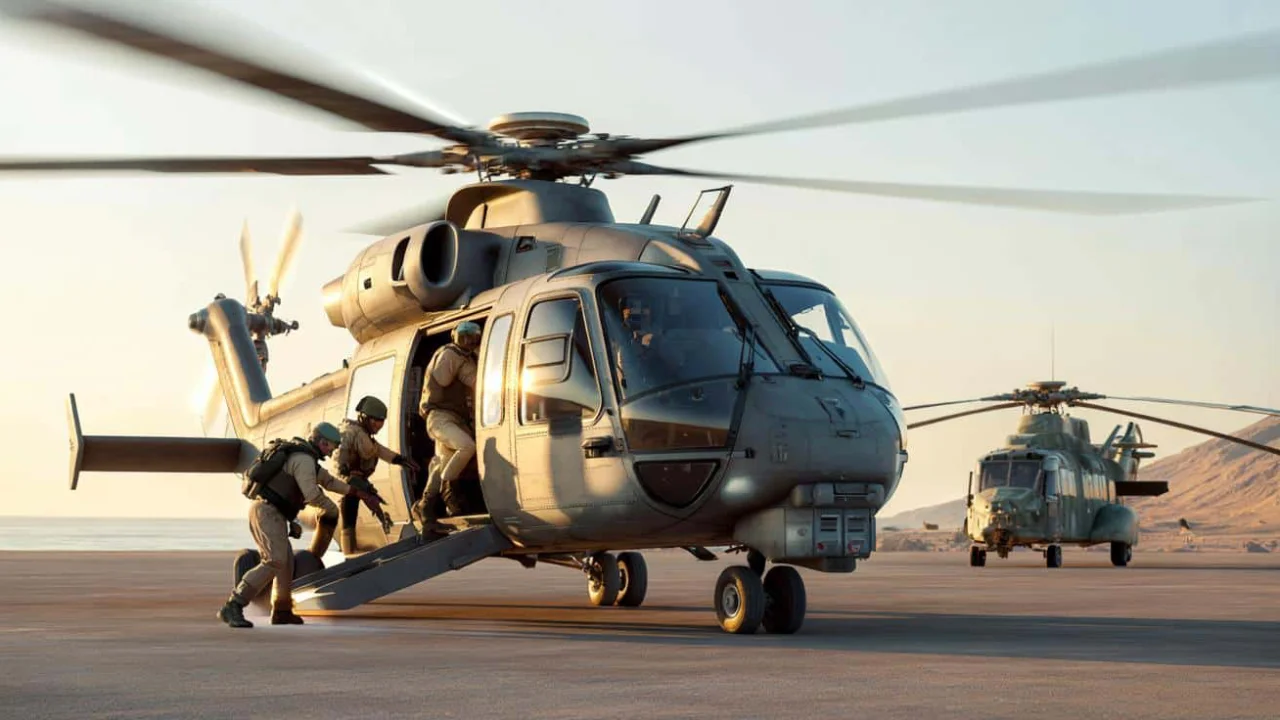
Captain Marie Dubois still remembers the sound. For fifteen years, she’d wake up to the distinctive thrum of Puma helicopters lifting off from Camp Lemonnier in Djibouti. The familiar whoosh-whoosh-whoosh meant another day of missions across the Horn of Africa, from evacuating civilians in crisis zones to supporting peacekeeping operations.
Last month, that sound changed forever. The old Pumas have been replaced by something entirely different – the NH90 Caïman, a technological marvel that represents far more than just a helicopter upgrade. It’s a symbol of France’s dramatic shift in how it projects military power across Africa.
“It’s like trading your grandfather’s reliable truck for a Formula One car,” Dubois explains. “Same job, completely different league.”
Why France is Betting Big on High-Tech Military Power
French military modernization in Africa isn’t happening in a vacuum. As China builds ports and the United States expands its drone operations, France faces a simple reality: its traditional approach to African military presence needs a serious upgrade.
The NH90 Caïman helicopters now stationed in Djibouti pack capabilities that would have seemed like science fiction just a decade ago. These machines can operate in extreme weather, carry advanced surveillance equipment, and coordinate with satellite networks in real-time.
“We’re not just replacing old helicopters,” says a senior French defense official. “We’re fundamentally changing how we respond to crises and support our allies in one of the world’s most strategically important regions.”
The timing matters. Djibouti sits at the mouth of the Red Sea, where roughly 30% of global container traffic passes through. When Houthi rebels started attacking commercial ships in 2023, this tiny African nation became the staging ground for international naval operations.
What Makes These Sky Monsters So Special
The NH90 Caïman isn’t your typical military helicopter. Here’s what sets it apart from the aging Pumas it replaced:
- Advanced avionics: Digital flight controls and navigation systems that work even when GPS signals are jammed
- Multi-role capability: Can switch between troop transport, medical evacuation, and combat support within hours
- Extended range: Nearly double the operational radius of older helicopters
- All-weather operations: Certified for flying in conditions that would ground previous-generation aircraft
- Network connectivity: Real-time data sharing with ground forces and naval vessels
| Capability | Old Puma | NH90 Caïman |
| Maximum range | 580 km | 800+ km |
| Troop capacity | 16 soldiers | 20 soldiers |
| Digital systems | Basic | Fully integrated |
| Night operations | Limited | Full capability |
The deployment timeline shows just how seriously France takes this modernization effort. Two NH90s arrived in May 2025, transported aboard massive Antonov cargo planes. Two more will follow by August, creating a small but incredibly capable fleet.
“These helicopters can do things that seemed impossible with our old equipment,” notes a French army pilot who requested anonymity. “The difference in situational awareness alone is like night and day.”
The Bigger Picture: Africa’s Military Technology Race
France’s helicopter upgrade in Djibouti reflects a broader transformation happening across African military partnerships. China has been investing heavily in African infrastructure and security cooperation. The United States maintains drone bases and special operations facilities. Even Japan has established a presence in Djibouti.
This creates a fascinating dynamic. Countries that once relied primarily on French military expertise now have multiple options for security partnerships. France’s response has been to offer something different: cutting-edge technology combined with decades of regional experience.
The 2024 defense agreement between France and Djibouti, valid for twenty years, provides the framework for this modernized approach. Unlike older colonial-era arrangements, this treaty emphasizes mutual benefit and technological cooperation.
“We’re not trying to maintain old-style influence,” explains a French diplomatic source. “We’re offering genuine partnership based on shared security interests and advanced capabilities.”
What This Means for Regional Security
The practical implications of French military modernization in Africa extend far beyond impressive helicopter specifications. These new capabilities could reshape how international forces respond to everything from piracy to humanitarian crises.
Consider recent operations in the Red Sea. When commercial ships came under attack, response times often determined whether vessels could be saved or not. The NH90’s extended range and advanced sensors mean French forces can now cover larger areas more effectively.
For African partners, this modernization offers tangible benefits. Enhanced medical evacuation capabilities mean better survival rates for both military personnel and civilians. Improved surveillance systems help with everything from anti-poaching efforts to border security.
“Technology is becoming the great equalizer in African security challenges,” observes a regional security analyst. “Countries that can access and effectively use advanced military technology have significant advantages in addressing both traditional and emerging threats.”
The ripple effects are already visible. Other French bases across Africa are reportedly scheduled for similar equipment upgrades. This suggests that the NH90 deployment in Djibouti is just the beginning of a continent-wide modernization effort.
Challenges and Opportunities Ahead
Of course, high-tech military equipment comes with high-tech challenges. Maintaining NH90 helicopters in Africa’s harsh conditions requires specialized training and supply chains that didn’t exist for simpler aircraft.
French military engineers are working closely with local technicians to build maintenance capabilities. The goal is to reduce dependence on European-based support while ensuring these sophisticated machines remain operational in demanding environments.
The human element remains crucial. “You can have the most advanced helicopter in the world, but it’s only as good as the people operating it,” notes a veteran French officer. “That’s why we’re investing heavily in training programs for both French and partner nation personnel.”
Looking ahead, this technological leap could influence how other European nations approach their own African military partnerships. If France demonstrates that high-tech solutions can be successfully deployed and maintained in challenging African environments, it may encourage broader adoption of similar approaches.
FAQs
What exactly is the NH90 Caïman helicopter?
The NH90 Caïman is a modern multi-role military helicopter designed for troop transport, medical evacuation, and combat support operations. It features advanced digital systems and can operate in extreme weather conditions.
Why did France replace the Puma helicopters?
The Puma helicopters had served for over 30 years and lacked modern digital capabilities needed for contemporary military operations. The NH90 offers significantly better range, capacity, and technological integration.
How many NH90 helicopters will be stationed in Djibouti?
France plans to deploy four NH90 Caïman helicopters to Djibouti by August 2025, with the first two already delivered in May 2025.
Will this modernization affect other French military bases in Africa?
While specific details haven’t been announced, reports suggest similar equipment upgrades are planned for other French military installations across Africa as part of a broader modernization effort.
What does this mean for Djibouti’s security situation?
The advanced helicopters provide enhanced capabilities for responding to regional crises, supporting anti-piracy operations, and conducting humanitarian missions throughout the Horn of Africa region.
How does this compare to other countries’ military presence in Djibouti?
France joins the United States, China, and Japan in maintaining significant military facilities in Djibouti, but the NH90 deployment represents one of the most technologically advanced helicopter capabilities currently stationed there.


