
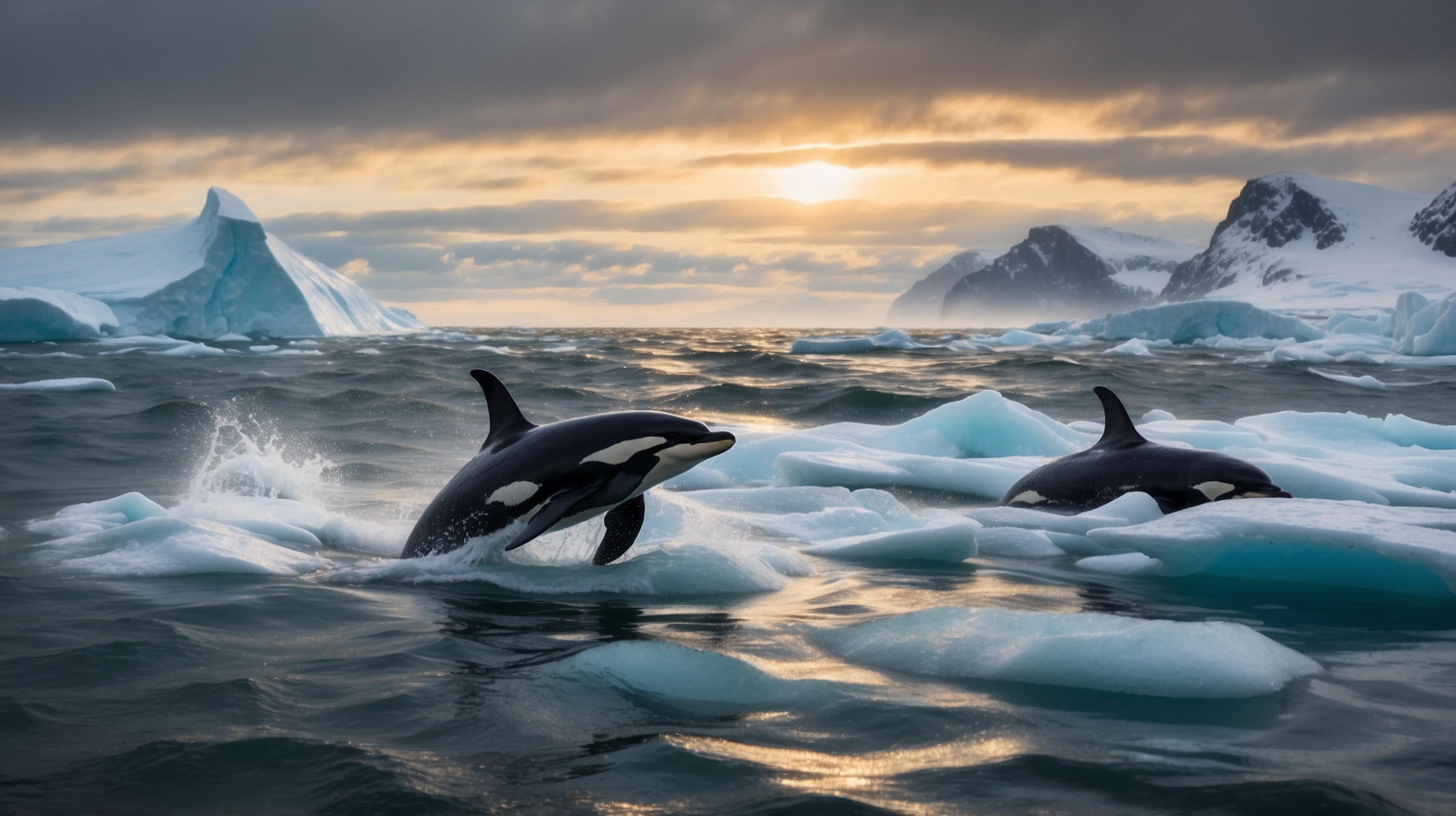
In a stark reminder of the intensifying impact of climate change, Greenland has declared a state of emergency after a group of researchers documented orcas, or killer whales, breaching near melting ice shelves along its southeastern coast. This unprecedented sighting, captured just miles from retreating glaciers, signals deepening ecological disturbances in one of the planet’s most climate-sensitive regions. The presence of orcas—typically not found in these waters this early in the season—is just one alarming sign of rapid warming and shifting marine ecosystems in the Arctic.
Greenland, long known as one of Earth’s most formidable icy frontiers, now finds itself at the forefront of Earth’s climate crisis. As its towering glaciers recede and sea ice breaks apart earlier each year, ocean temperatures in the Arctic rise at unsustainable rates. The sighting of orcas, apex predators unaccustomed to traversing confined icy fjords, underscores how both marine life and human communities must adapt quickly to unpredictable environmental changes.
Overview of the Greenland Climate Emergency
| Location | East and Southeast Greenland |
| Trigger Event | Sighting of orcas near retreating ice shelves |
| Emergency Declared By | Greenlandic environmental authorities |
| Key Concern | Accelerated ice melt; marine ecosystem disruption |
| Immediate Impact | Monitoring protocol escalated, glaciological studies intensified |
| Long-Term Risk | Sea level rise; ecological imbalance; Arctic food chain shifts |
Why orca sightings here are a red flag
Orcas, while technically global in distribution, rarely travel into Arctic fjords buffered by thick, glacially-fed sea ice. Their presence near glacial fronts in southeast Greenland suggests a rapid dismantling of seasonal ice barriers that previously kept the predators at bay. Experts point out that orcas typically follow prey such as seals and whales—but as ice coverage diminishes and warmer waters spread further north, their range is expanding into previously inaccessible ecosystems.
“We were stunned to see orcas this close to the glacial shelf this early in the season,” remarked lead marine biologist Dr. Signe Olafsson, who observed the pod from a research vessel near the Helheim Glacier. “It’s a troubling indicator of how the marine food web and the physical landscape are both shifting simultaneously.”
What changed this year
2024 saw the earliest onset of ice-shelf breakage along Greenland’s southeastern coast in recorded history, according to climate monitoring stations. Data from early May highlights a 40% reduction in seasonal ice formation compared to the 1980s. Oceanographers have linked this accelerated melt pattern to an influx of warmer Atlantic water into the Greenland Sea, a trend strengthened by changing currents and erratic wind conditions driven by the warming planet.
This warming is accompanied by a higher frequency of temperature extremes and an alarming rate of ice disintegration, observable via satellite. For the first time, certain glacier fronts experienced structural calving before the summer solstice, an occurrence once thought to be impossible so early in the melt season.
The role of orcas as ecosystem indicators
Orcas are often considered sentinel species—indicators of broader marine health. Their arrival into the icy landscapes of southeast Greenland may suggest drastic changes not only in predator-prey dynamics but in the entire Arctic marine biosphere. Local fisheries, already grappling with unpredictable stock availability, now must contend with a top predator that can upend balance and accessibility in key fishing zones.
“Orcas entering these waters is a warning bell. They’re following fish stocks and seals that are adapting to warmer ecosystems. Everything is moving northward—vulnerabilities included.”
— Lars Egedius, Marine Ecologist
How glacier melt connects to global sea level rise
The ice shelves of southeast Greenland—particularly Helheim, Kangerdlugssuaq, and Sermilik—are some of the fastest-moving glaciers in the world. When they disintegrate and calve into open water, the ice contributes directly to rising ocean levels. Scientists warn that the mass reduction from this region alone could raise global sea levels by several inches over coming decades, putting low-altitude cities around the world at risk of chronic flooding.
More alarming, these glaciers act as natural floodgates to the broader Greenland Ice Sheet. If their structural integrity continues to decline, the region risks triggering a chain reaction of accelerated inland ice loss that would substantially amplify global sea level contributions.
Winners and losers in the changing Arctic
| Winners | Losers |
|---|---|
| Orcas, able to access new hunting grounds | Seals and Arctic Char, whose habitats are shrinking |
| Commercial shipping routes opening through melted waters | Traditional Inuit food systems reliant on ice stability |
| Non-indigenous fish species migrating into warming Arctic | Endemic cold-adapted species dying off in warm currents |
| Climate research institutions receiving emergency grants | Local Greenlandic communities at risk of relocation |
Scientific response and new protocols
In response to the emergency, the Greenlandic Parliament has convened a cross-disciplinary environmental task force. Drones and remote sensors have been rapidly deployed to monitor glacier speeds, wildlife migration patterns, and ecosystem collapse risk. The government has also appealed for international cooperation to share satellite imaging and oceanic temperature forecasts beyond regional networks.
Global climate experts are urging unified Arctic-wide cooperation in research, conservation, and emergency adaptation. The orca sighting is being treated as a milestone event in the ongoing catalog of climate warnings emerging from polar regions.
“What you’re seeing isn’t isolated to Greenland. These are systemic climate events—the canary in the coal mine has started singing loudly.”
— Dr. Karen Yu, Polar Climate Scientist
Preparing for broader consequences
For Greenland, this emergency represents more than a moment of environmental distress—it’s a preview of what the next decade may hold. Coastal communities may need to relocate, key infrastructure faces deterioration from thawed permafrost, and traditional ways of life, including seasonal hunting, could become impossible.
The Greenlandic emergency declaration is also prompting urgent conversations about impacts beyond the Arctic. Destabilized weather patterns, erratic sea currents, and rising sea levels could lead to ripple effects that disrupt agriculture, fishing economies, and global migration patterns worldwide.
Short FAQs about the Greenland emergency
Why were orcas near melting ice shelves cause for alarm?
Their presence signals that Arctic marine ecosystems are warming and restructuring faster than predicted, allowing predators to move into formerly inaccessible icy waters.
What areas of Greenland are most affected?
The southeastern coastal regions, particularly around Helheim Glacier, have experienced early, rapid ice loss and marine ecosystem disruptions in 2024.
How does glacier melt in Greenland affect the world?
As glaciers melt, they contribute to global sea level rise, putting hundreds of millions of people in coastal cities at heightened flood risk.
Are orcas harmful to Arctic ecosystems?
Orcas are natural predators, but sudden arrival in fragile Arctic ecosystems can disrupt balance by amplifying stress on species already struggling with changing conditions.
What is being done in response to this emergency?
Greenlandic officials have increased monitoring, escalated research funding, and called for international collaboration on climate adaptation strategies.
Could events like this become more common?
Yes. Experts warn that without rapid action to curb emissions, similar climate disruption events may soon become seasonal or even routine in polar environments.
What can international communities do to help?
Support scientific research, adopt stronger climate policies, reduce carbon emissions, and contribute to global conservation efforts in the Arctic.
Is tourism to Greenland affected?
While tourism continues, certain expeditions and tours may face new restrictions or rerouting due to rapidly changing ice conditions and wildlife behavior.


