
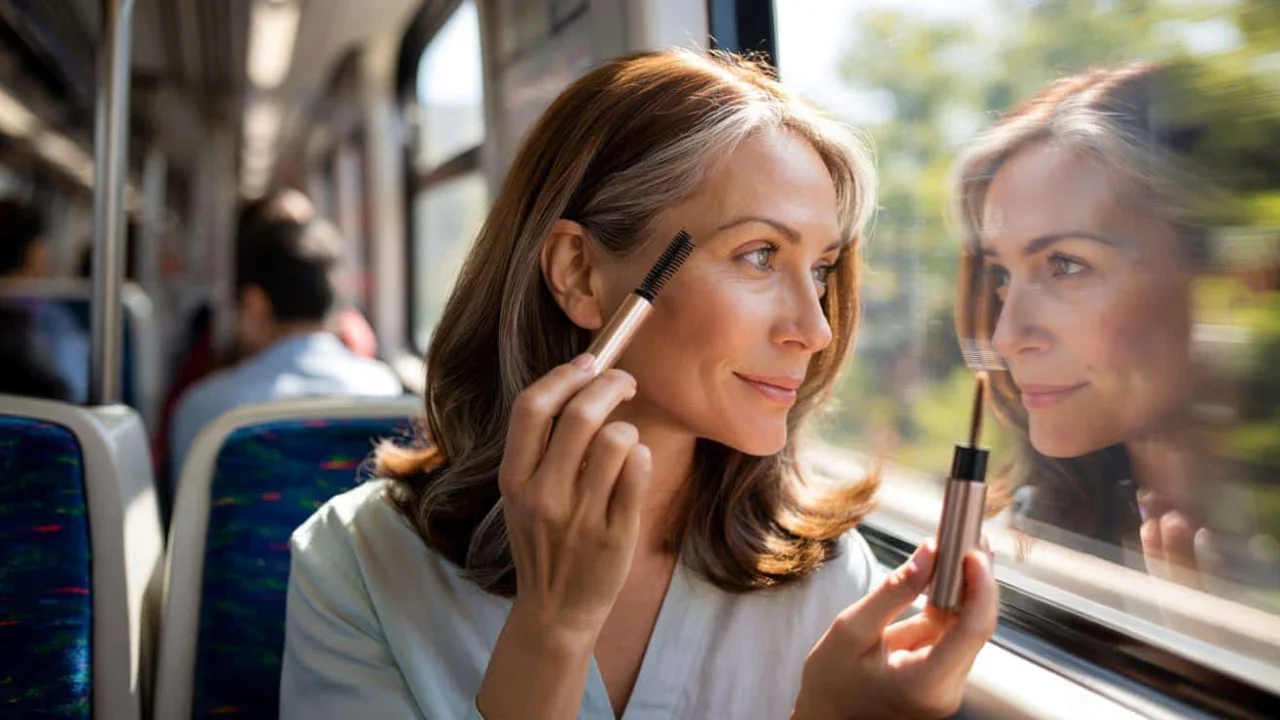
Sarah stared at her reflection in the hotel bathroom mirror, panic creeping in. Her important client presentation was in two hours, and there it was – a silver streak along her hairline that seemed to have appeared overnight. No time for a salon visit, no box dye in sight. Then she remembered the small pen-like tube her sister had given her weeks ago.
She uncapped it, brushed the plant-based formula along the grey line, and watched as it transformed into a natural-looking brown that matched her hair perfectly. Fifteen seconds later, she was ready to face the boardroom with confidence restored.
Sarah isn’t alone. Millions of people are quietly revolutionizing their approach to grey hair coverage, abandoning the traditional dye cycle for something far more flexible and gentle.
The quiet revolution happening in our bathrooms
For decades, covering grey hair meant commitment. You booked that salon appointment, endured the chemical smell, sat for hours under processing heat, and walked out with perfectly colored hair – for about two weeks. Then the dreaded root line appeared, and the cycle began again.
“Traditional hair dye is like signing a contract with your calendar,” explains colorist Maria Rodriguez from Beverly Hills. “My clients used to live their lives around their touch-up appointments. Now they’re discovering freedom.”
The shift is dramatic. Recent consumer surveys show that 42% of women over 35 are actively seeking alternatives to permanent hair color. The reasons vary: scalp sensitivity, concern about chemicals, cost fatigue, or simply wanting more control over their appearance.
What’s emerging instead is a completely different approach to grey hair coverage. Instead of harsh chemicals that penetrate the hair shaft, these new products work on the surface, creating natural-looking coverage that washes out gradually over several shampoos.
Understanding the new grey coverage options
The market has exploded with innovative solutions that work differently from traditional dyes. Here’s what’s actually available:
- Hair mascara wands: Temporary coverage that applies like makeup mascara
- Root touch-up sticks: Solid formulas that glide on like lipstick
- Spray-on coverage: Quick-drying formulas for larger areas
- Color-depositing shampoos: Gradual coverage that builds with each wash
- Plant-based temporary dyes: Natural formulas that fade gently over time
The key difference lies in the chemistry. Traditional permanent dyes use ammonia to open the hair cuticle, allowing color molecules to penetrate deeply. These new formulas coat the hair strand externally, creating coverage without structural damage.
“The science is fascinating,” notes hair chemistry expert Dr. Jennifer Chen. “Instead of forcing open the hair shaft, we’re using film-forming polymers that create a natural-looking coating. It’s gentler, reversible, and surprisingly durable.”
| Product Type | Coverage Duration | Application Time | Best For |
|---|---|---|---|
| Hair Mascara | Until next wash | 30 seconds | Quick touch-ups |
| Root Stick | 3-5 washes | 1-2 minutes | Hairline coverage |
| Temporary Spray | 1-2 washes | 2-3 minutes | Larger grey areas |
| Color Shampoo | Gradual buildup | Regular wash time | Overall blending |
Why people are choosing temporary over permanent
The appeal goes beyond convenience. Many users report feeling more confident about their appearance choices when they’re not locked into a permanent decision.
Take Jennifer, a marketing executive from Chicago: “I love that I can have perfectly covered grey for my big meetings, then let it fade naturally on weekends. It’s like having different versions of myself available.”
The psychological impact is significant. Traditional hair dye often created anxiety around root growth and maintenance schedules. The new temporary options eliminate that stress entirely.
Cost plays a major role too. A salon color service can cost $150-300 every 6-8 weeks. A temporary root touch-up product costs $15-25 and lasts months. The math is compelling.
Health considerations matter as well. Many people have developed sensitivities to traditional hair dye ingredients over years of use. Plant-based temporary formulas offer relief from scalp irritation and chemical exposure concerns.
“I started getting headaches every time I colored my hair,” shares Lisa, a teacher from Portland. “These temporary products let me cover my grey without any discomfort. I actually look forward to touching up my roots now.”
The anti-aging effect nobody expected
Interestingly, many users report looking younger with temporary grey coverage than they did with permanent color. The reason is subtle but important.
Traditional hair dye creates a uniform, flat color that can look harsh against aging skin. Temporary formulas allow some natural variation and dimension to show through, creating a softer, more natural appearance.
“There’s something about perfectly uniform hair color that can age you,” observes celebrity stylist Marcus Williams. “These new products create coverage that looks like it could be your natural hair, just without the grey. It’s incredibly flattering.”
The ability to adjust coverage intensity day by day also means people can match their hair to their energy levels, outfit choices, or social situations. Light coverage for casual days, fuller coverage for important events.
This flexibility has psychological benefits too. Instead of feeling like their appearance is fixed and aging, people report feeling more dynamic and youthful when they can easily modify their look.
What this means for the future of hair care
The trend represents a broader shift toward personalized, flexible beauty routines. Just as skincare moved toward customizable regimens, hair care is following suit.
Salon professionals are adapting by offering “grey blending” services that work with temporary products rather than against them. Some are even selling the products to clients as part of at-home maintenance programs.
“We’re not losing clients,” explains salon owner Rachel Torres. “We’re changing how we serve them. Instead of booking them every month for color, we see them quarterly for cuts and treatments, and they maintain their grey coverage at home.”
The environmental impact is notable too. Less frequent chemical processing means fewer harsh chemicals going down drains and less packaging waste from monthly salon visits.
Innovation continues rapidly in this space. New formulas are becoming more sophisticated, offering better color matching, longer wear time, and even conditioning benefits while providing coverage.
FAQs
How long does temporary grey hair coverage last?
Most temporary products last 1-5 shampoos, depending on the formula and your hair type. Root sticks typically last longest, while hair mascaras wash out after one shampoo.
Will temporary grey coverage damage my hair?
No, these products are designed to coat the hair surface rather than penetrate it. Most are actually conditioning and can improve hair texture over time.
Can I use temporary coverage if I have chemically treated hair?
Yes, temporary grey coverage products are generally safe for previously colored, permed, or chemically treated hair. They won’t interfere with existing treatments.
Do temporary grey coverage products work on all hair colors?
Most products come in multiple shades to match different hair colors. The key is choosing a shade that’s close to your natural color for the most realistic results.
How much does temporary grey coverage cost compared to salon coloring?
A typical temporary product costs $15-30 and lasts 2-4 months, while salon coloring costs $150-300 every 6-8 weeks. The savings can be substantial over time.
Can men use these temporary grey coverage products too?
Absolutely. Many products are specifically designed for men’s hair and grooming routines, offering quick, natural-looking coverage for grey temples and hairlines.


