
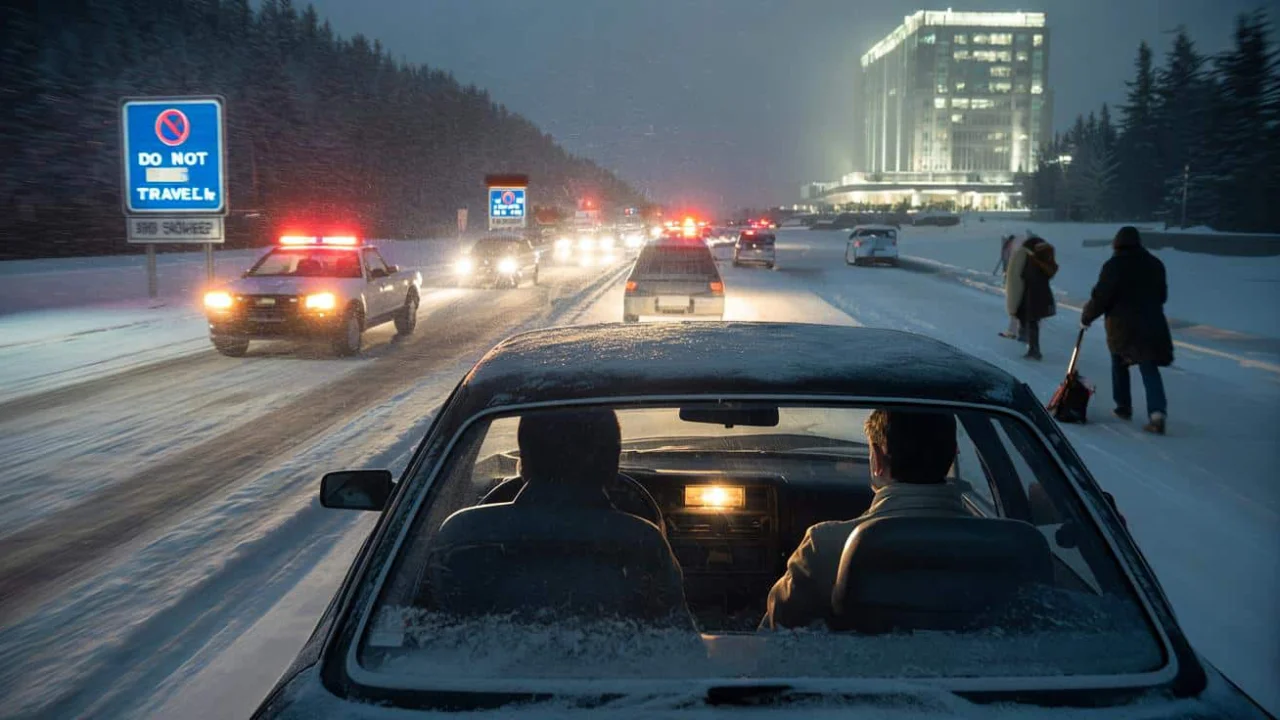
Maria stared at her phone screen, reading the same message for the third time. “All employees expected in office tomorrow, 8 AM sharp. Weather is not an excuse for tardiness.” Outside her apartment window, the first fat snowflakes were already sticking to her car windshield. The weather app showed a red warning banner: “WINTER STORM WARNING – Heavy snow expected overnight into tomorrow morning.”
She scrolled to the next notification. The county emergency management office was practically shouting through social media: “STAY HOME. Roads will be impassable. This is a life-threatening storm.” Her boss’s email had arrived just minutes later, as if he’d seen the same warnings and decided to double down.
Maria works at a mid-sized insurance firm where “team player” gets thrown around like confetti, but sick days get tracked like a credit score. Tomorrow, she’ll have to choose between risking her life on icy roads or risking her job by staying safe at home.
When Heavy Snow Expected Meets Corporate Demands
Tonight’s forecast isn’t just bad weather—it’s the kind of storm that makes seasoned meteorologists use words like “dangerous” and “potentially deadly.” Heavy snow expected to dump 8-12 inches between midnight and dawn, with wind gusts reaching 45 mph and temperatures plummeting to create a skating rink under every fresh inch.
State police are already positioning salt trucks and preparing for multiple-car pileups. The governor held a press conference using phrases like “essential travel only” and “serious threat to public safety.”
“We’re looking at conditions that could strand motorists for hours,” explains Dr. Rebecca Chen, a meteorologist with the National Weather Service. “The timing couldn’t be worse—this system moves through right during the morning commute.”
Yet across the region, corporate emails are landing in inboxes with a very different message. No weather clauses. No remote work options. Just expectations that somehow, magically, business will proceed exactly as planned.
The Real Cost of “Essential” Workers
The disconnect isn’t subtle. While emergency management officials beg people to stay off roads, many employers are essentially demanding the opposite. The math is simple and cruel: they’re willing to risk employee safety rather than lose a day’s productivity.
Here’s what workers are actually facing when heavy snow expected warnings clash with corporate demands:
- Driving on roads that snowplow crews can’t keep up with
- Navigating in near-zero visibility conditions
- Risking getting stranded far from home
- Choosing between job security and personal safety
- Bearing the cost of potential accidents or vehicle damage
“I’ve seen too many accidents where someone was driving to work in conditions that made experienced truck drivers pull over,” says Officer Mike Torres, who’s worked highway patrol for fifteen years. “Nobody should be risking their life for a meeting that could happen on Zoom.”
| Weather Condition | Authority Recommendation | Typical Corporate Response |
|---|---|---|
| Heavy snow 6+ inches | Stay home, non-essential travel | Business as usual |
| Ice storm warnings | Do not drive unless emergency | Arrive on time or face discipline |
| Whiteout conditions | Pull over, wait it out | No tardiness excuses accepted |
| Wind gusts 40+ mph | Avoid highways, especially trucks | Remote work not available |
Who Really Bears the Risk
The workers getting these ultimatums aren’t CEOs with company cars and flexible schedules. They’re people driving older vehicles with questionable tires, living paycheck to paycheck, unable to afford missing work or losing their jobs over “insubordination.”
Take retail workers, bank tellers, office staff, and warehouse employees. When heavy snow expected warnings flood the news, they’re the ones who get the “we’re counting on you” speeches while executives work from their home offices.
“It’s always the people who can least afford to take risks who are forced to take the biggest ones,” points out workplace safety advocate Jennifer Walsh. “The irony is that companies spend thousands on liability insurance, then create conditions that make claims inevitable.”
The pattern repeats every winter. Emergency services prepare for the worst. Schools close preemptively. Government offices offer flexible schedules. But private employers? They often act like weather warnings are just suggestions that don’t apply to their business needs.
Meanwhile, tow truck drivers and emergency responders know they’ll be working overtime tonight. They’ll be pulling cars out of ditches, responding to accidents, and risking their own safety to help people who were forced onto dangerous roads by bosses sitting safely at home.
What This Means for Workers and Families
When companies ignore heavy snow expected warnings, they’re not just risking individual safety—they’re creating a ripple effect that impacts entire families and communities.
Parents have to choose between leaving kids home alone when schools close or calling in sick to work. Single-car families face impossible logistics when one person works for a flexible employer and another faces threats for weather-related absences.
Emergency services get overwhelmed with preventable accidents. Insurance claims spike. Hospital emergency rooms fill with car crash victims who were just trying to get to work on time.
“Every winter storm, we see the same thing,” explains emergency room physician Dr. Amanda Rodriguez. “People injured in accidents they never should have been in, driving to jobs that could have waited a day.”
The human cost adds up quickly. Lost wages from accidents. Vehicle damage that working families can’t afford to repair. Medical bills from injuries sustained trying to meet unreasonable employer expectations.
Some companies are starting to get it. They’re realizing that losing a day’s productivity is cheaper than dealing with liability issues, insurance claims, and the very real possibility that valued employees could be seriously injured or killed trying to meet arbitrary attendance requirements.
But for every forward-thinking employer, there are still plenty sending out emails tonight that essentially translate to: “We know it’s dangerous, but come in anyway.”
As the heavy snow expected tonight begins to fall, thousands of workers are checking their tires, charging their phones, and hoping they’ll make it through their commute tomorrow morning. They shouldn’t have to make that choice.
FAQs
Can my employer force me to drive in dangerous weather conditions?
While employers can set attendance policies, they generally cannot force you to drive in conditions deemed unsafe by authorities. Most states protect workers who refuse to perform tasks they reasonably believe are unsafe.
What should I do if my boss demands I come in during a weather emergency?
Document the weather warnings and your employer’s demands. If you feel the conditions are genuinely dangerous, prioritize your safety. Check your state’s labor laws regarding unsafe work conditions.
Are there legal protections for workers who can’t get to work during severe weather?
Some states have laws protecting workers from retaliation for weather-related absences when authorities issue travel warnings. However, protections vary significantly by location and industry.
How can I prepare if I must drive in heavy snow conditions?
Keep an emergency kit with blankets, water, snacks, and a phone charger. Drive slowly, maintain extra distance from other vehicles, and pull over safely if conditions become too dangerous to continue.
What makes tonight’s expected snowfall particularly dangerous?
The combination of heavy snow rates, strong winds, and freezing temperatures creates whiteout conditions and ice formation. The timing during morning commute hours makes it especially hazardous for workers.
Should companies be held liable if employees are injured driving to work in dangerous weather?
Legal liability varies, but companies that ignore official weather warnings and force employees onto dangerous roads may face increased legal and insurance risks if accidents occur.


