
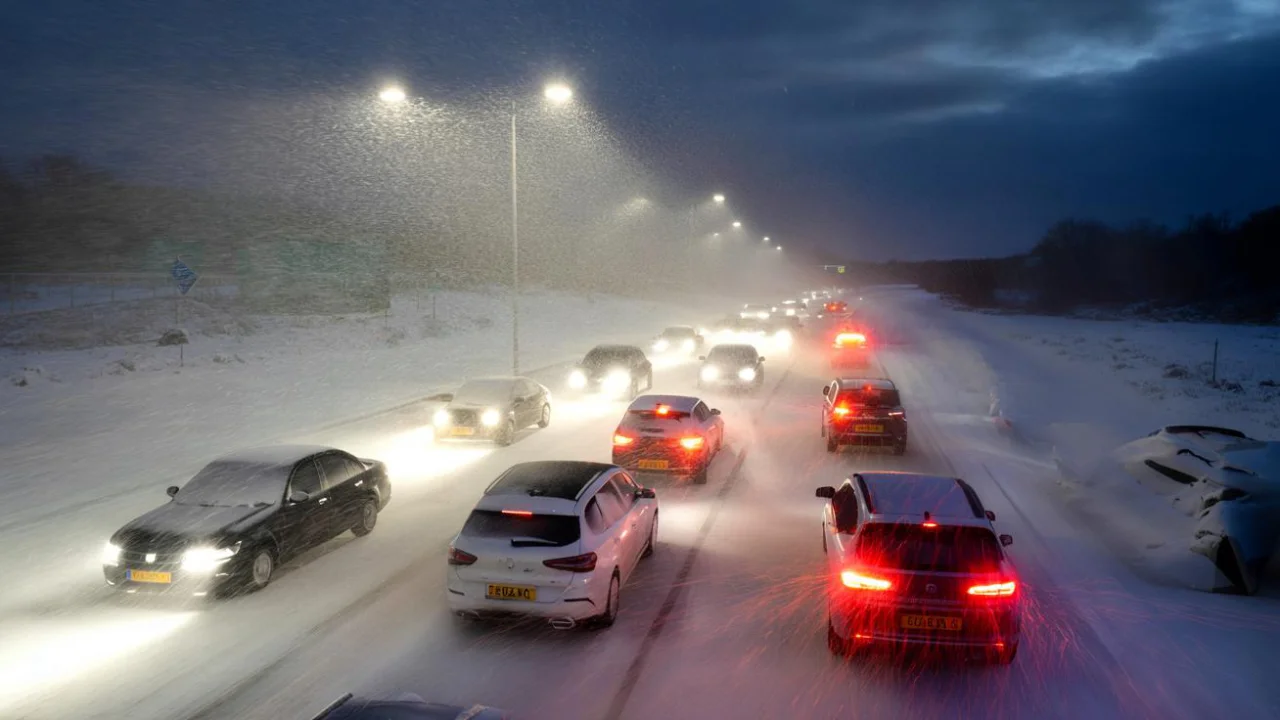
Sarah checked her phone one more time as she loaded the car with weekend bags. The weather app flashed angry red warnings about heavy snow forecast to hit after midnight, but her sister’s wedding rehearsal was tomorrow morning, three hours north. “It’s just a bit of snow,” she muttered, tossing the phone onto the passenger seat. Around her, neighbors were doing the same mental calculation – weighing family commitments against weather warnings, convinced they’d beat the worst of it.
By 11 PM, the first flakes were already dancing in the streetlights. Sarah wasn’t alone on the motorway. Hundreds of red taillights stretched ahead, a river of defiance against the meteorologists’ stark predictions.
The heavy snow forecast was about to prove why sometimes the experts know exactly what they’re talking about.
When Weather Warnings Turn Into Reality Checks
Tonight’s heavy snow forecast represents more than just inconvenient weather – it’s a collision between human optimism and atmospheric physics. The Met Office has confirmed that snow bands will intensify dramatically after midnight, with visibility potentially dropping from clear roads to near-zero conditions in under ten minutes.
“We’re looking at a classic setup for rapid deterioration,” explains Dr. Michael Patterson, a meteorological consultant. “The snow rate could reach 2-3 inches per hour in the worst bands, which is enough to overwhelm even well-prepared road networks.”
The problem isn’t just the amount of snow. It’s the speed at which conditions change. One moment drivers are cruising at normal speeds on wet tarmac, the next they’re trapped in a white-out with no safe way to exit the situation.
What makes tonight’s heavy snow forecast particularly dangerous is the temperature profile. Ground temperatures are hovering just above freezing, which means the first snow will melt and refreeze, creating an invisible ice layer beneath the accumulating powder.
The Numbers That Matter Tonight
Understanding the scale of tonight’s weather event requires looking at the hard data behind the heavy snow forecast:
| Time Period | Expected Snow Rate | Visibility | Road Conditions |
|---|---|---|---|
| 11 PM – Midnight | Light, 0.5 inch/hour | 2-3 miles | Wet, manageable |
| Midnight – 2 AM | Moderate, 1-2 inches/hour | 0.5-1 mile | Slush forming |
| 2 AM – 4 AM | Heavy, 2-3 inches/hour | Under 0.25 miles | Dangerous accumulation |
| 4 AM – 6 AM | Very heavy, 3+ inches/hour | Near zero | Impassable |
The critical window is between 2 AM and 4 AM, when the heavy snow forecast shows the most intense bands moving through. During this period, emergency services typically see a dramatic spike in accidents and stranded vehicles.
Key factors making tonight especially treacherous include:
- Temperature gradient creating ice beneath snow
- Light winds allowing snow to accumulate vertically
- Untreated secondary roads becoming impassable first
- Limited gritting resources during overnight hours
- Reduced emergency response capacity in rural areas
“The heavy snow forecast models are showing remarkable consistency,” notes Emma Richards, a highway authority spokesperson. “When all the models agree on rapid intensification, that’s when we really start worrying about public safety.”
Why People Keep Driving Into the Storm
Despite clear warnings about tonight’s heavy snow forecast, traffic levels remain surprisingly high. The phenomenon isn’t about ignorance – it’s about human psychology meeting modern life’s inflexible demands.
Last winter’s similar weather event provides a sobering case study. When heavy snow hit the M25 without warning, what should have been a 45-minute commute turned into an 8-hour ordeal for thousands. Parents spent the night in cars with young children, running engines intermittently to stay warm while fuel ran low.
“People see the heavy snow forecast and think they’re different, that they’ll make it through before conditions get bad,” explains transport psychologist Dr. Janet Morrison. “We’re terrible at visualizing exponential change – how quickly ‘manageable’ snow becomes ‘impossible’ snow.”
The economic pressure adds another layer. Missing a job interview, family celebration, or medical appointment carries immediate consequences that feel more tangible than weather warnings. A wedding doesn’t get postponed because of a heavy snow forecast.
Emergency services report that the majority of weather-related rescues involve people who saw the warnings but calculated they could beat the timing. The problem is that heavy snow doesn’t follow convenient schedules.
What Happens When Roads Become Parking Lots
The real danger of ignoring tonight’s heavy snow forecast isn’t just individual risk – it’s systemic collapse. When too many people attempt to travel during severe weather, the entire transport network can fail within hours.
The cascade effect starts small. A few cars struggle on an incline, creating a bottleneck. More vehicles bunch up behind, wheels spinning ineffectively on the increasingly packed snow. Within thirty minutes, what was flowing traffic becomes a static queue stretching for miles.
This is when the heavy snow forecast transforms from inconvenience to crisis:
- Gritting trucks can’t reach affected areas through stationary traffic
- Emergency vehicles become trapped in the same gridlock
- Fuel runs low in idling engines, creating hypothermia risks
- Mobile networks overload as thousands call for help simultaneously
- Recovery vehicles can’t access stranded cars
“Once you get mass abandonment of vehicles, it can take days to clear the roads properly,” warns highways engineer Tom Fletcher. “The heavy snow forecast is clear about timing – people really should be listening.”
The psychological toll is often worse than the physical discomfort. Being trapped in a car for hours, watching phone battery drain while snow piles higher around the windows, creates a particular kind of helplessness that many describe as genuinely traumatic.
The Science Behind Tonight’s Storm
Understanding why tonight’s heavy snow forecast is so concerning requires looking at the meteorological machinery driving the system. This isn’t just winter weather – it’s a specific atmospheric setup that creates particularly hazardous conditions.
The key ingredients are aligning perfectly: cold air mass, moisture-rich system, and orographic lifting. When these combine, the result is exactly what the heavy snow forecast models are predicting – rapid, intense accumulation that can catch even experienced drivers off guard.
“We’re seeing textbook conditions for what we call ‘explosive snow development,'” explains meteorologist Dr. Sarah Chen. “The heavy snow forecast isn’t being dramatic – if anything, it might be underestimating the speed of change in some areas.”
The most dangerous aspect is the forecast’s precision about timing. Unlike general winter weather, tonight’s system will intensify in predictable waves, creating brief windows of manageable conditions followed by periods of near-impossible driving.
FAQs
How quickly can visibility change during heavy snow?
Visibility can drop from several miles to less than 100 yards in under ten minutes when heavy snow bands move through.
Should I trust my car’s all-wheel drive in these conditions?
All-wheel drive helps with traction but doesn’t improve braking or steering on snow and ice. It’s not a guarantee of safe travel.
What’s the difference between a weather warning and a heavy snow forecast?
Weather warnings are official alerts about dangerous conditions, while forecasts predict what’s coming. Both should be taken seriously when they align.
How much snow makes roads impassable?
Just 2-3 inches of snow can make untreated roads dangerous, especially if it’s falling quickly and temperatures are near freezing.
What should I do if I’m already driving when heavy snow starts?
Find the nearest safe exit immediately. Don’t try to push through deteriorating conditions – visibility can disappear faster than you can react.
Why do people ignore heavy snow forecasts?
Human psychology makes us poor at judging exponential risks. We see light snow and assume it will stay manageable, underestimating how quickly conditions can become dangerous.


