
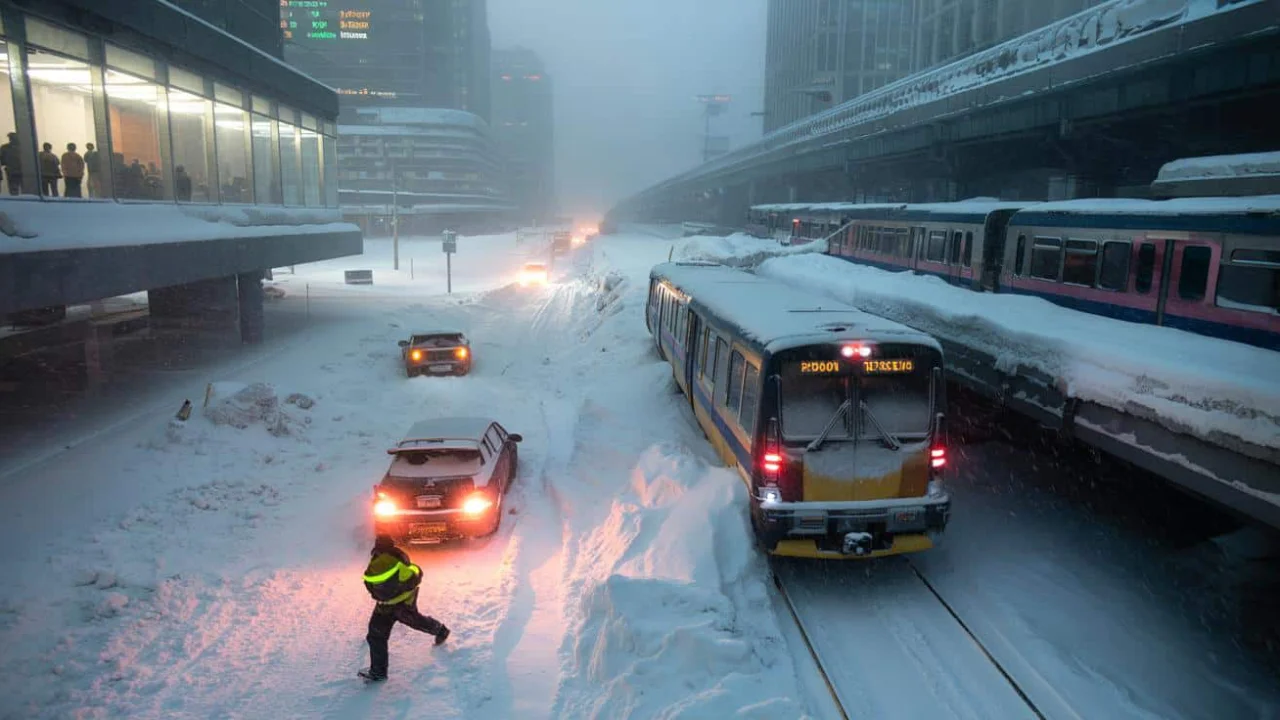
Maria clutched her coffee mug tighter as she watched her neighbor’s sedan disappear completely under what looked like a white mountain. Just twelve hours ago, she’d laughed at the weather app’s prediction—55 inches seemed impossible, almost comical. Now, staring out her kitchen window, she couldn’t even see the stop sign at the corner of her street.
Her phone buzzed with the third school closure notification of the morning. Then another from her office. Then one from the city transit authority. The heavy snowfall forecast everyone had been talking about wasn’t just arriving—it was rewriting the rules of how an entire region could function.
This wasn’t just snow anymore. This was nature hitting the pause button on modern life.
The Numbers That Make Officials Panic
When meteorologists start using phrases like “historic snowfall event,” you know something serious is brewing. The heavy snowfall forecast currently bearing down on multiple states isn’t your typical winter inconvenience—it’s the kind of weather system that makes emergency management officials lose sleep.
“We’re looking at snowfall rates that could hit 4 inches per hour at peak intensity,” explains Dr. Sarah Chen, a meteorologist with the National Weather Service. “When you combine that with sustained winds of 35-45 mph, you’re creating near-whiteout conditions that make travel extremely dangerous.”
The storm’s projected path covers major metropolitan areas where millions of people rely on functioning transportation networks. Highways that normally handle 100,000 vehicles daily are expected to become impassable ribbons of white. Rail lines that connect entire regions face shutdowns that could last days, not hours.
Here’s what makes this heavy snowfall forecast particularly challenging:
- Peak snowfall rates of 3-4 inches per hour during the storm’s core
- Wind gusts creating snow drifts up to 8 feet in exposed areas
- Temperatures dropping to -10°F, making snow removal equipment less effective
- Storm duration extending 18-24 hours, overwhelming standard clearing operations
- Multiple waves of heavy snow preventing roads from being cleared between bands
Breaking Down the Chaos by the Numbers
Understanding the scale of this weather emergency requires looking at the hard data. The heavy snowfall forecast affects everything from your morning commute to supply chains that keep stores stocked.
| Impact Category | Expected Disruption | Recovery Time |
|---|---|---|
| Major Highways | Complete closure for 24-48 hours | 3-5 days for full clearing |
| Rail Services | Suspended operations | 2-4 days |
| Airports | Flight cancellations 80-100% | 1-2 days |
| Power Infrastructure | Outages affecting 15-20% of region | 3-7 days |
| Emergency Services | Limited response capability | During storm duration |
“The sheer volume of snow overwhelms our clearing capacity,” admits Tom Rodriguez, head of the regional transportation department. “We can handle 6-8 inches overnight, but when you’re talking about 4-5 feet total accumulation, we’re essentially starting over every few hours.”
The economic ripple effects extend far beyond canceled flights and closed schools. Delivery trucks can’t navigate buried roads. Workers can’t reach their jobs. Hospitals struggle to maintain full staffing while dealing with weather-related emergencies.
Why “Just Stay Home” Isn’t Always Simple
The official advice sounds straightforward enough: avoid travel, stay indoors, wait it out. But the reality of modern life makes following that guidance more complicated than authorities often acknowledge.
Essential workers—nurses, police officers, utility repair crews, grocery store employees—don’t have the luxury of working from their living rooms. Parents discover that closed schools mean scrambling for childcare or taking unexpected time off work. People with medical appointments, prescription pickups, or elderly relatives to check on face impossible choices.
“We’re asking people to completely reorganize their lives with 12-24 hours notice,” points out Dr. Rebecca Martinez, who studies emergency preparedness. “That works for some people, but creates real hardship for others who don’t have that flexibility.”
The heavy snowfall forecast forces these difficult decisions onto millions of people simultaneously. Do you risk driving to the pharmacy for crucial medication? How long can you safely leave elderly neighbors without checking on them? What happens if the power goes out and you’re not prepared?
Small businesses face particular challenges. Restaurant owners watch perishable inventory sit unused while customers can’t reach them. Retail shops lose crucial weekend sales during what might have been busy shopping days. Service providers—plumbers, electricians, repair technicians—see their schedules completely upended.
The Human Side of Weather Emergencies
Behind every heavy snowfall forecast statistic, real people are making tough calculations about risk versus necessity. Social media fills with photos of empty grocery store shelves and long lines at gas stations as residents try to prepare for days of isolation.
Emergency shelters prepare for people whose heating systems fail or who lose power for extended periods. Hospitals stock extra supplies and arrange for staff to stay overnight rather than attempting dangerous commutes. Animal shelters worry about pets whose owners might be stranded away from home.
“The storm itself is only half the story,” explains James Patterson, director of emergency management for the affected region. “The recovery phase—getting people back to their normal routines—often takes longer than the actual weather event.”
Psychological stress adds another layer of complexity. Being trapped indoors for days tests patience and mental health, especially for families with young children or people living alone. The financial anxiety of missed work, spoiled food, and potential property damage compounds the immediate physical challenges of the storm.
Yet communities also discover resilience they didn’t know they possessed. Neighbors check on each other. Local Facebook groups organize supply sharing. Hardware stores stay open as long as safely possible to help people prepare. The heavy snowfall forecast becomes a test not just of infrastructure, but of how people care for each other during difficult times.
FAQs
How accurate are heavy snowfall forecasts predicting 55 inches?
Modern forecasting technology is quite reliable for major storm systems 2-3 days out, with accuracy typically within 20% for total snowfall amounts.
Should I attempt to drive during the heaviest snowfall periods?
No. When snowfall rates exceed 2 inches per hour, even four-wheel-drive vehicles can become stuck or lose control.
How long do road closures typically last after extreme snowfall?
Major highways may reopen within 24-48 hours, but side streets and residential areas often take 3-5 days to become fully passable.
What supplies should I have ready for a 55-inch snowfall event?
Focus on food, water, medications, flashlights, batteries, and heating alternatives for at least 3-5 days of potential isolation.
Can public transportation operate during heavy snowfall?
Most bus and rail systems suspend operations when snowfall exceeds 6-8 inches or when wind creates whiteout conditions.
How do I prepare my home for potential power outages during the storm?
Charge all devices, fill bathtubs with water, move to rooms that retain heat best, and ensure you have non-electric heating options if possible.


