
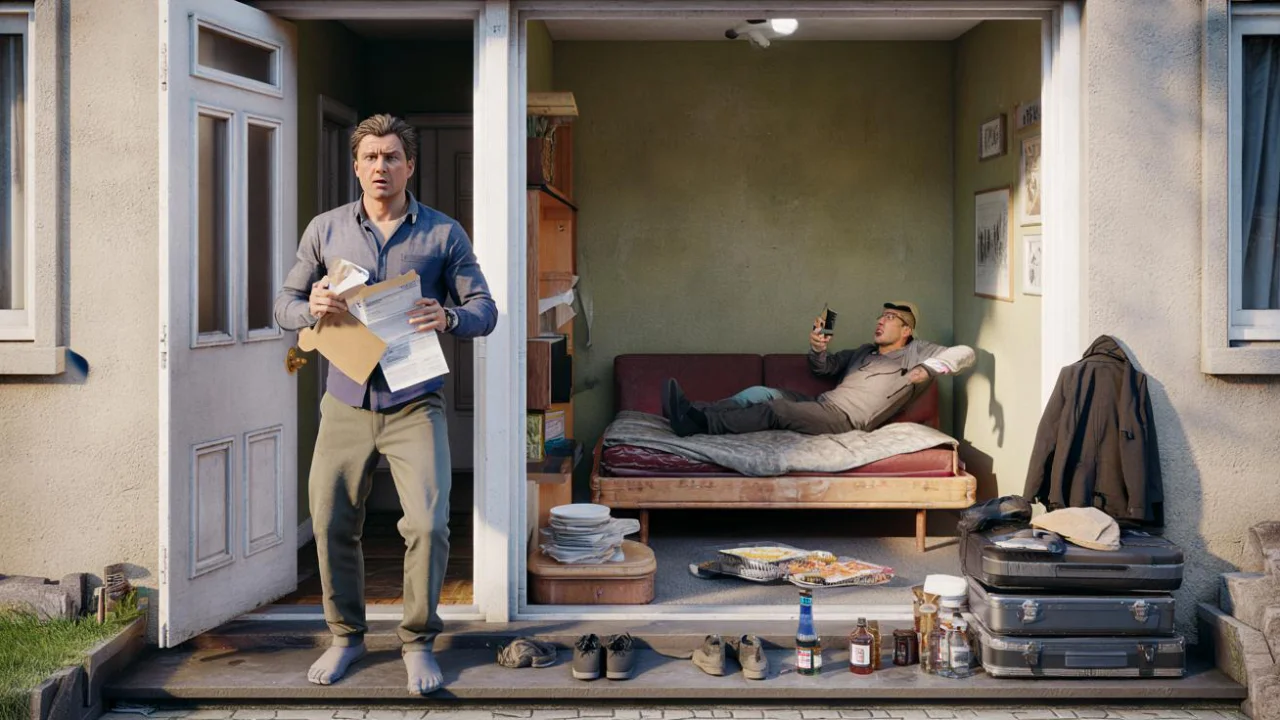
The neighbors first noticed the extra shoes. A second pair of sneakers in the hallway, heavy work boots wedged near the door, and the muffled sounds of a TV still going at 2 a.m. in a building where people usually sleep early to catch the metro at dawn. Inside the cramped 38-square-meter apartment, Marc was trying not to lose his mind.
He had agreed to “help for a month or two” by hosting his unemployed brother-in-law, “just until he gets back on his feet.” Three months later, the electricity bill had doubled, the couch was permanently occupied, and a stranger was sleeping on an inflatable mattress in the kitchen. Marc opened his own door with a mixture of shame and anger.
The situation felt absurd, unfair, and yet disturbingly familiar to thousands of families across the country who’ve discovered that generosity can quickly spiral into a legal nightmare.
When Family Help Becomes a Legal Trap
At first, it seemed like a beautiful story of family solidarity. Marc’s wife had begged him to help her younger brother who had lost his job, broken up with his girlfriend, and couldn’t afford rent anymore. “Just for a while, he’s family,” she said. Marc worked from home in that tiny apartment, already juggling calls, spreadsheets, and a creaky chair, but he gave in.
The first week went smoothly. They cooked together, watched late-night series, and laughed about old stories. Then the lines started to blur. The “temporary” guest never left, and what started as hosting an unemployed brother-in-law became something much more complicated.
The real shift came on a Thursday evening when Marc discovered strangers in his apartment. His brother-in-law had casually mentioned he was “renting them the room for a few nights” – except the “room” was actually Marc’s living room, his office, and his only quiet space. Even worse, Marc later discovered through forgotten text messages that his brother-in-law had posted the sofa on a short-term rental app as a “budget stay near the city center,” making money in a home where he didn’t pay a cent.
“What many people don’t realize is that once someone establishes residency in your home, even informally, the legal protections kick in immediately,” explains housing attorney Sarah Mitchell. “You can’t just change the locks and throw their stuff out, even if they’re not paying rent or contributing to expenses.”
The Hidden Legal Risks of Hosting Family Members
Marc’s nightmare illustrates a growing problem that catches generous families off guard. When hosting unemployed relatives turns sour, the legal complications can be devastating. Here are the key risks homeowners and renters face:
- Unauthorized subletting violations that can result in lease termination
- Damage liability for anything guests do to the property
- Utility bill increases that the host must cover entirely
- Established residency rights that make removal legally complex
- Insurance complications if undisclosed occupants cause damage
- Zoning violations in areas with occupancy limits
The legal framework around temporary housing arrangements varies significantly by state, but most jurisdictions protect established residents regardless of whether they pay rent. This means that someone who’s been staying in your home for 30 days or more may have legal rights that require formal eviction procedures to remove them.
| Time Period | Legal Status | Removal Process |
|---|---|---|
| 1-14 days | Guest | Can be asked to leave |
| 15-29 days | Gray area | May require notice |
| 30+ days | Established resident | Formal eviction required |
“I’ve seen families torn apart by these situations,” says family counselor Dr. James Rodriguez. “What starts as genuine help becomes a power struggle where legal rights override family relationships.”
When Generosity Backfires: Real-World Consequences
Marc’s situation escalated quickly once his brother-in-law realized his legal position. Plates piled up in the sink, stains appeared on the walls, and cigarette burns dotted the balcony floor. The landlord sent a formal complaint for unauthorized subletting and damage, threatening eviction.
Since the lease was in Marc’s name, every broken tile, every unpaid electricity bill, and every unauthorized guest became his legal responsibility. When he finally asked his brother-in-law to leave, the response was chilling: “I’m registered here now, I have rights, you can’t just kick me out.”
This scenario plays out across the country as economic pressures force more families into these arrangements. The pandemic significantly increased the number of adults moving back in with relatives, creating a perfect storm of housing stress and legal complications.
Property management expert Lisa Chen notes, “Landlords are becoming increasingly strict about unauthorized occupants because they’ve seen too many situations where well-meaning tenants end up violating their leases through family help arrangements.”
The financial impact extends beyond utility bills and property damage. Marc faced potential eviction, which would have destroyed his credit score and housing prospects for years. His work-from-home arrangement became impossible with constant noise and interruptions, threatening his income as well.
Protecting Yourself While Helping Family
Experts recommend several strategies for families considering hosting unemployed relatives without falling into legal traps:
- Set clear written agreements with specific end dates and contribution expectations
- Check lease agreements and notify landlords about temporary guests when required
- Document everything including the temporary nature of the arrangement
- Establish house rules about guests, noise, and property care
- Create accountability measures for job searching and moving out
The key is treating even family arrangements with some level of formality to protect everyone involved. “A simple written agreement that outlines expectations, timelines, and responsibilities can save relationships and prevent legal nightmares,” advises attorney Mitchell.
For Marc, the resolution came after months of stress and legal fees. He ultimately had to go through formal eviction proceedings to remove his brother-in-law, a process that took two months and cost over $3,000. The family relationships were severely damaged, and Marc’s wife struggled with guilt and anger over her brother’s behavior.
FAQs
Can I legally remove a family member who won’t leave my home?
After 30 days, most states require formal eviction procedures even for family members who don’t pay rent.
Am I responsible for damage caused by family guests?
Yes, as the leaseholder or homeowner, you’re typically liable for all damage that occurs on your property.
What should I do before hosting an unemployed relative?
Create a written agreement with clear timelines, check your lease for guest policies, and notify relevant parties.
Can family members establish legal residency without paying rent?
Yes, payment of rent is not required to establish residency rights in most jurisdictions.
How long can someone legally stay as a “temporary” guest?
Generally 14-30 days depending on state law, after which they may gain residency protections.
What happens if my landlord discovers unauthorized long-term guests?
You could face lease violations, fines, or eviction depending on your rental agreement terms.


