
Sarah thought she was being smart. She’d switched to LED bulbs, unplugged her phone charger when not in use, and even bought an energy-efficient dishwasher. So when her electricity bill jumped by 40% last month, she stared at the numbers in complete confusion.
She walked through her house that evening, detective-style, looking for clues. The washer sat silent. The air conditioner was off. Her laptop was closed. But there in the living room sat her pride and joy: a gorgeous 75-inch 4K TV surrounded by a PlayStation 5, Apple TV, soundbar, and cable box.
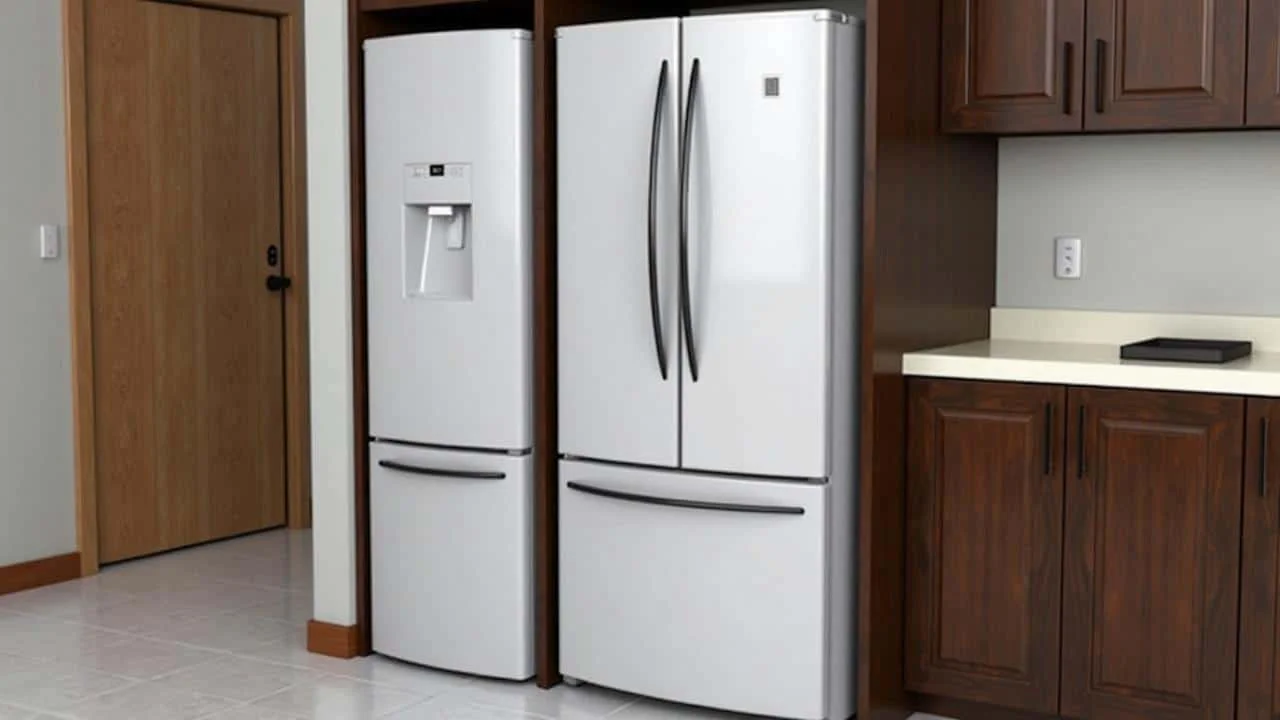
That’s when her neighbor, an electrical engineer, dropped the bombshell that changed everything: “Sarah, that entertainment setup of yours? When it’s cranked up for movie night, it’s pulling as much power as if you had 65 refrigerators running at the same time.”
Your Living Room Has Become a Power Plant
Most people think of household appliance energy consumption in terms of the obvious culprits. The fridge that runs 24/7. The water heater working overtime. The air conditioner during summer heat waves.
But lurking in plain sight is the modern entertainment center, and it’s hungry in ways that would shock you.
“People are blown away when I show them the actual numbers,” says Mark Henderson, a home energy auditor from Portland. “A large 4K TV on maximum brightness can pull 400-500 watts. Add gaming consoles, sound systems, and streaming devices, and you’re looking at serious power draw.”
The comparison to 65 refrigerators isn’t about annual energy usage. It’s about peak instantaneous power consumption. When your TV setup hits maximum demand, the electrical meter spins like it’s powering a small business.
Modern TVs have gotten incredibly sophisticated. They pack processors that rival computers, backlighting systems that can blind you, and color enhancement that makes everything pop. All of this technology demands electricity, and lots of it.
Breaking Down the Energy Monsters in Your Entertainment Center
Let’s pull back the curtain on exactly what’s eating your electricity. The numbers might surprise you:
| Device | Typical Power Draw | Peak Power Draw |
|---|---|---|
| 75-inch 4K TV (standard mode) | 150-200W | 400-500W |
| PlayStation 5 (gaming) | 150-200W | 220W |
| Xbox Series X (gaming) | 140-170W | 190W |
| Premium soundbar system | 30-50W | 100W |
| Cable/satellite box | 25-40W | 45W |
| Streaming device | 5-10W | 15W |
| Standard refrigerator | 100-150W | 200W |
The math gets scary fast. A fully loaded entertainment system can easily hit 800-900 watts during peak usage. That’s equivalent to running 4-6 refrigerators simultaneously just for your evening entertainment.
But here’s where it gets really interesting. TVs have different power modes that most people never think about:
- Eco Mode: Reduces power by 20-30% but dims the picture
- Standard Mode: Balanced power and picture quality
- Vivid/Store Mode: Maximum brightness and color, maximum power draw
- Gaming Mode: High refresh rates and processing power for responsive gaming
“Most TVs come set to store mode out of the box because it makes them look incredible on the showroom floor,” explains Jennifer Park, an energy efficiency consultant. “But that setting is designed to grab attention in bright retail spaces, not for home viewing.”
The Hidden Costs Adding Up on Your Electric Bill
Let’s talk real money. If you’re running a high-end entertainment setup for 4 hours a day at peak power, you’re looking at serious household appliance energy consumption.
At the national average electricity rate of $0.15 per kWh, an 800-watt entertainment system costs about $0.48 per hour to operate. That might not sound like much until you multiply it out:
- Daily 4-hour session: $1.92
- Monthly cost: $57.60
- Annual impact: $691.20
For families who game, stream, and watch TV more heavily, these numbers can easily double. Weekend movie marathons and summer gaming sessions can push your entertainment center’s electricity costs over $100 monthly.
“I’ve seen households where the TV and gaming setup represents 25-30% of their total electricity bill,” says David Chen, a residential energy analyst. “That’s more than their air conditioning in some cases.”
The standby power consumption adds another layer of cost. Even when “off,” modern entertainment devices continue drawing power for instant-on features, software updates, and maintaining network connections. This phantom load can add $50-100 annually just from devices that appear to be sleeping.
Gaming consoles are particularly sneaky. They often default to “instant on” mode, which keeps them partially powered to download updates and respond to voice commands. A PlayStation 5 in rest mode still pulls 10-15 watts continuously.
Simple Changes That Can Cut Your Entertainment Power Bill
The good news? You don’t have to give up your entertainment to control these energy costs. Small adjustments can make a huge difference in household appliance energy consumption.
Start with your TV’s picture settings. Switch from vivid or store mode to standard or cinema mode. You’ll barely notice the difference in picture quality, but your electricity meter definitely will. This simple change can reduce your TV’s power draw by 100-200 watts.
For gaming consoles, dig into the power settings. Switch from instant-on to energy-saving mode. Yes, it takes an extra 30 seconds to boot up, but you’ll save 100+ watts of standby power 24/7.
“The biggest wins come from changing default settings that manufacturers choose for convenience rather than efficiency,” notes energy consultant Michael Torres. “Most people never touch these settings, but they’re costing hundreds of dollars per year.”
Consider using a smart power strip for your entertainment center. When you turn off the TV, it automatically cuts power to connected devices, eliminating standby draw completely. This single device can reduce your entertainment center’s annual energy consumption by 15-20%.
Timing also matters. Many utilities offer time-of-use pricing with cheaper electricity during off-peak hours. Shifting gaming sessions and movie nights to these windows can cut your entertainment electricity costs significantly.
FAQs
Does a bigger TV always use more electricity?
Generally yes, but technology matters more than size. A newer 65-inch LED TV might use less power than an older 55-inch model with less efficient backlighting.
Should I unplug my TV when not watching?
For maximum savings, yes. But a smart power strip is more convenient and achieves similar results by cutting standby power automatically.
Do OLED TVs use less energy than LED TVs?
It depends on content. OLED TVs are very efficient with dark scenes but can use more power than LEDs when displaying bright, colorful content.
How much can I save by adjusting my TV’s picture settings?
Switching from vivid to standard mode typically reduces power consumption by 25-40%, saving $50-150 annually for heavy users.
Are gaming consoles always power hungry?
Modern consoles are actually quite efficient during light gaming, but they can spike to 200+ watts during graphically intensive games or 4K streaming.
Will using eco mode ruin my viewing experience?
Most people can’t tell the difference between eco and standard modes in normal home lighting conditions. The power savings are definitely noticeable on your bill.


