
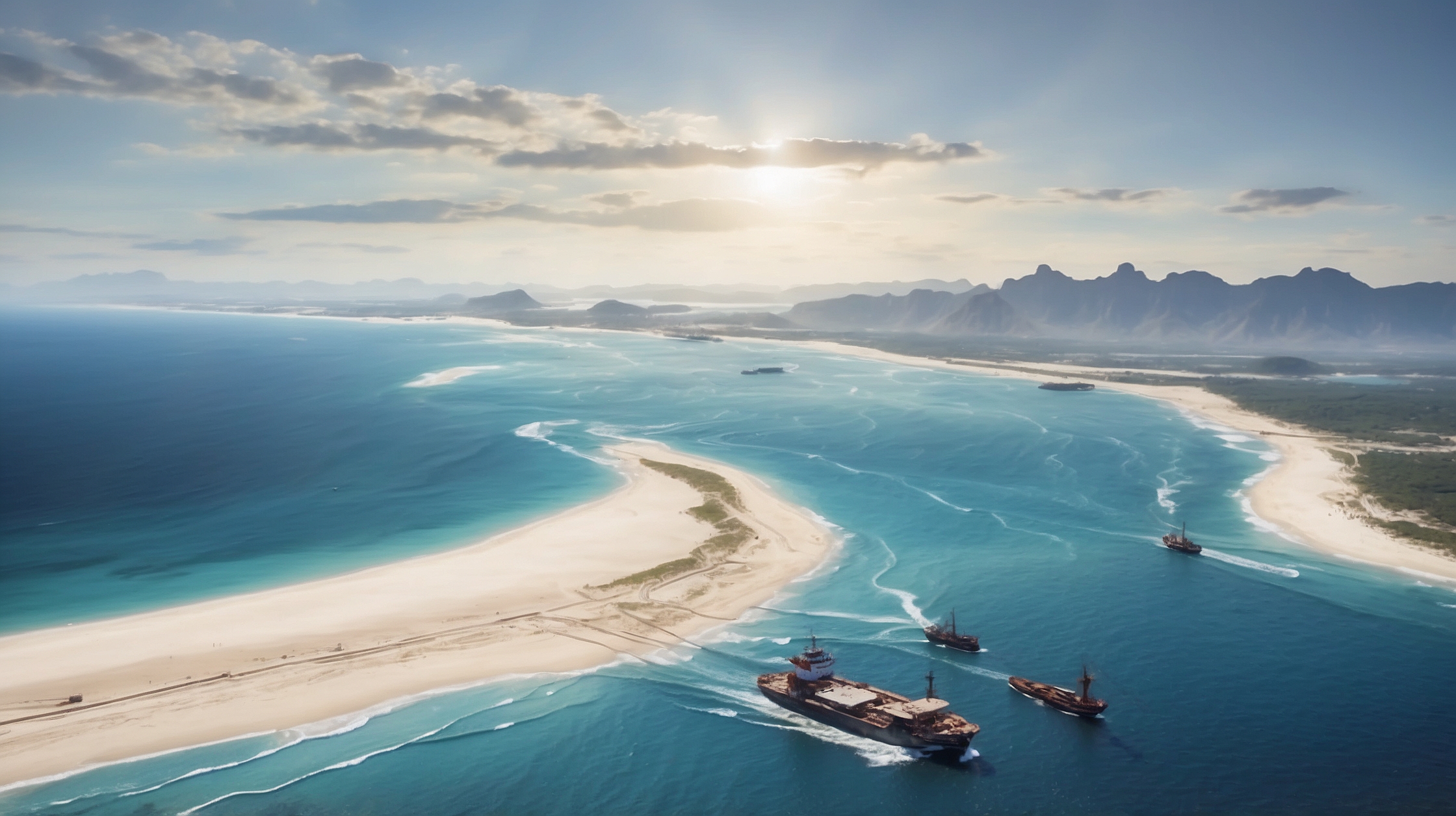
In just over a decade, China has executed one of the most ambitious and controversial geographic transformations in modern history. Through a methodical process involving dredging, reef destruction, and massive infrastructure investment, the country transformed scattered, submerged atolls in the South China Sea into sprawling man-made islands. These artificial land masses are not merely symbols of human engineering prowess—they have carried significant geopolitical and environmental implications for the region and the world.
From 2012 to 2023, China invested heavily in building out its claims in the South China Sea by constructing artificial islands. These islands, constructed from sand, rock, and imported building materials, now serve military, scientific, and civilian purposes. The consequences have resonated throughout Southeast Asia, sparking disputes over territory and impacting marine ecosystems in one of the world’s most biodiverse areas. Behind the colossal scale of this operation lies a calculated plan that intertwines military strategy, economic interest, and technological innovation.
Key details about China’s artificial island expansion
| Category | Details |
|---|---|
| Duration | Approximately 12 years (2012–2023) |
| Primary Areas | Spratly Islands and Paracel Islands in the South China Sea |
| Method | Dredging and land reclamation using sand and crushed coral |
| Purpose | Military, strategic, economic, and scientific |
| Island Features | Runways, naval ports, radars, lighthouses, and housing |
| International Reaction | Widespread condemnation and tension with Southeast Asian nations |
The strategy behind building islands in strategic seas
At the heart of China’s construction efforts is the South China Sea, a waterway vital for global shipping and rich in natural resources like oil, gas, and fisheries. Nearly one-third of global maritime trade passes through the region, giving it unparalleled strategic value. Under the guise of peaceful development and environmental research, China began to militarize previously empty reefs with airstrips, radar stations, and fortified bunkers.
This strategy aligns with China’s “Nine-Dash Line” policy—its controversial territorial claim that covers around 90% of the South China Sea. Despite international tribunals dismissing these claims, Beijing’s game-changing tactic of “building sovereignty” via artificial land has physically altered maps and diplomatic equations. China has essentially translated hypothetical borders into sand-covered bases anchored deep in contested waters.
How the artificial islands were built
The process of turning underwater reefs into operational islands involved an intense and ecologically disruptive technique known as dredging. Massive dredging vessels suck sand and sediment from the seafloor, then spray or dump the material on top of coral reefs. This is followed by concrete fortification, construction of buildings, landing strips, and networking systems. It’s a scorched-earth approach for the ocean floor but one that enabled China to create fully functional islands in a matter of months.
The largest among these artificial islands—like Kagitingan Reef (Fiery Cross Reef) and Zamora Reef (Subi Reef)—are equipped with 3,000-meter-long airstrips capable of accommodating military jets and bombers. These bases also host radar installations, anti-aircraft systems, and naval docks, effectively transforming what were once inhospitable marine zones into strategic military outposts.
“These islands are unsinkable aircraft carriers. China doesn’t need to move fleets; the bases are already embedded in the region.”
— Rear Admiral (Ret.) James Foggo, Former Commander, U.S. Naval Forces Europe
Impact on military and global security
China’s artificial islands have triggered new concerns about regional military escalation. With fortified positions embedded deep in contested water, the balance of power in Southeast Asia continues to shift. Nations such as the Philippines, Vietnam, and Malaysia—all of whom have overlapping maritime claims—view the islands as attempts to coerce and intimidate through hard infrastructure.
The islands also complicate U.S. freedom of navigation operations (FONOPs), which assert access to international waters. The presence of Chinese anti-aircraft systems and surveillance networks means American and allied vessels traveling through the region risk direct or indirect confrontation.
“The militarization of these islands represents the application of power projection in a non-traditional theater.”
— Dr. Mei Zhen, Professor of International Maritime Policy
Ecological and environmental fallout
The creation of these artificial islands has come at a profound environmental cost. The South China Sea is home to nearly a third of the world’s coral reefs, and much of that biodiversity is under threat due to dredging and reef burial. Once buried under tons of sand and rock, coral ecosystems—critical breeding grounds for marine life—cannot regenerate.
Beyond reefs, the suspended sediment clouds gashed into underwater ecosystems, smothering marine habitats with debris and disrupting long-standing migratory patterns for fish species. Environmental groups and marine biologists have routinely condemned the activity as permanent ecological vandalism.
“We are not just losing reefs; we are disrupting delicate ocean biospheres in a part of the ocean critical for global ecology.”
— Lin Bao, Marine Biologist
Who benefits and who loses
| Winners | Losers |
|---|---|
|
– Chinese military planners – State-owned energy firms – Construction and dredging corporations |
– Coral reef ecosystems – Southeast Asian claimants – Global maritime law norms |
The future of China’s man-made archipelago
As satellite imagery continues to show improvements and expansions on these artificial islands, it’s clear China has no intention of slowing down. In fact, the islands appear to be evolving from military bases to hybrid zones featuring research stations, ports, and increasingly civilian infrastructure. Some experts speculate that tourism and mining may feature in future development—allowing China to integrate the region further into its national economic system.
However, the growth invites resistance. The Association of Southeast Asian Nations (ASEAN) continues to negotiate a legally binding code of conduct for the South China Sea—but its slow progress contrasts with China’s fast-paced island building. This raises questions of sovereignty, law, and what defines state territory in the 21st century.
“This is the new frontier of geopolitical competition—not over where borders were drawn, but where land is created.”
— Prof. Angela Reyes, Geopolitical Analyst
Frequently Asked Questions (FAQs)
How many islands has China built in the South China Sea?
China has constructed at least seven major artificial islands, primarily on submerged reefs in the Spratly Islands region.
Is island-building legal under international law?
Most international legal scholars argue that the artificial islands violate international maritime law, particularly the 2016 Permanent Court of Arbitration ruling, which rejected China’s territorial claims.
What are these islands primarily used for?
The islands are used for military operations, surveillance, economic zones, and scientific research. Infrastructure includes airstrips, docks, and radar facilities.
What are the environmental consequences of artificial island-building?
It causes permanent coral reef loss, ecosystem destruction, and marine biodiversity displacement, significantly affecting regional fisheries and water quality.
Why is the South China Sea considered so important?
It’s a vital global trade route, rich in natural resources, and strategically important for military and economic control in Asia-Pacific.
Are other countries also building artificial islands?
Some regional nations have also developed outposts on disputed reefs, but at a much smaller scale than China. China’s projects are by far the most expansive and militarized.


