
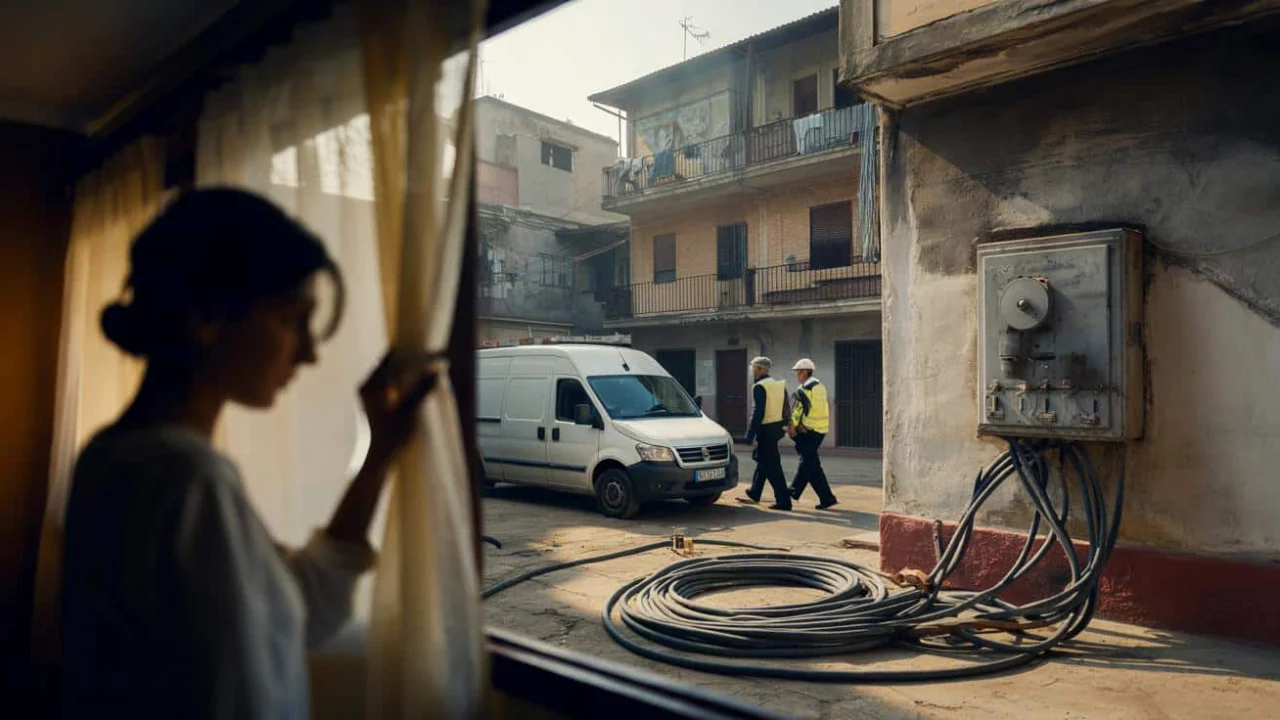
Sarah pressed her face against the kitchen window for the third time that morning, watching the thick black cable that had been bothering her for weeks. It snaked across the shared courtyard like an electrical lifeline, connecting her downstairs neighbor’s apartment to the building’s main power supply. The neighbor’s electricity had been cut off a month ago, but somehow their lights still blazed every night.
She’d been wrestling with the decision for days. Should she call the utility company about what was clearly an illegal electrical hookup? Part of her felt like a snitch, but another part worried about the safety risks. The cable looked makeshift, taped in several places, and she’d noticed a burning smell in the hallway recently.
When Sarah finally made the call on Tuesday afternoon, she expected weeks of bureaucratic delays. Instead, the utility company’s response shocked her: “We’ll have inspectors there tomorrow morning.” By 8:30 AM Wednesday, a white utility van was parked outside, and the illegal connection was being dismantled.
When Neighbors Cross the Line
The speed of the utility company’s response reveals just how seriously they take reports of illegal electrical hookups. These unauthorized connections pose significant fire hazards and can cause power fluctuations that affect entire buildings. What many people don’t realize is that utility companies have dedicated teams ready to respond quickly to such reports.
“Most people think reporting an illegal hookup will take forever to get attention,” explains Marcus Rodriguez, a former utility inspector with 15 years of experience. “The reality is completely different. These situations are treated as emergency safety issues.”
The illegal electrical hookup in Sarah’s building followed a common pattern. When residents can’t pay their electricity bills, some resort to creative solutions that bypass their meters entirely. They tap into shared electrical sources, use extension cords from neighbors, or even connect directly to power lines.
These makeshift solutions create dangerous situations. Overloaded circuits can spark fires, and improperly installed wiring can electrocute anyone who touches it. The burning plastic smell Sarah noticed was likely insulation melting from an overheated connection.
The Hidden Dangers of DIY Electrical Work
Illegal electrical hookups create risks that extend far beyond the person stealing electricity. The consequences can affect entire neighborhoods, and the dangers are more serious than most people realize.
| Risk Type | Potential Consequences | Who’s Affected |
| House Fires | Property damage, injury, death | Entire building residents |
| Power Outages | Overloaded circuits trip breakers | Multiple households |
| Electrocution | Serious injury or death | Anyone touching faulty wiring |
| Voltage Fluctuations | Damaged appliances and electronics | Connected neighbors |
The most common warning signs of illegal electrical hookups include:
- Unusual cables running between buildings or units
- Burning plastic smells in common areas
- Flickering lights when neighbors use appliances
- Extension cords running through windows or doors permanently
- Residents using electricity despite having meters disconnected
“I’ve seen apartments burn down because of illegal hookups,” says Jennifer Chen, a fire safety inspector. “The improvised connections heat up, melt their insulation, and ignite nearby materials. It happens faster than people think.”
The Aftermath: When Safety Meets Community
After the inspectors left Sarah’s building, the real drama began. The atmosphere in the hallways shifted from neighborly politeness to uncomfortable tension. Some residents felt Sarah had overstepped boundaries by involving authorities instead of talking to the neighbor directly.
Others supported her decision, arguing that electricity theft affects everyone’s bills and safety. The building’s WhatsApp group, previously filled with cheerful messages about package deliveries and building maintenance, went silent for days.
The neighbor whose illegal electrical hookup was disconnected faced immediate consequences. Beyond losing their unauthorized power source, they received a formal notice about tampering with utility infrastructure. Depending on local laws, penalties for electricity theft can include:
- Substantial fines ranging from hundreds to thousands of dollars
- Criminal charges for theft of services
- Liability for any property damage caused by illegal connections
- Difficulty getting utilities restored in the future
The situation also highlighted broader issues about housing affordability and utility assistance programs. Many people resort to illegal electrical hookups not out of greed, but because they can’t afford their electricity bills.
“We see this more often during economic hardships,” explains David Kim, a social worker who helps families with utility assistance. “People get desperate, but they don’t realize how dangerous these solutions can be.”
What Happens When You Report
Sarah’s experience demonstrates how quickly utility companies respond to reports of illegal electrical hookups. The process typically unfolds in predictable stages, though the timeline can vary by location and utility provider.
When someone reports an illegal connection, utility companies treat it as a priority safety issue. Inspectors usually arrive within 24-48 hours, armed with cameras, testing equipment, and authority to disconnect unauthorized connections immediately.
The investigation process is straightforward but thorough. Inspectors photograph the illegal setup, trace the unauthorized connections, and document any safety violations. They don’t need permission from residents to disconnect illegal hookups on utility property or equipment.
Most utility companies also have anonymous reporting systems, recognizing that neighbors might fear retaliation. However, inspectors may need contact information for follow-up questions about the location and nature of the illegal connection.
“We take every report seriously because electrical safety affects entire communities,” says Rodriguez. “One faulty connection can cause problems for dozens of families.”
FAQs
How quickly do utility companies respond to reports of illegal electrical hookups?
Most utility companies treat these as emergency safety issues and send inspectors within 24-48 hours of receiving a report.
Can I report an illegal electrical hookup anonymously?
Yes, most utility companies accept anonymous reports, though they may request contact information for clarification about the location or setup.
What evidence do I need to report an illegal hookup?
You need the address and a description of what you’ve observed, such as unauthorized cables, burning smells, or electricity use despite disconnected meters.
What happens to people caught with illegal electrical connections?
They face immediate disconnection, substantial fines, potential criminal charges for theft of services, and liability for any property damage caused.
Are there legal alternatives for people who can’t afford electricity?
Yes, most areas have utility assistance programs, payment plans, and emergency aid programs to help with electricity bills.
What should I do if I suspect my neighbor has an illegal electrical hookup?
Contact your utility company’s emergency line or customer service to report the situation, providing the address and details about what you’ve observed.


