
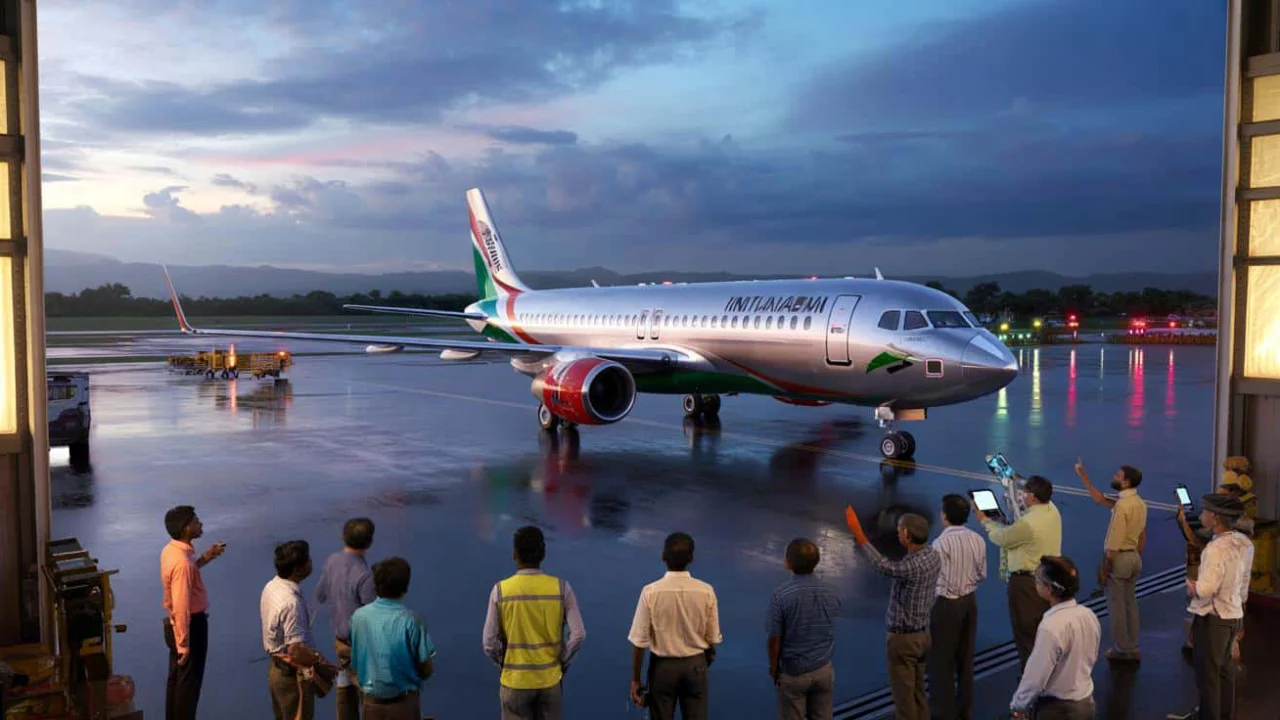
Rajesh Kumar stares at his boarding pass for the hundredth time this month. Another Delhi to Mumbai flight on a Boeing 737. Another cramped middle seat. Another reminder that when Indians fly, they’re passengers in someone else’s aircraft.
But in a humid hangar outside Bengaluru, that reality is about to change. Engineers in worn jeans pace around a gleaming white fuselage bearing an unfamiliar logo. Not Boeing. Not Airbus. Not even China’s COMAC.
This one says “Made in India” – and it’s about to shake up the most exclusive club in aviation.
The Aviation Duopoly Finally Has Competition
For decades, commercial aviation has been a two-horse race. Airbus builds jets in Toulouse, Boeing in Seattle, and airlines around the world pick their poison. Sure, China’s COMAC has been making noise with the C919, but their planes barely fly outside Chinese borders.
Indian passenger jets represent something different entirely. This isn’t just another government vanity project or a copy-paste operation. It’s a calculated move by a country that’s already proven it can disrupt global industries.
“We’re not trying to build the biggest or the fastest plane,” explains Dr. Anita Sharma, former aerospace engineer turned industry consultant. “We’re building the plane that makes the most sense for how people actually fly today.”
Think about it. India moves more than 150 million passengers annually on domestic routes alone. Most of these flights are 1-3 hour hops between major cities. Perfect territory for a mid-range, single-aisle aircraft that costs less to buy and operate than its European or American rivals.
The timing couldn’t be better. Global airlines are hungry for fuel-efficient, cost-effective aircraft as passenger numbers surge post-pandemic. Current delivery schedules from Boeing and Airbus stretch years into the future, leaving airlines scrambling for alternatives.
What Makes Indian Jets Different
Indian passenger jets aren’t trying to reinvent aviation overnight. Instead, they’re focusing on practical advantages that could give them a real edge in the market:
- Cost advantage: Lower manufacturing costs could translate to 15-20% cheaper aircraft prices
- Regional optimization: Designed specifically for hot, high-altitude airports common in developing markets
- Maintenance network: Leveraging India’s existing aerospace service industry
- Financing flexibility: Potential for creative leasing and financing arrangements for emerging market carriers
The technical specifications emerging from development suggest a 150-180 seat aircraft optimized for routes under 3,000 kilometers. That puts it in direct competition with the Airbus A320 family and Boeing 737 series – the workhorses of global aviation.
| Aircraft | Seating Capacity | Range (km) | Target Market |
|---|---|---|---|
| Indian Passenger Jet (projected) | 150-180 | 2,500-3,000 | Regional/Domestic |
| Airbus A320neo | 140-180 | 3,500-6,300 | Global |
| Boeing 737 MAX | 138-230 | 3,300-6,570 | Global |
| COMAC C919 | 158-190 | 4,075-5,555 | China-focused |
“The beauty is in the specialization,” notes aviation analyst Mark Thompson. “While Boeing and Airbus try to build jets that work everywhere, India can focus on what actually works best for their target markets.”
The Ripple Effects Are Already Starting
Indian passenger jets won’t just impact India. The global aviation supply chain is already taking notice, and the effects could reshape how we think about aircraft manufacturing.
First, there’s the obvious market disruption. If Indian jets can deliver on their cost and efficiency promises, airlines in Africa, Southeast Asia, and Latin America suddenly have a viable alternative to the Boeing-Airbus duopoly. That’s potentially thousands of aircraft orders over the next decade.
But the deeper impact lies in manufacturing philosophy. Indian aerospace companies are building on the country’s software and services expertise. Think modular design, predictive maintenance systems, and digital-first operations – areas where traditional aircraft manufacturers have been slow to innovate.
“Indian companies understand services in a way that traditional manufacturers don’t,” explains industry veteran Captain Sarah Mitchell. “They’re not just selling planes; they’re selling complete operational solutions.”
For passengers like Rajesh, the changes could be immediate and tangible. More aircraft options typically mean more competitive pricing, better routes, and potentially more comfortable flying experiences as airlines have genuine choices beyond the traditional duopoly.
The environmental angle matters too. Newer, more efficient aircraft designs could significantly reduce aviation’s carbon footprint, especially on high-frequency domestic routes where older, less efficient planes currently dominate.
Challenges and Realities
Building passenger aircraft isn’t like manufacturing smartphones or cars. The certification process alone takes years and costs hundreds of millions of dollars. Safety standards are non-negotiable, and global aviation regulators don’t hand out approvals lightly.
Indian passenger jets face the same hurdles that grounded many previous challengers. Certification from authorities like the FAA and EASA requires proving not just that the aircraft is safe, but that it meets the same rigorous standards as established manufacturers.
Then there’s the trust factor. Airlines are conservative by nature. Even if Indian jets prove technically superior and cheaper to operate, convincing carriers to bet their reputations and passenger safety on an unproven manufacturer remains a massive challenge.
“The first few years will be about proving the concept works,” admits former Air India pilot Captain Vikram Singh. “But if they can deliver on their promises, the market potential is enormous.”
The supply chain complexity also can’t be understated. Modern aircraft contain millions of components from hundreds of suppliers worldwide. Building that ecosystem from scratch, or convincing existing suppliers to work with a new manufacturer, requires both technical expertise and significant financial backing.
FAQs
When will Indian passenger jets actually start flying commercially?
Current projections suggest first commercial flights could begin within 5-7 years, pending certification and initial production ramp-up.
How much cheaper will Indian jets be compared to Boeing and Airbus?
Industry estimates suggest 15-20% lower purchase prices, with potentially greater savings in operating and maintenance costs.
Which airlines are most likely to buy Indian passenger jets first?
Domestic Indian carriers and airlines in emerging markets across Asia, Africa, and Latin America are the most probable early adopters.
Will Indian jets be as safe as Boeing and Airbus aircraft?
They’ll need to meet the same international safety certification standards as all commercial aircraft, ensuring equivalent safety levels.
What happens to Boeing and Airbus if Indian jets succeed?
Competition typically drives innovation and better pricing across the industry, potentially benefiting airlines and passengers regardless of manufacturer.
Can India really compete with established aircraft manufacturers?
India’s success in automotive, IT services, and space technology suggests the technical capability exists – execution and market acceptance remain the key challenges.


