
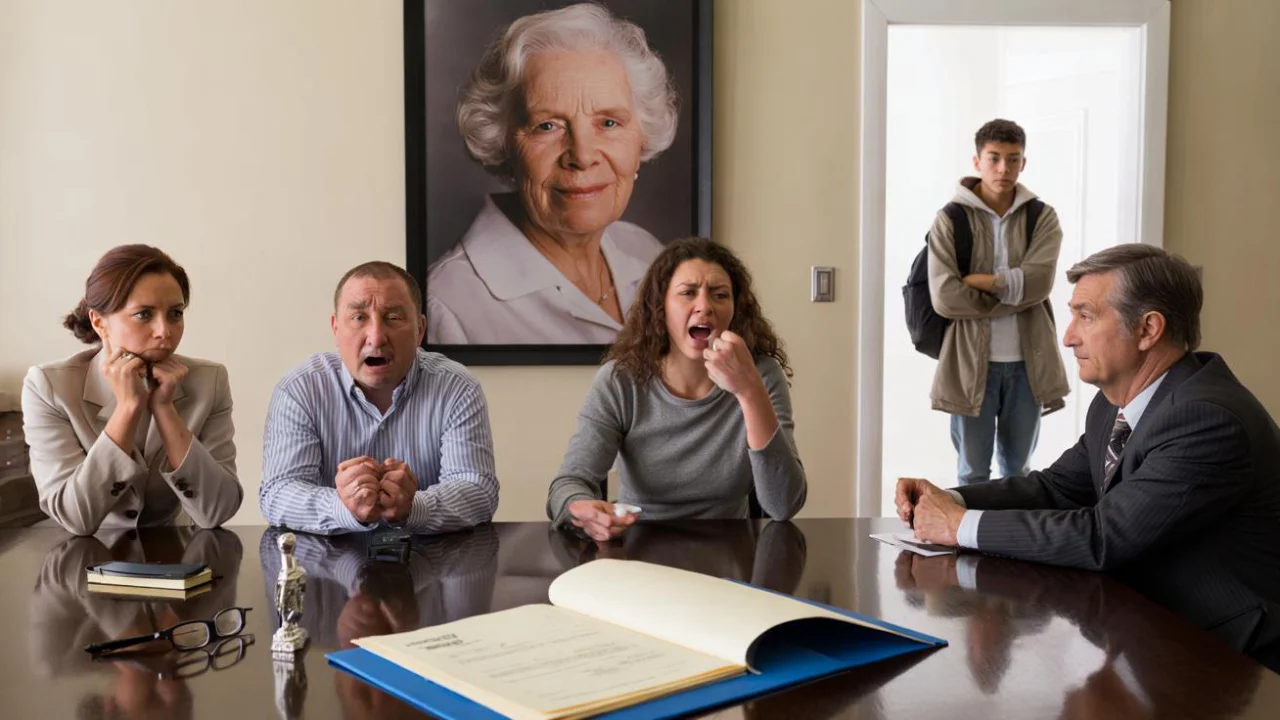
Margaret had always told her three children the same thing at every Christmas dinner: “Don’t worry about me, kids. Everything I have will be yours someday.” For forty years, they heard those words like a warm promise wrapped around the holiday ham. So when the 82-year-old widow died last month, her children expected the will reading to be a formality—a sad but straightforward division of the family home, savings, and grandmother’s pearl necklace.
Instead, they got the shock of their lives. Every single dollar went to Maria, the home health aide who’d cared for Margaret the last three years, and to Tommy, the quiet teenager next door who’d helped with groceries and yard work.
The inheritance drama that followed has torn the family apart and sparked a legal battle that shows just how complicated modern family relationships have become.
When Family Expectations Meet Reality
This inheritance drama isn’t unique. Estate lawyers see similar cases almost weekly now, as aging parents form deep bonds with caregivers while their adult children live busy lives in distant cities. “The people who are present in someone’s final years often become their chosen family,” says estate attorney Jennifer Walsh, who has handled hundreds of contested wills. “Adult children are shocked when they realize emotional proximity matters more than blood relations.”
Margaret’s case follows a pattern that’s becoming increasingly common. Her children—a teacher in Denver, an accountant in Phoenix, and a nurse in Seattle—visited twice a year and called monthly. They genuinely loved their mother but couldn’t provide daily care from hundreds of miles away.
Maria, meanwhile, helped Margaret shower, cooked her favorite meals, drove her to doctor appointments, and sat with her during lonely afternoons. Tommy mowed the lawn, carried heavy packages, and spent Saturday mornings playing chess with Margaret on her front porch.
“When someone is there for the hard stuff—the falls, the confusion, the fear—they become family in the truest sense,” explains geriatric psychologist Dr. Robert Chen. “Blood relationships don’t automatically guarantee emotional intimacy.”
The Legal Battle Everyone Saw Coming
Margaret’s children aren’t accepting this inheritance drama quietly. They’ve hired a lawyer and plan to contest the will, claiming their mother wasn’t mentally competent when she changed it two years ago. They’re also suggesting Maria manipulated a vulnerable elderly woman—a charge that’s both common and difficult to prove.
Here’s what typically happens in inheritance disputes like this:
- Children claim undue influence by caregivers
- Medical records get scrutinized for signs of dementia
- Family relationships are dissected in court
- Legal fees often consume much of the estate
- Relationships are permanently damaged regardless of outcome
The legal standards for contesting a will are actually quite high. The family must prove either that Margaret lacked mental capacity or that someone exerted undue influence over her decisions. Simply being disappointed by the results isn’t grounds for overturning someone’s final wishes.
| Common Inheritance Dispute Triggers | Percentage of Cases |
|---|---|
| Caregiver receives substantial inheritance | 35% |
| Unequal distribution among children | 28% |
| Second spouse inherits over adult children | 18% |
| Charitable donations surprise family | 12% |
| Business assets disputed | 7% |
“Most families could avoid this inheritance drama with better communication,” notes family mediator Sarah Kim. “But talking about death and money makes people uncomfortable, so they avoid it until it’s too late.”
The Ripple Effects Nobody Expected
This inheritance drama has created casualties beyond Margaret’s immediate family. Maria, who thought she was simply doing her job with compassion, now faces accusations and legal threats. She’s had to hire her own attorney and may lose her life savings defending herself, even if she ultimately wins.
Tommy, now 19, has been ostracized by neighbors who think he somehow schemed his way into an inheritance. His parents are considering moving to escape the gossip and tension that’s divided their quiet suburban street.
The three siblings, who used to gather for holidays and share family memories, haven’t spoken since the will reading six weeks ago. Their children—Margaret’s grandchildren—are caught in the middle, forced to choose sides in a battle that their beloved grandmother never intended to start.
“This is exactly what Margaret feared would happen,” says her longtime neighbor Ruth Anderson. “She always worried that money would destroy her family’s relationships. Ironically, trying to reward the people who truly cared for her has created the very conflict she hoped to avoid.”
Legal experts predict the case could take two years to resolve, during which time the house sits empty, maintenance costs mount, and family relationships continue to deteriorate. Even if the children win, they may inherit a diminished estate and permanently damaged family bonds.
What This Means for Other Families
This inheritance drama highlights a growing problem in American families. As people live longer and need more care, traditional family structures often can’t provide the daily support elderly parents require. The result is that hired caregivers and kind neighbors sometimes develop closer relationships with aging parents than their own children do.
“Adult children need to understand that their parents’ world changes dramatically when they need daily assistance,” explains elder care specialist Maria Rodriguez. “The person who helps them maintain dignity and independence becomes incredibly important to them.”
The solution isn’t necessarily spending more time with aging parents, though that helps. Instead, families need to have honest conversations about expectations, care arrangements, and estate planning before crisis hits.
Some practical steps that can prevent inheritance drama include:
- Regular family meetings about parent care and financial planning
- Clear documentation of mental capacity when making will changes
- Transparency about caregiver relationships and compensation
- Professional mediation when family tensions arise
- Legal review of estate plans every few years
“The real tragedy here isn’t who gets the money,” observes Walsh. “It’s that a woman who wanted to show gratitude to people who cared for her has accidentally destroyed the family relationships she valued most.”
FAQs
Can adult children always contest a will that leaves everything to caregivers?
Yes, they can contest it, but they must prove either mental incapacity or undue influence, which are difficult legal standards to meet.
How common are inheritance disputes involving caregivers?
Estate lawyers report that caregiver inheritance disputes make up about 35% of all will contests, and the numbers are growing as the population ages.
What happens to the estate while an inheritance dispute is being resolved?
The assets are typically frozen by the court, meaning no one can access them until the legal matter is settled, which often takes 1-3 years.
Can families prevent these situations from happening?
Yes, through regular communication, transparent estate planning, family meetings about care arrangements, and professional mediation when tensions arise.
Do caregivers who receive large inheritances usually get to keep them?
It depends on the circumstances, but courts generally uphold valid wills unless there’s clear evidence of fraud or mental incapacity.
How much do inheritance disputes typically cost in legal fees?
Legal fees for contested wills often range from $50,000 to $200,000, and sometimes consume a significant portion of the estate being disputed.


