
Maria Gonzalez was showing her eight-year-old daughter the night sky from their backyard when something caught her eye. Through her modest telescope, she spotted what looked like a fuzzy star with a tiny tail. “Mom, why does that star look blurry?” her daughter asked. Maria didn’t know then that she was looking at something that had traveled from another solar system entirely.
That moment of wonder—a parent and child peering into the cosmos—captures exactly why the latest breakthrough in space imaging matters so much. We’re all cosmic tourists, trying to make sense of what’s out there.
Now, thanks to eight stunning spacecraft images, we’re getting our clearest view ever of interstellar comet 3I ATLAS, and it’s changing how we see these mysterious visitors from deep space.
What Makes This Interstellar Visitor So Special
The interstellar comet 3I ATLAS isn’t just another space rock. It’s only the third confirmed interstellar object ever detected in our solar system, and the first one we’ve captured with this level of detail.
Unlike regular comets that orbit our Sun, this cosmic wanderer originated from another star system entirely. It’s been traveling through the cold emptiness of interstellar space for potentially millions of years before stumbling into our neighborhood.
“These images represent a quantum leap in our ability to study interstellar objects,” explains Dr. Sarah Chen, a planetary scientist at the Institute for Space Research. “We’re seeing details that were simply impossible to capture before.”
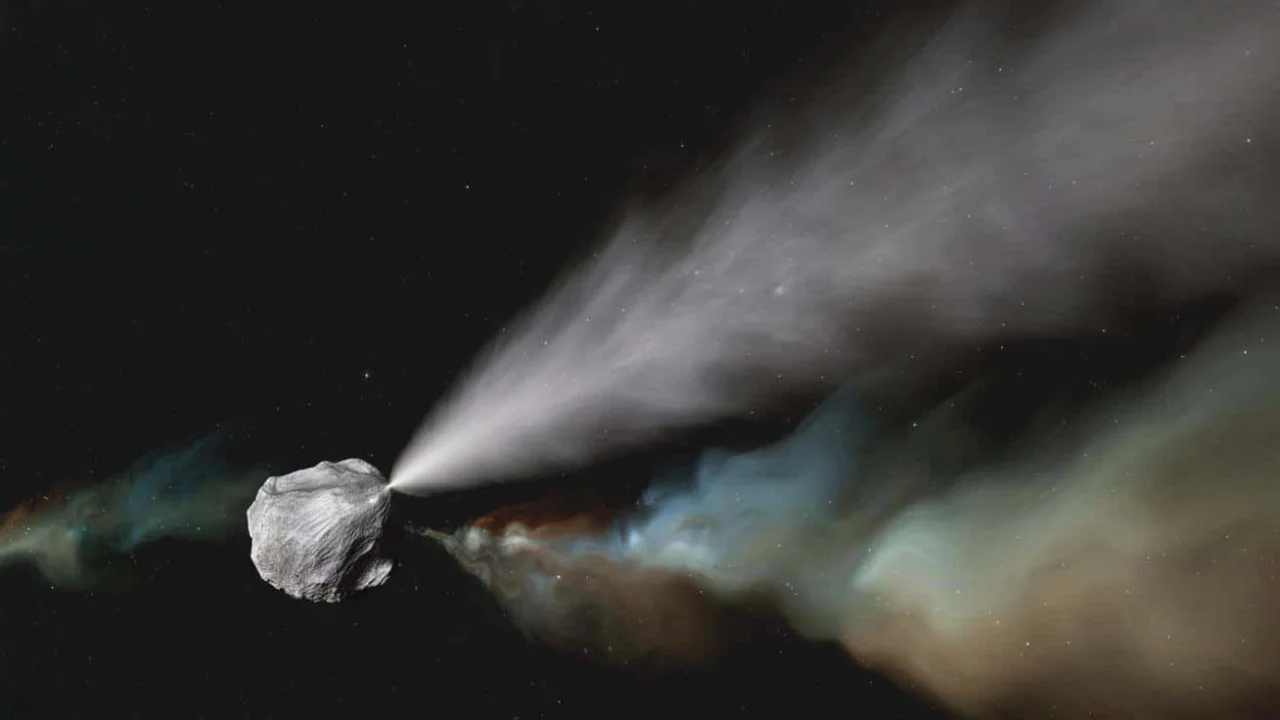
The eight high-resolution images reveal something extraordinary: instead of the fuzzy blob that ground-based telescopes usually show, we can now see individual jets of gas and dust streaming from the comet’s nucleus. The tail appears to fray into delicate threads, and the glow around the core shows intricate structure that tells us about the comet’s composition and behavior.
What’s particularly striking is how different this interstellar comet looks compared to our familiar solar system comets. The asymmetric glow and the way its tail bends suggest it’s made of materials that formed under completely different conditions, around a different star.
Breaking Down the Technical Breakthrough
The quality of these images represents a massive technical achievement. Here’s what makes them so groundbreaking:
| Feature | Previous Capabilities | New Images |
|---|---|---|
| Resolution | Fuzzy, pixelated blobs | Sharp nucleus and tail structure |
| Detail Level | Basic shape only | Individual gas jets visible |
| Observation Time | Limited windows | Sequential 8-frame capture |
| Atmospheric Interference | Significant distortion | Crystal clear space-based view |
The spacecraft responsible for these images was positioned perfectly to catch 3I ATLAS during its closest approach to our solar system. Unlike ground-based telescopes that have to peer through Earth’s turbulent atmosphere, this space-based camera had an unobstructed view.
Key technological advantages include:
- Ultra-sensitive imaging sensors designed for deep space photography
- Precise tracking systems that kept the fast-moving comet in frame
- Advanced image processing that enhanced subtle details
- Strategic timing that captured the comet at its most active phase
“The difference between these images and what we had before is like comparing a high-definition movie to a grainy security camera footage,” notes Dr. James Rodriguez, lead imaging specialist on the mission.
Each of the eight frames captures the comet from a slightly different angle, creating what scientists describe as a “time-lapse sculpture” of its motion and evolving tail structure.
Why This Discovery Matters for Science and Humanity
These unprecedented images of interstellar comet 3I ATLAS aren’t just pretty pictures—they’re revolutionizing our understanding of what exists beyond our solar system.
For scientists, this data provides the first detailed look at materials that formed around a completely different star. By analyzing the comet’s composition, tail behavior, and structural features, researchers can learn about the conditions in other stellar systems.
“Every pixel in these images tells us something about how planets and comets form around other stars,” explains Dr. Lisa Park, an astrochemist studying the data. “We’re essentially getting a sample of another solar system delivered right to our doorstep.”
The practical implications extend far beyond academic curiosity:
- Better understanding of how our own solar system compares to others
- Insights into the early formation of planetary systems
- Improved ability to detect and track future interstellar visitors
- Enhanced techniques for studying distant exoplanets
For space agencies, these images prove that we now have the technology to study interstellar objects in detail when they visit us. This capability will be crucial as we discover more of these cosmic visitors in the coming years.
The images also capture public imagination in a way that dry scientific data simply can’t. When people see that delicate tail structure and those intricate gas jets, they’re looking at something that truly came from the stars.
“There’s something profoundly moving about seeing an object that has traveled between star systems,” reflects Dr. Chen. “It connects us to the larger cosmos in a very tangible way.”
What Happens Next
Scientists are now diving deep into analysis of these eight images, looking for clues about the interstellar comet’s origin and composition. Advanced spectroscopy will reveal what elements make up 3I ATLAS, while detailed measurements of its tail dynamics will show how it responds to our Sun’s radiation.
The success of this imaging campaign is also spurring development of even more advanced space-based telescopes specifically designed to study interstellar visitors. Future missions might be able to track these objects for longer periods, or even send probes to intercept them.
As detection technology improves, astronomers expect to discover many more interstellar objects passing through our solar system. Some estimates suggest that at any given time, there could be dozens of these cosmic wanderers zipping past us undetected.
FAQs
What exactly is interstellar comet 3I ATLAS?
It’s a comet that originated from another star system and is now passing through our solar system, making it only the third confirmed interstellar object we’ve ever detected.
How are these new images different from previous comet photos?
These spacecraft images show unprecedented detail, including individual gas jets and tail structure that was impossible to see with ground-based telescopes.
Why is studying this comet so important?
Because it gives us our first detailed look at materials that formed around a different star, helping us understand how other solar systems work.
How fast is the comet traveling?
Interstellar objects typically travel at speeds of 20-40 kilometers per second relative to our Sun, much faster than regular solar system comets.
Will we see more interstellar visitors in the future?
Yes, improved detection technology means we’ll likely discover many more interstellar objects as our ability to spot them gets better.
Can regular people see this comet with backyard telescopes?
While very faint, dedicated amateur astronomers with good equipment and dark skies might be able to spot it, though it would appear as just a dim fuzzy object.


