
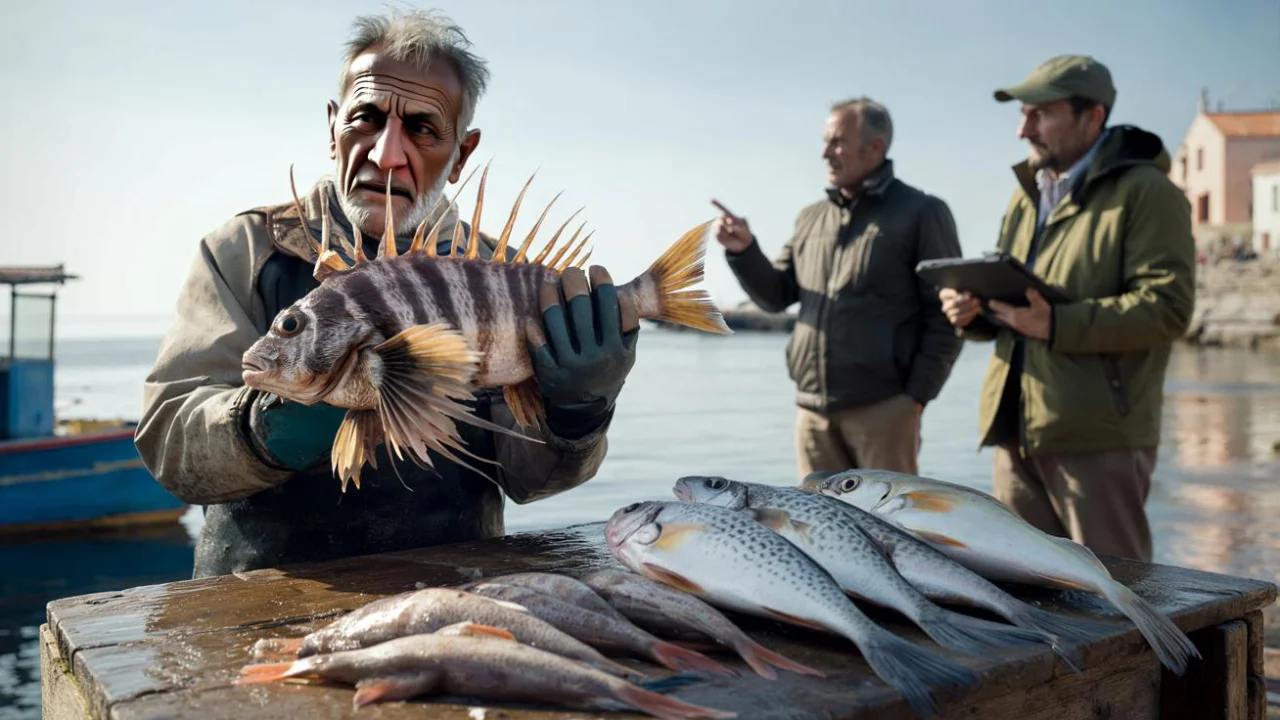
Maria Kostas has been selling fish at the same stall in Paphos for thirty-seven years. Her grandfather started this business, her father expanded it, and she planned to pass it to her son. But this morning, she’s staring at creatures she doesn’t recognize filling her ice bins.
“Look at this thing,” she says, holding up a spotted pufferfish with thick gloves. “My customers ask me what it is. I tell them it’s poison. They ask if it’s sustainable. I want to laugh, but it’s not funny anymore.”
Her neighbor, an old fisherman named Andreas, nods grimly. “The sea is changing. These killer fish are everywhere now. And somehow, the government says we should protect them. Protect the things that are destroying everything we know.”
The Invasion That Changed Everything
The Mediterranean Sea is experiencing an ecological crisis that’s reshaping coastal life from Cyprus to Spain. Invasive fish mediterranean species, particularly lionfish and various pufferfish varieties, have established permanent colonies throughout the eastern Mediterranean basin.
These aren’t just new additions to the local ecosystem. They’re apex predators with no natural enemies, voracious appetites, and breeding rates that would make rabbits jealous. A single lionfish can consume up to 30 small fish per day, while pufferfish devour everything from shellfish to sea urchins.
“We’re witnessing the most dramatic marine invasion in Mediterranean history,” explains Dr. Elena Dimitriou, a marine biologist at the University of Athens. “These species arrived through the Suez Canal, and they’re fundamentally altering food webs that have existed for millennia.”
The numbers tell a stark story. In some areas off Cyprus and Turkey, native fish populations have declined by up to 80% in just five years. Traditional fishing grounds that sustained families for generations are now dominated by species that many locals can’t even safely handle.
The Sustainability Paradox Breaking Communities
Here’s where the story takes a bizarre turn. European Union biodiversity policies, designed to protect marine life, now classify these invasive fish mediterranean species under complex protection frameworks. The same regulations that restrict fishing of native species often apply to the invaders too.
Local fishermen face a maddening situation:
- They can’t fish traditional species due to quota restrictions
- The invasive species are often covered by the same protective regulations
- Export markets don’t want unfamiliar fish species
- Tourism suffers as beaches become dangerous due to venomous species
- Young people leave fishing communities for other work
“Brussels bureaucrats have never seen a lionfish eat a grouper,” says Captain Yorgos Stavros, who’s been fishing Cyprus waters for forty years. “They write policies about biodiversity while our actual sea life disappears.”
The economic impact ripples beyond fishing boats. Restaurants struggle to source familiar species. Dive tourism operators report that once-vibrant reefs now look like underwater deserts. Fish markets that drew tourists now showcase creatures that look more like horror movie props.
| Species | Origin | Arrival Method | Impact Level |
|---|---|---|---|
| Lionfish | Red Sea/Indo-Pacific | Suez Canal | Severe |
| Pufferfish (multiple species) | Red Sea | Suez Canal | High |
| Barracuda | Indo-Pacific | Suez Canal | Moderate |
| Rabbitfish | Red Sea | Suez Canal | High |
When Policy Meets Reality on Mediterranean Shores
The disconnect between environmental policy and coastal reality creates daily frustrations. Fishermen report that enforcement officers sometimes fine them for catching invasive species without proper documentation, even when those same species are destroying local ecosystems.
“Last month, they fined my cousin for not having the right papers when he caught pufferfish,” explains Maria from her market stall. “These fish are eating our native species alive, but we need permission to remove them. It makes no sense.”
Environmental groups find themselves in an uncomfortable position too. Traditional conservation approaches don’t work when the threat comes from protecting biodiversity itself. Some organizations now quietly support controlled harvesting of invasive fish mediterranean populations, but official policies lag behind on-ground reality.
Dr. Hassan Al-Rashid, a marine invasion specialist working across the eastern Mediterranean, puts it bluntly: “We’re applying 20th-century conservation models to a 21st-century ecological crisis. The result is policy paralysis while ecosystems collapse.”
The Human Cost of Ecological Change
Behind every policy debate are real families watching their livelihoods disappear. Konstantinos Petrou’s family has fished the same waters near Limassol for four generations. His boats now return half-empty, and his crew is looking for other work.
“My son studies engineering now,” he says. “He won’t be the fifth generation of fishermen because there might not be fishing left.”
The social fabric of Mediterranean fishing communities is fraying. Young people leave for cities. Traditional knowledge about seasonal patterns and fish behavior becomes irrelevant when the species themselves vanish. Markets that once bustled with activity now feel hollow.
Tourism operators face their own challenges. Dive shops report that customers expect to see colorful Mediterranean fish but find alien landscapes instead. Beach hotels deal with guests injured by venomous species. The very assets that built coastal tourism are disappearing.
Some communities are fighting back with creative solutions. Cyprus restaurants now serve “lionfish specials,” trying to create market demand for invasive species. Malta runs spearfishing competitions targeting pufferfish. Greece experiments with processing invasive catch into fish meal for aquaculture.
“We can’t wait for Brussels to figure this out,” says restaurant owner Sophia Constantinou. “Either we adapt and start eating these monsters, or we lose everything we’ve built here.”
FAQs
Why are invasive fish protected if they’re destroying Mediterranean ecosystems?
EU biodiversity laws often treat all marine species equally, applying conservation measures that don’t distinguish between native and invasive species in practice.
How did these fish get into the Mediterranean?
Most invasive fish mediterranean species arrived through the Suez Canal, which connects the Red Sea to the Mediterranean, creating a pathway for tropical species to spread westward.
Can invasive Mediterranean fish be eaten safely?
Many can be eaten if properly prepared, but some like pufferfish require expert handling due to toxins. Lionfish are actually considered delicious when cooked correctly.
Are there any natural predators for these invasive species?
Very few. Mediterranean predators didn’t evolve with these species and often can’t handle their venomous spines or toxic flesh, giving invasive fish a massive survival advantage.
What can tourists do to help?
Try invasive species dishes at local restaurants, support fishing communities adapting to changes, and avoid activities that might spread invasive species to new areas.
Is the invasion reversible?
Marine biologists believe some control is possible through targeted fishing and ecosystem management, but complete removal of established invasive populations is extremely difficult in open ocean environments.


