
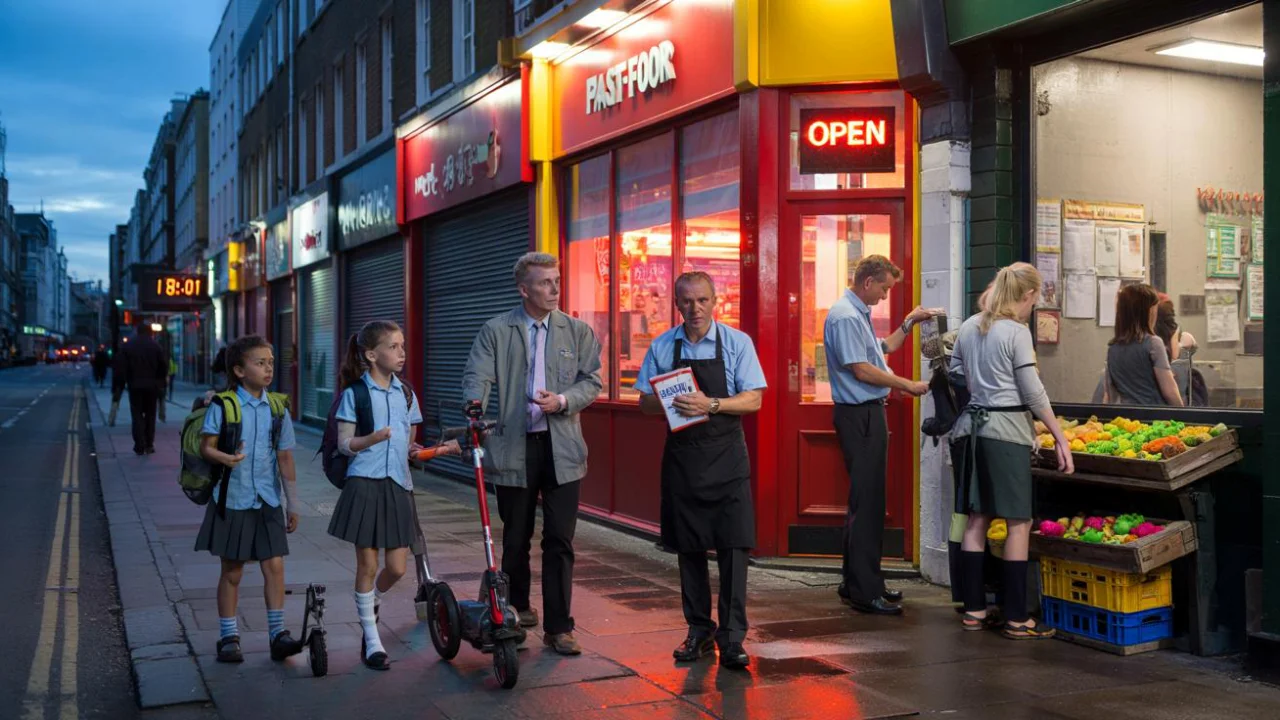
Sarah rushes through the city center at 6:15 p.m., her eight-year-old son trailing behind after football practice. They’ve done this routine a hundred times before – grab a quick burger, chips, and juice before heading home to tackle homework. But tonight, every fast-food outlet they pass has its lights dimmed and doors locked.
“Mum, why is McDonald’s closed?” her son asks, pressing his face against the darkened window. Sarah checks her phone. It’s barely past six o’clock on a Tuesday evening, yet the familiar glow of takeaway signs has vanished from the high street.
Welcome to Britain’s first junk food curfew – a radical experiment that’s dividing communities and rewriting the rules about when and where families can grab a quick meal.
What Exactly Is This Junk Food Curfew?
The controversial policy forces all fast-food outlets, takeaways, and quick-service restaurants to close their doors at exactly 6 p.m. every day. No exceptions, no late-night meals, no emergency dinner runs after work.
City officials implemented this junk food curfew as part of an ambitious plan to tackle childhood obesity rates that have reached alarming levels. The data backing their decision is stark – over 40% of children in some neighborhoods are classified as overweight or obese by the time they leave primary school.
“We’re not trying to be the food police, but we have a responsibility to protect our children’s health,” says Councillor Margaret Davies, who championed the legislation. “Late-night fast food consumption was becoming a serious problem, especially around schools and in areas with limited healthy food options.”
The curfew affects everything from major chains like KFC and Burger King to small independent chicken shops and pizza outlets. Only restaurants that serve sit-down meals with table service are exempt, creating an unusual two-tier dining system in the city center.
How the New Rules Are Reshaping Daily Life
The impact of the junk food curfew extends far beyond hungry teenagers. Here’s what’s changed since the policy took effect:
| Time Period | Before Curfew | After Curfew |
|---|---|---|
| 5:00-6:00 PM | Moderate fast food traffic | Frantic rush, long queues |
| 6:00-9:00 PM | Peak takeaway hours | All fast food outlets closed |
| After 9:00 PM | Late-night dining options | Only sit-down restaurants open |
- Frantic 5 p.m. rush: Fast food outlets now experience chaotic queues as customers race to beat the 6 p.m. deadline
- Supermarket surge: Evening grocery sales have increased by 23% as families adapt to cooking at home
- Restaurant boost: Sit-down establishments report a 15% increase in dinner bookings
- Job concerns: Many takeaway workers face reduced hours or unemployment
- Delivery confusion: Food delivery apps stop accepting fast food orders after 6 p.m., frustrating customers
Local business owner Ahmed Hassan, who runs three chicken shops in the city, describes the financial pressure: “My evening shift used to be our busiest time. Now we’re losing 60% of our daily revenue. I’ve had to let two staff members go already.”
The Battle Lines Are Drawn
Public opinion on the junk food curfew splits along predictable lines, but with some surprising twists. Health campaigners and many parents support the initiative, while business owners and civil liberties groups strongly oppose it.
Dr. James Mitchell, a pediatric nutritionist at the local hospital, backs the policy: “We’re seeing children consume their entire daily calorie allowance in a single late-night takeaway meal. Something drastic needed to be done to break these patterns.”
But the criticism is equally fierce. Lisa Rodriguez, a single mother working two jobs, explains her frustration: “I finish work at 7 p.m. and pick up my kids from after-school care. Sometimes a quick burger was the only way to get them fed before bedtime. Now I’m spending twice as much on groceries and still struggling to find time to cook.”
The policy has created some unexpected consequences. Street food vendors report booming business as they’re not subject to the same restrictions. Meanwhile, some fast food chains are exploring whether they can reclassify themselves as “restaurants” to avoid the curfew.
Small business federation spokesperson Tom Williams calls it “economic vandalism dressed up as health policy.” He argues that the junk food curfew unfairly targets working-class businesses while wealthier areas with sit-down restaurants remain unaffected.
What Happens Next?
The city council plans to monitor obesity rates, school meal participation, and local business revenue over the next 18 months. If the data shows positive health outcomes, other cities across the country have expressed interest in adopting similar policies.
Early indicators are mixed. School nurses report fewer children arriving with energy drinks and fast food for breakfast, but food poverty charities worry that families are struggling to afford alternative meals.
The junk food curfew represents a bold experiment in public health policy – one that treats food access as a community issue rather than just individual choice. Whether it succeeds or fails could influence how British cities approach the obesity crisis for years to come.
For now, families like Sarah’s are still adapting. She’s started keeping emergency pasta and sauce in her car, just in case. “It’s inconvenient,” she admits, “but maybe that’s the point. Maybe we all needed a push to change our habits.”
FAQs
What types of food outlets are affected by the junk food curfew?
All fast-food chains, takeaways, and quick-service restaurants must close at 6 p.m. Only full-service restaurants with table service are exempt from the curfew.
Can I still order delivery after 6 p.m.?
No, food delivery apps cannot process orders from fast-food outlets after 6 p.m. However, you can still order from restaurants that offer table service.
What’s the penalty for breaking the curfew?
Businesses that stay open past 6 p.m. face fines starting at £1,000 for first offenses, with potential license revocation for repeat violations.
Are there any exceptions to the 6 p.m. closing time?
No exceptions are currently in place. The curfew applies seven days a week, including weekends and holidays.
How long will this policy remain in effect?
The city council will review the junk food curfew after 18 months based on health outcomes, business impact, and public feedback.
Could this policy spread to other cities?
Several other UK cities are watching the results closely and may implement similar measures if childhood obesity rates show improvement.


