
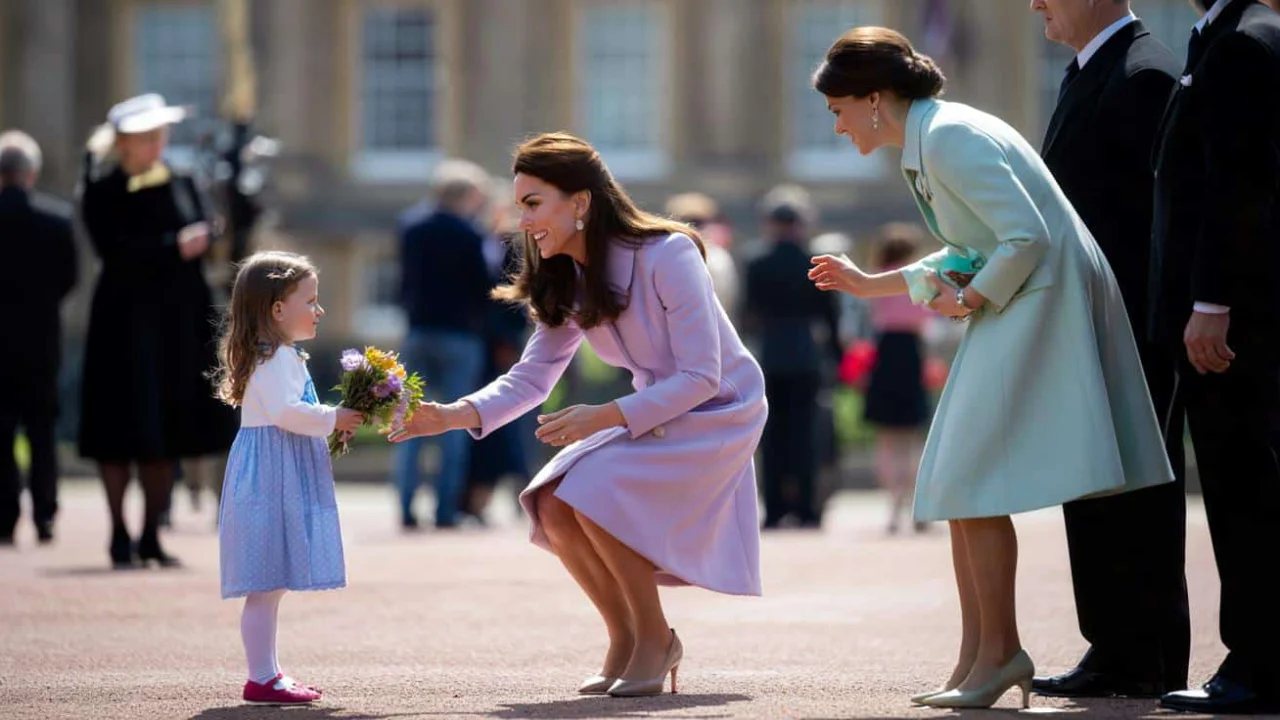
Sarah watched the video on her phone during her lunch break, pausing it right at the moment Kate Middleton bent down to meet a little girl’s eyes. Something about that simple gesture hit her differently than the usual royal wave-and-smile routine. As a kindergarten teacher herself, Sarah recognized the move instantly – it’s what you do when you want a scared child to trust you.
But apparently, that natural instinct had just sparked a royal controversy. The comments under the video were brutal: accusations of copying, debates about protocol, and heated arguments about who “owned” the right to kneel down and talk to children.
Welcome to modern monarchy, where even basic human kindness becomes a battlefield.
The gesture that broke the internet
Kate Middleton’s recent royal engagement should have been routine. A walkabout, some handshakes, maybe a few flower bouquets from excited children. Instead, one small moment – the Princess of Wales dropping to her knees to speak with a nervous young girl – has ignited a fierce debate about royal protocol and whether Kate is “copying” Sophie, Duchess of Edinburgh.
The controversy stems from what royal watchers have dubbed Sophie’s “signature move.” For years, the Duchess of Edinburgh has made headlines for her approachable style with children, frequently bending down or squatting to their eye level during official visits. It’s become her calling card, earning praise for its warmth and relatability.
Now Kate has adopted the same gesture, and the internet can’t decide if it’s sweet or stolen.
“Sophie pioneered this approach years ago,” says royal commentator Victoria Manning. “She’s always been the most naturally maternal of the senior royals, so seeing Kate suddenly mirror that exact gesture feels a bit calculated.”
Breaking down the royal protocol controversy
The debate reveals deeper tensions about how modern royalty should behave. Traditional kate middleton royal protocol has always emphasized maintaining dignity through physical distance and formal posture. Royal family members were expected to remain upright, perhaps bending slightly at the waist but never fully crouching or kneeling in public view.
Here’s what’s really at stake in this seemingly simple gesture:
- Traditional protocol emphasizes maintaining royal dignity through formal posture
- Modern expectations favor relatability and authentic human connection
- The gesture creates vulnerability – both physical and symbolic
- Social media amplifies every move, making protocol breaks more visible
- Public reactions split between praising warmth and criticizing informality
The comparison photos spreading across social media show striking similarities between Sophie and Kate’s interactions with children. Both royals adopt the same crouched position, maintain direct eye contact, and create an intimate bubble away from the formal receiving line.
| Royal Protocol Element | Traditional Approach | Modern Adaptation |
|---|---|---|
| Physical Positioning | Remain upright, slight bow | Crouch to child’s eye level |
| Distance Maintained | Arm’s length minimum | Close, intimate interaction |
| Duration of Contact | Brief, formal exchange | Extended, personal moment |
| Media Consideration | Always camera-ready pose | Authentic interaction over optics |
“The old guard sees this as undignified,” explains royal historian James Fletcher. “But younger audiences see it as proof the royals actually care about connecting with people, especially children.”
Why this moment matters beyond the palace walls
The controversy reflects a broader shift in how public figures navigate authenticity versus tradition. Kate’s gesture – whether borrowed from Sophie or not – signals the monarchy’s ongoing evolution toward a more accessible, emotionally intelligent public face.
Parents watching these interactions see something different than protocol experts. They see adults who understand how to make children feel safe and heard. The gesture translates across cultures and contexts in ways that formal handshakes never could.
But the “copying” accusations point to another modern phenomenon: the need for individual royals to carve out distinct public personas. Sophie’s warmth with children has been her defining characteristic for years. When Kate adopts the same approach, it raises questions about authenticity and territorial boundaries within the royal family.
“Every senior royal needs their niche,” notes royal biographer Emma Thornton. “Sophie had the nurturing mother figure role locked down, so Kate stepping into that space creates natural friction.”
The real impact on royal tradition
This debate isn’t really about who bent their knees first. It’s about whether the monarchy can adapt its image without losing its mystique. The institution has always balanced accessibility with authority, but social media has made that balance more precarious.
Every gesture gets analyzed, compared, and judged in real-time. Traditional kate middleton royal protocol developed over centuries to maintain dignity and distance. Modern expectations demand relatability and emotional intelligence. These two forces don’t always align comfortably.
The controversy also highlights how royal women face different scrutiny than their male counterparts. Prince William’s interactions with children rarely generate accusations of copying or protocol-breaking. The focus on Kate and Sophie’s similar gestures reflects deeper expectations about how royal mothers should behave.
“Female royals carry the emotional labor of the monarchy,” says gender studies professor Dr. Lisa Chen. “They’re expected to be both perfectly poised and genuinely warm, which is an impossible standard.”
Whether Kate consciously adopted Sophie’s approach or simply followed her maternal instincts, the gesture has succeeded in creating genuine connection. The nervous little girl who received Kate’s attention looked visibly more comfortable after their eye-level exchange.
Perhaps that’s what matters most – not the protocol implications or copying accusations, but the simple human moment between an adult and a child who needed reassurance. In an institution often criticized for being out of touch, these small gestures of warmth might be exactly what the monarchy needs to stay relevant.
FAQs
Did Kate Middleton really copy Sophie’s gesture?
There’s no definitive proof Kate intentionally copied Sophie, though both royals use similar approaches when interacting with children during official visits.
Is it against royal protocol to kneel or crouch in public?
Traditional protocol favored maintaining upright posture, but modern royals have more flexibility to show warmth and approachability during engagements.
Why does this gesture matter so much?
Royal body language carries symbolic weight about power, accessibility, and the monarchy’s relationship with the public, making even small gestures significant.
How has social media changed royal protocol?
Social media amplifies every royal interaction, making protocol breaks more visible and creating instant public debates about appropriate behavior.
Do other royal family members use similar gestures?
Several modern royals, including Princess Diana historically, have used eye-level interactions with children, though Sophie and Kate are most associated with this approach currently.
What does this controversy reveal about modern monarchy?
The debate highlights tensions between maintaining traditional dignity and meeting contemporary expectations for authentic, relatable public figures.


