
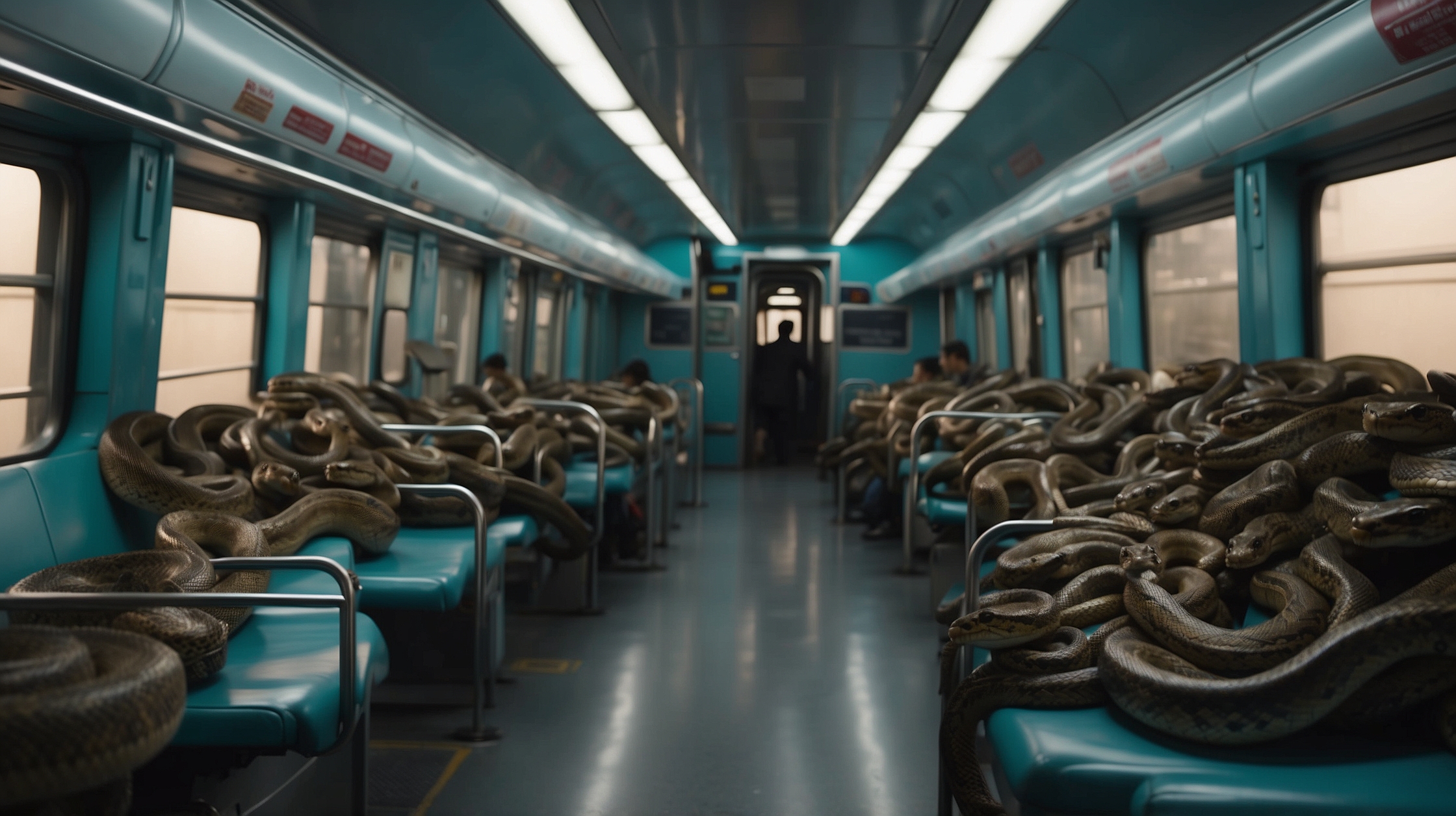
Commuters on India’s vast railway networks were stunned this week after multiple passengers reported sightings of **king cobras**—one of the world’s most dangerous snakes—onboard moving trains. The incidents have triggered a wave of panic among travelers and raised serious concerns about public safety, especially as videos of the encounters swiftly went viral on social media. In a country where millions depend daily on the railway system, the idea that venomous reptiles are slithering into passenger coaches has inflamed public opinion, prompted official investigations, and spotlighted neglected intersections of **wildlife conservation** and urban transit.
The strange phenomenon isn’t isolated. At least four separate sightings of king cobras were reported across trains in West Bengal, Odisha, Assam, and Bihar in the past ten days. In two confirmed incidents, railway officials had to halt trains and seek assistance from forest personnel to safely extract the snakes. Eyewitnesses described scenes of panic and chaos, with commuters scrambling to avoid the reptiles. Preliminary inquiries suggest the cobras may have been intentionally placed on trains by illegal wildlife traffickers—a claim now under thorough investigation by India’s Railway Protection Force (RPF) and the Wildlife Crime Control Bureau (WCCB).
King cobras on Indian trains: What we know so far
| Incident Timeline | Last 10 days |
|---|---|
| Total Sightings | At least four confirmed |
| Regions Affected | West Bengal, Bihar, Odisha, Assam |
| Possible Cause | Suspected illegal wildlife trafficking |
| Official Investigations | Launched by RPF and WCCB |
| Most Affected Trains | Passenger trains on Eastern Railway zones |
| Public Reaction | Widespread panic and commuter outrage |
Eyewitness accounts reveal chilling scenarios
In one particularly harrowing instance near Malda Town, passengers on the Howrah–New Jalpaiguri Shatabdi Express were jolted by the sight of a coiled king cobra near the toilet area of the AC Coach C-3. The train was immediately stopped at the nearest station, and emergency protocols were initiated as local forest authorities were summoned. Thankfully, no injuries were reported, but passengers claimed they received almost no information from onboard staff and were left to fend for themselves during the confusion.
“We saw the snake just a few meters away from seats where children were playing,” one shaken passenger told local media. “People were shouting and running. It was like a scene from a horror movie.”
Expert opinions point to wildlife trafficking routes
Experts have raised red flags that these incidents may be indicators of a larger underlying problem: the **illegal trade of protected species** using India’s aging train infrastructure. King cobras, which are protected under Schedule II of the Wildlife (Protection) Act, 1972, are highly valuable in underground wildlife markets, both domestically and internationally, due to their venom and purported medicinal value.
These snakes are not just appearing at random. There’s a strong possibility of intentional movement by poachers using the railways as a smuggling channel.
— Dr. Kavita Rao, Wildlife Policy Analyst
Investigators are now scrutinizing CCTV footage, manifests, and surveillance logs from cargo compartments suspected of being exploited for unlawful animal transport.
Railway authorities under fire for lax security
The incidents have ignited criticism directed toward Indian Railway authorities, with accusations of ineffective monitoring, poor hygiene in coaches, and lack of robust screening measures for luggage or cargo that could be used to conceal animals. As concern grows, both railway unions and civic bodies are pressing for more stringent checks on goods cars and live monitoring in suspicious zones where security has historically been underfunded.
The safety of passengers must be paramount. These events expose glaring lapses in the system that need immediate fixing.
— Ajay Bajaj, President, Indian Railways Commuters Forum
Public outrage and demand for accountability
Commuters across urban centers like Kolkata, Patna, and Bhubaneswar are taking to social media to voice their anger. Demands include mandatory fumigation before departure, installation of snake-repellent devices in compartments, and a formal assurance from the Railway Ministry. Passengers have noted that despite the country’s highly advanced train schedules and booking systems, the infrastructural modernization has failed to incorporate baselines of **biosecurity and wildlife deterrents**.
Several online petitions have accrued thousands of signatures urging the Indian Railways to implement **smart security tools** such as AI-based anomaly detection in passenger and cargo movement, especially in routes that pass through forest corridors.
Impact on wildlife and ecological imbalance
Beyond human safety, experts warn that such intrusions by wildlife onto transit networks can disturb fragile ecosystems. When reptiles like king cobras are removed or trafficked blindfolded and crated, they often suffer traumatic injuries, respiratory issues, or death. India’s Northeast and Eastern rail corridors pass through some of the subcontinent’s richest biospheres—habitats that are increasingly encroached upon as train lines expand deeper into green zones.
The ecology around railways must be treated with care, or we could be looking at a cycle of human-animal conflict spiraling out of control.
— Prof. Niharika Sen, Ecologist, Indian Institute of Science
Steps being taken by officials
In response to the soaring public concern, the Railway Board has authorized a high-level task force in collaboration with the WCCB to control animal intrusion and investigate potential smuggling routes. A provisional safety bulletin has also been issued to all zone heads, and teams are being instructed to reinforce inspection protocols, particularly in areas with high environmental vulnerability.
Simultaneously, state governments in Odisha and West Bengal have started deploying drone-based surveillance teams and sought funding to trial “snake deterrent systems” using heat sensors and vibration emitters at select suburban platforms. The efforts aim to not only protect passengers but also to protect animal species from trauma and harm, striking a balance between development and biodiversity.
Potential winners and losers in this crisis
| Winners | Losers |
|---|---|
| Wildlife Crime Control Bureau (for action taken) | Indian Railway authorities (for lapses) |
| Public safety advocacy groups | Illegal wildlife traffickers under scrutiny |
| Environmental NGOs pushing conservation reform | Rail commuters facing security fears |
Short FAQs about the king cobra train scandal
Are king cobras native to the regions where they were spotted?
Yes, king cobras are native to India, and their typical habitat includes forests in Assam, Odisha, and Bengal. However, spotting them inside urban railway coaches is highly unusual and alarming.
Could passengers be bitten by these snakes?
Yes, theoretically. King cobras are venomous and can be aggressive if threatened. Fortunately, no bites have been reported in the recent incidents.
Is it true these snakes were being smuggled?
While investigations are ongoing, early evidence and routing patterns suggest possible links to illegal wildlife trafficking operations using train routes as transport channels.
Are there safety systems in place for such animal intrusions?
Currently, safety protocols are limited. The recent incidents have prompted calls for enhanced surveillance and systemic checks to prevent future occurrences.
What actions can commuters take if they spot a snake?
The general advice is to move away quietly and inform the train staff immediately. Avoid trying to handle the animal. Many trains now have emergency helpline numbers to report such sightings.
What penalties exist for smuggling protected wildlife?
Under the Wildlife (Protection) Act, 1972, smuggling protected animals like king cobras is a non-bailable offense, potentially punishable by up to seven years in prison.
How has public transport been affected since the reports?
Some regional trains have witnessed cancellations and delays. Authorities have also increased random baggage inspections and security screenings in snake-prone routes.
Are more animals likely to be found this way?
It’s possible, given India’s biodiversity and extensive rail network. Officials are now mapping high-risk zones to mitigate further occurrences and build better response systems.


