
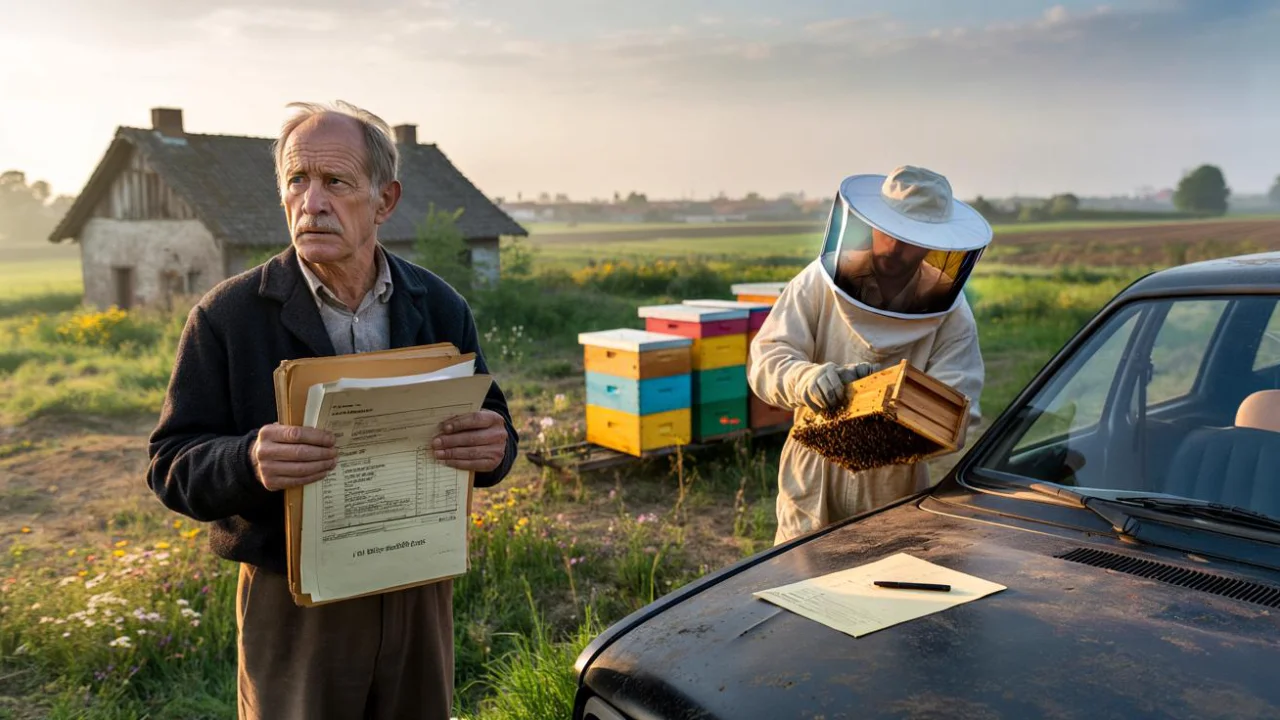
Marie stared at the tax inspector’s letter for the third time, her coffee growing cold on the kitchen table. Two years ago, when young Thomas knocked on her door asking to place his beehives on her unused back field, it seemed like the perfect arrangement. He’d give her fresh honey, help maintain the land, and she’d finally see some life in the overgrown corner of her property.
Now that simple land for honey deal had spiraled into a bureaucratic nightmare. The tax office wanted to classify their arrangement as a rental business. Thomas was facing fines for “undeclared commercial activity.” And Marie? She was being told she might owe back taxes on the jars of honey she’d been receiving.
“All we wanted was to help each other out,” she whispered to her husband. “When did being neighborly become a crime?”
How Innocent Agreements Turn Into Tax Traps
Across the country, similar stories are unfolding. What starts as a friendly handshake between landowners and beekeepers is becoming a legal minefield that’s tearing rural communities apart.
The issue is surprisingly common. A retiree with spare land meets a young beekeeper struggling to find affordable space for hives. They shake hands on a simple deal: land in exchange for honey, maybe some light maintenance work. No money changes hands. Everyone feels good about supporting local agriculture and biodiversity.
Then reality hits. Tax authorities are increasingly scrutinizing these informal arrangements, arguing that honey payments constitute taxable income. Agricultural inspectors question whether proper permits were obtained. Insurance companies worry about liability issues.
“The law doesn’t recognize the concept of ‘just being nice,'” explains rural tax specialist Claire Dubois. “Every transaction has to fit into predetermined categories, and these honey arrangements often don’t fit neatly anywhere.”
The Real Cost of Bureaucratic Confusion
The impact extends far beyond paperwork headaches. These tax investigations are destroying relationships and discouraging environmental cooperation at the worst possible time.
Here’s what’s at stake in a typical land for honey deal investigation:
- Retroactive tax bills: Landowners face demands to pay income tax on honey received, sometimes going back several years
- Business registration requirements: Simple arrangements suddenly need commercial licenses and agricultural permits
- Insurance complications: Standard homeowner’s policies may not cover beekeeping activities
- Property reclassification: Land might be reclassified as commercial, affecting property taxes
- Environmental impact: Beekeepers relocate hives to less suitable locations or abandon beekeeping entirely
The numbers tell a sobering story. Agricultural mediator Jean-Paul Moreau estimates that informal beekeeping arrangements have dropped by 30% in rural areas over the past two years, largely due to fear of tax complications.
“People are scared,” Moreau says. “They’d rather let their land go unused than risk getting tangled up with tax inspectors.”
| Issue | Percentage of Cases | Average Cost |
|---|---|---|
| Retroactive tax demands | 65% | €2,400 |
| Required business registration | 80% | €800 |
| Insurance policy changes | 45% | €400/year |
| Legal consultation fees | 70% | €1,200 |
When Good Intentions Meet Bad Laws
The irony is painful. At a time when environmental protection and local food production are national priorities, bureaucratic red tape is killing exactly the kind of grassroots cooperation the country needs.
Beekeeper associations report that members are increasingly reluctant to approach landowners, fearing the legal complications that might follow. Landowners, meanwhile, are turning down requests to host hives, worried about tax implications they don’t understand.
“We’re creating a system that punishes environmental stewardship,” argues biodiversity consultant Dr. Sophie Laurent. “These informal partnerships were supporting pollinator populations in agricultural areas where bees are desperately needed.”
The situation has become so problematic that some regions are experimenting with simplified frameworks for small-scale land sharing. But progress is slow, and many existing arrangements remain in legal limbo.
A Nation Divided Over Simple Solutions
The controversy has exposed deeper tensions about regulation, rural life, and community cooperation. Urban lawmakers often struggle to understand why rural residents can’t simply “follow proper procedures” for these arrangements.
Rural communities, however, see the crackdown as another example of bureaucratic overreach destroying traditional ways of life. The land for honey deal represents something larger: the ability to solve problems through neighborly cooperation rather than official channels.
“My grandfather would trade labor for vegetables, tools for hay, help for help,” says affected landowner Michel Pernet. “Now they want contracts and tax forms for everything. It’s killing the spirit of community.”
Legal experts are divided on solutions. Some advocate for specific exemptions for small-scale bartering arrangements. Others argue that clear taxation rules, however burdensome, protect both parties in the long run.
The debate has reached parliament, where rural representatives are pushing for legislative changes to protect informal agricultural cooperation. Urban legislators worry about creating loopholes that could be exploited by larger commercial operations.
Meanwhile, people like Marie and Thomas remain caught in the middle, watching their simple agreement become a symbol of everything wrong with modern bureaucracy. Their bees continue to produce honey, but the sweetness has gone out of their arrangement.
FAQs
Are all land for honey deals illegal?
No, but they need proper documentation and may have tax implications depending on the value of honey exchanged.
How much honey value triggers tax obligations?
Generally, any regular exchange of goods for land use could be considered taxable income, regardless of amount.
Can these arrangements be made legal?
Yes, with proper contracts, permit applications, and tax declarations, but the process can be complex and costly.
What should landowners do if contacted by tax authorities?
Seek immediate legal advice and gather all documentation related to the arrangement, including any informal agreements.
Are there alternatives to informal honey deals?
Some regions offer simplified frameworks for small-scale agricultural partnerships, but availability varies by location.
Will the law change to protect these arrangements?
Legislative proposals are under consideration, but no concrete timeline exists for reform.


