
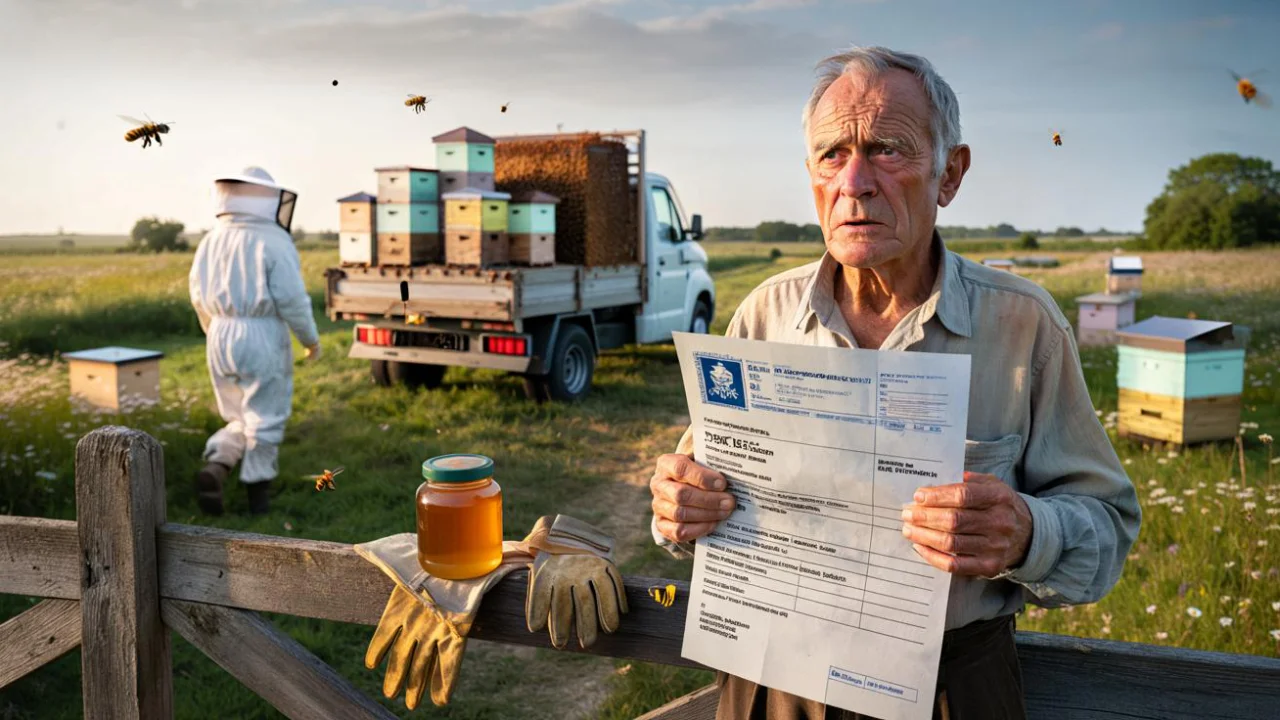
Marcel Dubois thought he was doing something beautiful when he shook hands with the local beekeeper last spring. His late father’s field had sat empty for years, just collecting weeds and property taxes. When Pierre arrived with his gentle proposal—use the land for free, share a few jars of honey each season, maybe slip him twenty euros for upkeep—it felt like breathing life back into forgotten soil.
Twelve months later, Marcel stared at an official letter demanding €2,400 in back taxes, penalties, and interest. The tax office had reclassified his simple land for honey deal as “undeclared professional rental income.” Pierre’s hives were gone by morning, loaded onto his truck under cover of darkness. The wildflowers still bloomed, but the partnership that seemed so innocent had crumbled into a bureaucratic nightmare.
This isn’t just Marcel’s story anymore. It’s become a flashpoint dividing an entire nation over where friendship ends and taxable business begins.
How a handshake became a tax audit
The original arrangement couldn’t have been simpler. Marcel owned five acres of unused farmland inherited from his father. Pierre needed safe, pesticide-free space for his twelve beehives. They agreed on what felt like a neighborly swap: free land access in exchange for honey and minimal compensation for property taxes.
No written contracts existed. No business registration. No formal rent calculations. Just two men who thought they were helping each other while supporting local bee populations.
“We never imagined this would become a legal issue,” says rural law expert Catherine Moreau. “These informal arrangements have existed in French countryside for generations. But tax authorities are increasingly scrutinizing any exchange of value, however small.”
The trouble started when neighbors began questioning the arrangement. Some witnessed Pierre’s regular visits to collect honey and maintain hives. Others noticed Marcel occasionally receiving small payments. Someone eventually reported potential “undeclared activity” to local tax authorities.
Within months, what began as community curiosity escalated into a formal investigation. Tax inspectors reclassified the land for honey deal as commercial property rental, triggering demands for back taxes on income Marcel barely remembered receiving.
The devastating costs of simple arrangements
The financial impact on both men reveals why this case has struck such a nerve across rural communities. Marcel faces immediate tax liabilities that dwarf any benefit he ever received from the arrangement.
| Cost Category | Amount (EUR) | Impact |
|---|---|---|
| Back taxes owed | 800 | 18 months of reassessed rental income |
| Penalties | 1,200 | Failure to declare income penalty |
| Interest charges | 400 | Accumulating monthly |
| Legal consultation | 600 | Attempts to resolve dispute |
| Total honey received | 180 | Actual value over 18 months |
Pierre suffered different but equally serious consequences. Fearing expanded scrutiny of his small beekeeping operation, he abandoned not only Marcel’s land but two other similar arrangements. His honey production dropped by 40% overnight.
The ripple effects extend far beyond individual losses:
- Local bee populations lost access to pesticide-free foraging areas
- Other landowners immediately canceled informal arrangements with beekeepers
- Small-scale honey producers face increased regulatory uncertainty
- Rural communities question traditional cooperation practices
“This case has created a chilling effect across our region,” explains beekeeping association president Jean-Paul Fontaine. “People are afraid to help each other because they don’t know when friendship becomes a taxable transaction.”
A nation divided over rural traditions
The Marcel and Pierre case has exploded across social media and rural forums, splitting public opinion into passionate camps. The debate reveals deeper tensions about government overreach, rural traditions, and environmental protection.
Supporters of the landowner argue that excessive bureaucracy is strangling small acts of environmental stewardship. They point out that Marcel’s arrangement supported biodiversity while generating minimal personal benefit. Many rural residents share similar stories of informal cooperation that could face identical scrutiny.
Critics counter that the law applies equally regardless of intentions or amounts involved. They argue that regular payments for land use constitute rental income that must be declared, however modest. Some suggest that overlooking small-scale violations creates unfair advantages over legitimate businesses following proper procedures.
“The tax code doesn’t distinguish between large commercial operations and friendly arrangements,” notes tax attorney Philippe Rousseau. “Any recurring exchange of value for property access technically constitutes taxable rental income.”
Environmental advocates occupy middle ground, concerned that rigid enforcement discourages conservation partnerships. They worry that similar crackdowns could reduce available habitat for endangered pollinators.
What this means for rural communities
The implications reach far beyond Marcel’s empty field. Rural communities across the country are reassessing traditional cooperation arrangements that never involved formal documentation.
Farmers sharing equipment, neighbors exchanging labor for produce, and informal land-use agreements all face potential reclassification as taxable transactions. The uncertainty has prompted many to abandon beneficial partnerships rather than risk unexpected tax bills.
Local mayors report increased inquiries about tax implications of community projects. Beekeepers describe difficulty finding suitable locations as landowners become wary of liability. Environmental groups worry about declining habitat access for conservation efforts.
“We’re seeing the breakdown of traditional rural mutual aid,” observes rural sociology researcher Dr. Marie Blanchard. “People are choosing isolation over cooperation because the legal risks feel too high.”
The government faces pressure to clarify guidelines for small-scale arrangements while maintaining tax compliance. Some legislators propose exemptions for environmental partnerships below certain value thresholds. Others suggest simplified reporting procedures that acknowledge informal cooperation without eliminating oversight.
Meanwhile, Marcel’s field remains empty. The wildflowers bloom each spring, but no buzzing hives remind visitors of the partnership that once seemed so natural. The land for honey deal that brought two men together ultimately drove them apart, leaving questions about rural cooperation that extend far beyond one retired factory worker and his departed beekeeping friend.
FAQs
What exactly triggered the tax investigation in this case?
Neighbors reported suspicious activity after witnessing regular visits and small payments between the landowner and beekeeper, prompting tax authorities to investigate potential undeclared income.
Are all informal land-sharing arrangements now at risk?
While not automatically taxable, any arrangement involving regular payments or valuable exchanges could potentially face scrutiny if reported to tax authorities.
How much money was actually involved in this honey deal?
Marcel received approximately €180 worth of honey and small cash payments over 18 months, but faces over €3,000 in taxes, penalties, and legal costs.
Could this case have been avoided with proper documentation?
Yes, a formal lease agreement with proper tax declarations would have prevented penalties, though it would have made the arrangement less attractive for both parties.
What’s the current status of the legal dispute?
Marcel is appealing the tax assessment while Pierre has relocated his beekeeping operations to avoid further complications with informal arrangements.
How are other rural communities responding to this case?
Many are canceling similar informal arrangements or seeking legal advice before entering new partnerships, creating challenges for small-scale environmental cooperation.


