
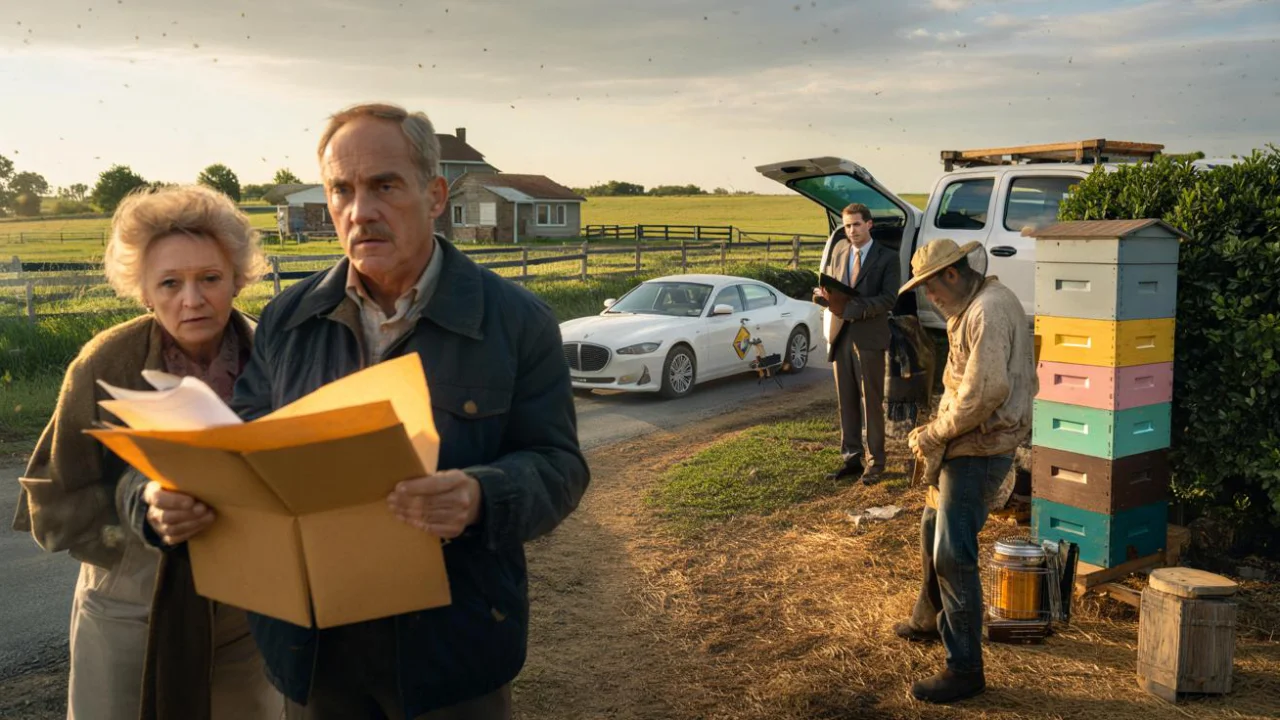
Margaret and Tom Richardson never imagined that letting their neighbor place a few beehives on their unused field would turn into a legal nightmare. The 72-year-old couple had simply said “yes” when young Marcus, the local beekeeper, asked if he could set up his operation on their back acres. No money changed hands. No contracts were signed. Just two elderly people trying to help a struggling young man make a living.
Eighteen months later, they received a letter from the tax authority that would change everything. The government claimed they owed thousands in back taxes on “undeclared agricultural income” and faced potential penalties for operating an unlicensed business. Their act of kindness had somehow become a commercial enterprise in the eyes of the law.
This isn’t just about one couple’s misfortune. It’s about a growing crisis where informal land arrangements between ordinary people are colliding head-on with modern bureaucracy, creating land use disputes that destroy communities and criminalize basic human decency.
When Good Neighbors Become Unintentional Business Partners
The Richardsons’ story reveals a troubling reality facing rural communities worldwide. What families consider neighborly favors, authorities increasingly view as taxable commercial activities. The couple’s “unused” field generated honey sales worth over $15,000 annually, none of which they ever saw or claimed.
“We thought we were just being nice,” Margaret Richardson said during a recent interview. “Now they’re treating us like tax cheats. We don’t even like honey.”
The tax investigation revealed Marcus had built a thriving business using their land as his primary production site. He sold honey at farmers markets, supplied local restaurants, and even launched an online store. All while the Richardsons remained completely unaware of the business implications.
Legal experts say these informal arrangements create gray areas that neither party fully understands until it’s too late.
“Most people have no idea that allowing commercial activity on their property, even for free, can create tax obligations and legal liabilities,” explains agricultural law attorney Sarah Mitchell. “The law doesn’t recognize ‘just being nice’ as a business model.”
The Hidden Costs of Informal Land Agreements
Land use disputes like the Richardsons’ case are becoming increasingly common as authorities crack down on undocumented agricultural activities. The financial and legal consequences can devastate families who never intended to enter business partnerships.
Here’s what property owners face when informal arrangements go wrong:
- Back taxes on income they never received
- Penalties for unreported commercial activity
- Legal fees to defend against government claims
- Potential loss of agricultural tax exemptions
- Liability for environmental or safety violations
- Disputes over property improvements made by users
| Type of Dispute | Average Cost to Resolve | Time to Settlement |
|---|---|---|
| Tax liability claims | $8,000-$25,000 | 12-18 months |
| Commercial use violations | $3,000-$15,000 | 6-12 months |
| Property boundary disputes | $10,000-$40,000 | 18-36 months |
| Environmental compliance issues | $5,000-$50,000 | 12-24 months |
The emotional toll often exceeds the financial burden. Many families report feeling betrayed by both the system and the people they tried to help.
“These disputes tear apart rural communities,” says community mediator James Crawford. “Neighbors stop talking to each other. Trust disappears. People become afraid to help anyone.”
The Ripple Effect on Rural Communities
The Richardson case has sent shockwaves through their small farming community. Other retirees with unused land are now refusing requests from local farmers and beekeepers, fearing similar legal troubles.
This creates a cruel irony: young entrepreneurs who desperately need affordable land access are being shut out by the very people who want to support them. The result is fewer small businesses, reduced agricultural diversity, and dying rural economies.
Marcus, the beekeeper at the center of the dispute, has since relocated his operation but struggles to find new sites. “Everyone’s scared now,” he admits. “People who used to say yes immediately now ask about lawyers and insurance. I understand why, but it’s killing small operations like mine.”
Property law specialist Dr. Amanda Foster warns that these disputes represent a fundamental shift in rural relationships. “We’re seeing the death of handshake agreements and informal cooperation that built agricultural communities. Everything must be documented, taxed, and regulated.”
Legal Experts Weigh In on Prevention
Legal professionals emphasize that preventing land use disputes requires clear documentation from the start, even for seemingly simple favors between neighbors.
“The key is treating every land arrangement as a potential business relationship,” explains property attorney David Chen. “Whether money changes hands or not, you need written agreements that spell out responsibilities, duration, and exit strategies.”
Essential elements of protective land use agreements include:
- Clear definition of permitted activities
- Specified time limits with renewal options
- Responsibility for taxes and permits
- Insurance and liability coverage requirements
- Termination procedures and notice periods
- Property restoration obligations
However, many rural residents find this level of formality alienating and expensive. “Requiring lawyers for every neighborly favor is killing the spirit of rural community,” argues local farmer Janet Walsh.
What This Means for Property Owners Today
The Richardson case serves as a warning for anyone considering informal land arrangements. Even well-intentioned favors can trigger serious legal and financial consequences when commercial activity develops.
Property owners should assume that any productive use of their land will eventually attract government attention. Tax authorities are increasingly sophisticated in identifying unreported agricultural and commercial activities through satellite imagery, social media monitoring, and cross-referencing business licenses with property records.
“The days of flying under the radar are over,” notes tax consultant Patricia Huang. “Modern enforcement techniques catch informal arrangements that would have remained invisible just a decade ago.”
The moral of the story isn’t that people should stop helping each other. Rather, it’s that good intentions require good documentation to avoid devastating consequences.
FAQs
Can I let someone use my land for free without legal consequences?
Not really. Even free land use can create tax obligations and legal liabilities if commercial activity develops on your property.
What’s the difference between a favor and a business arrangement?
The law focuses on economic activity and profit generation rather than whether money changes hands between the property owner and user.
How can I protect myself when helping neighbors with land use?
Always create written agreements that specify permitted activities, time limits, and who handles taxes, permits, and insurance.
Are handshake deals legally binding for land use?
Oral agreements can be legally binding but are difficult to enforce and provide no protection against tax or regulatory issues.
What should I do if I receive a tax inquiry about land use?
Contact a tax attorney immediately and gather all documentation about the arrangement, even if it was informal.
How do authorities discover unreported land use arrangements?
Through routine inspections, satellite imagery, social media monitoring, business license cross-checks, and neighbor reports.


