
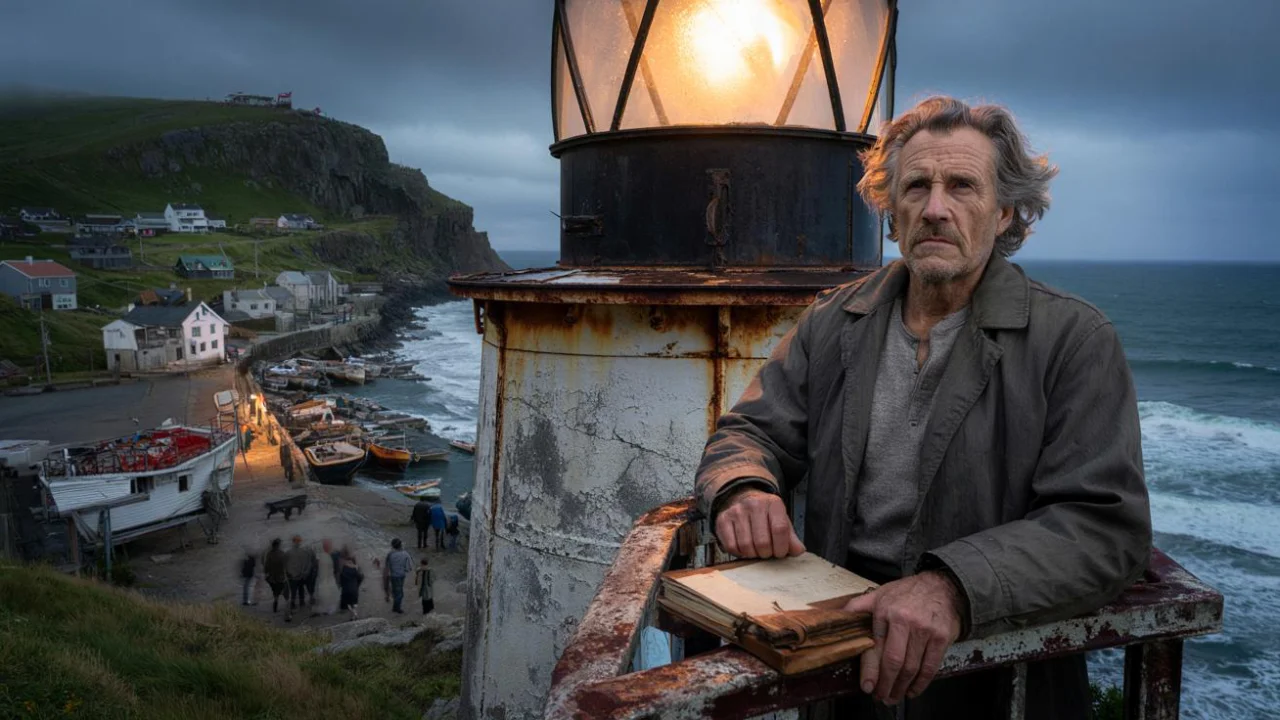
Sarah Matthews never thought she’d pick sides in a fight about a lighthouse. Growing up in Boston, lighthouses were just pretty postcards in gift shops. But last month, visiting her aunt in Greyhaven, she watched an old man climb those weathered stone steps every evening at dusk, lighting a beacon that’s guided ships for over a century.
When the town council announced plans to replace the lighthouse keeper technology with AI drones, Sarah found herself arguing with strangers in the local diner. “It’s not about nostalgia,” she told a tech entrepreneur from the city. “It’s about what happens when the power goes out and those drones can’t fly.”
That’s exactly what Tom Carraway has been saying for months. And it’s tearing Greyhaven apart.
The battle between tradition and technology divides a town
Tom Carraway has been Greyhaven’s lighthouse keeper for 34 years. Every night, he climbs 127 steps to light the beacon that warns ships away from the rocky coastline. His leather logbook records weather patterns, ship movements, and close calls that GPS systems never catch.
The town council wants to replace him with a network of AI-powered drones equipped with LED beacons and radar systems. The proposal promises 24/7 coverage, real-time weather monitoring, and emergency response capabilities that no human keeper could match.
“The technology exists to do this job better and safer,” says council member Janet Pierce. “We can’t let sentiment put lives at risk.”
But Tom isn’t backing down. Neither are the fishing families who’ve relied on his beacon for generations, or the retired captains who remember nights when his light was the only thing standing between them and disaster.
What’s really at stake in the lighthouse keeper technology debate
The arguments go deeper than just old versus new. Here’s what each side is fighting for:
| Traditional Lighthouse | AI Drone System |
|---|---|
| Human judgment and experience | 24/7 automated monitoring |
| Works during power outages | Multiple backup systems |
| $45,000 annual maintenance | $180,000 initial cost, $25,000 yearly |
| Single point of failure | Redundant coverage network |
| 150+ years proven reliability | Newer technology, fewer case studies |
The technical specs tell one story, but the human cost tells another. Tom’s not just a lighthouse keeper—he’s the guy who called the Coast Guard when the Mitchell family’s boat engine died in a fog bank. He’s spotted oil spills, coordinated rescues, and served as the unofficial weather station for every fisherman in town.
- Manual weather observations provide local context that automated systems miss
- Human oversight can identify unusual conditions requiring immediate action
- Personal relationships with local mariners enable better communication during emergencies
- Physical presence allows for equipment repairs and maintenance during storms
“You can’t program intuition,” says retired fishing captain Mike Sullivan. “Tom saved my boat twice because he knew something was wrong before any computer would have figured it out.”
How modern lighthouse keeper technology could change coastal safety
The proposed AI drone system represents a massive shift in maritime safety. Instead of one fixed beacon, Greyhaven would deploy a fleet of autonomous drones that adapt to weather conditions and shipping patterns in real-time.
Each drone carries high-intensity LED arrays, GPS positioning systems, and weather sensors. When storms approach, the drones automatically adjust their formation to provide maximum coverage. If one drone fails, others immediately fill the gap.
“The technology can do things Tom simply can’t,” explains Dr. Maria Rodriguez, a maritime safety researcher. “It can track multiple vessels simultaneously, communicate directly with ship navigation systems, and provide precise location data during emergencies.”
The system also connects to regional maritime networks, sharing data with Coast Guard stations and other navigation aids along the coast. During last winter’s nor’easter that knocked out power for three days, similar drone systems in Maine continued operating on battery power while traditional lighthouses went dark.
Real people facing real consequences
Beyond the technical arguments, families are choosing sides based on their own experiences with the sea. The Hendersons run a lobster operation that’s been in their family for four generations. They want the reliability that comes with having Tom’s eyes on the water every night.
But younger fishermen like Carlos Mendez see different risks. “My GPS failed last year during a squall,” he says. “If those drones had been talking to my backup systems, I would have known exactly where the rocks were.”
The split isn’t generational, though. Plenty of older residents support the drone technology, while some millennials have joined Tom’s cause. Lisa Chang, who moved to Greyhaven to escape Silicon Valley, puts it simply: “I came here to get away from the idea that technology solves everything.”
The economic impact weighs heavily too. Tourism brings in $2.3 million annually, much of it from visitors drawn to the historic lighthouse. Will drone tours have the same appeal? Local business owners aren’t sure.
Restaurant owner Frank Kowalski worries about losing the romance that brings couples to his cliff-side tables. “People don’t drive three hours to watch drones,” he argues. But hotel manager Patricia Wong points to liability concerns: “If someone gets hurt on those lighthouse stairs, we could all be sued.”
The storm that could decide everything
Hurricane season approaches, and weather forecasters are predicting an active year. The lighthouse’s structural engineers have flagged serious concerns about the building’s ability to withstand major storm surge and high winds.
Tom acknowledges the risks but insists he’ll keep the light burning as long as the town lets him. “I’ve ridden out worse storms than this old tower,” he says. “We’ll ride out this one too.”
The council vote is scheduled for next month. Early polling suggests the town is split almost evenly, with undecided voters likely to determine the outcome. Whatever they choose will reshape not just Greyhaven’s skyline, but its identity.
As Tom makes his evening climb up those stone steps, the weight of 150 years of maritime history climbs with him. Below in the harbor, fishing boats check their GPS units and weather apps. The future and the past circle each other like ships in the night, waiting to see which light they’ll follow home.
FAQs
How much would it cost to maintain the traditional lighthouse versus the new drone system?
The traditional lighthouse costs about $45,000 annually for maintenance and Tom’s salary, while the AI drone system would cost $180,000 upfront with $25,000 yearly maintenance costs.
What happens if the drone system fails during a storm?
The proposed system includes multiple backup drones and battery power designed to last 72 hours during outages. However, critics worry about potential software failures or communication breakdowns during severe weather.
Could the lighthouse keeper and drone technology work together?
Some residents have suggested a hybrid approach where Tom continues his duties while drone technology provides additional coverage, but the council hasn’t seriously considered this option due to cost concerns.
How do other coastal towns handle lighthouse technology upgrades?
About 60% of historic lighthouses in New England have been automated or replaced with modern systems in the past 20 years, though most transitions happened gradually rather than through complete replacement.
What would happen to Tom if the lighthouse is replaced?
The town has offered Tom a position maintaining the new drone system, but he’s indicated he would likely retire rather than transition to the new technology.
Is the lighthouse really unsafe for visitors?
Recent structural assessments identified deteriorating mortar, unstable railings, and inadequate emergency exits that pose liability risks, though the lighthouse has operated safely for decades under Tom’s supervision.


