
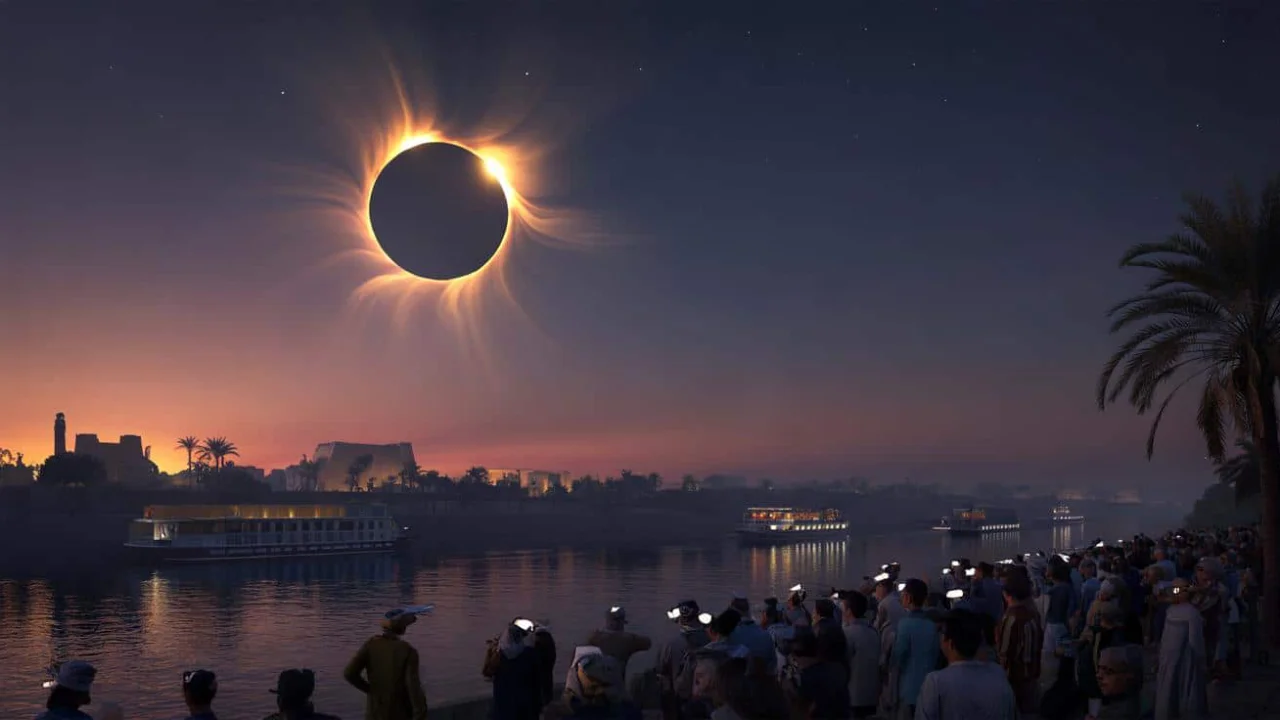
Maria was halfway through her morning coffee when her sister’s message lit up her phone screen. The image was grainy—a perfect black circle surrounded by wispy white flames against a dark sky. “You HAVE to see this eclipse in 2027!” the text read. “It’s going to be the longest one in our lifetime!”
Maria stared at the photo for a moment longer than usual. She’d never seen a total solar eclipse before, always missing them by a few hundred miles or forgetting to look up at the right moment. But something about this one felt different. The idea of day turning to night, even for a few minutes, stirred something deep inside her.
She wasn’t alone in that feeling. Across the globe, people are already marking their calendars, booking flights, and making plans for what astronomers are calling the astronomical event of the century.
August 2027 Will Deliver the Longest Solar Eclipse This Century
The wait is officially over. Astronomers have confirmed that August 2, 2027, will bring us the longest solar eclipse of the 21st century, with totality lasting up to 6 minutes and 23 seconds in some locations.
To put that in perspective, most total solar eclipses give you barely 2-3 minutes of darkness. This eclipse will offer more than double that time, creating an almost surreal experience for those lucky enough to witness it.
“We’re looking at an eclipse that will fundamentally change how people think about our place in the solar system,” says Dr. Sarah Chen, a solar physicist at the International Astronomy Institute. “Six minutes might not sound like much, but when you’re standing there watching the sun disappear, it feels like an eternity.”
The longest solar eclipse will carve a path across North Africa, passing through parts of Spain, Gibraltar, Morocco, Algeria, Tunisia, Libya, Egypt, Saudi Arabia, Yemen, and Somalia. The shadow will then continue across the Indian Ocean.
Where and When You’ll See This Record-Breaking Eclipse
The path of totality—where observers will experience complete darkness—stretches approximately 165 miles wide. But the real magic happens in specific locations where the timing creates maximum duration.
| Location | Duration of Totality | Local Time |
|---|---|---|
| Luxor, Egypt | 6 minutes 23 seconds | 3:18 PM |
| Gibraltar | 4 minutes 57 seconds | 12:42 PM |
| Morocco (Tangier) | 3 minutes 48 seconds | 12:46 PM |
| Saudi Arabia (Mecca) | 6 minutes 18 seconds | 4:32 PM |
Even if you can’t make it to the path of totality, the partial eclipse will be visible across a much larger area. People across Europe, Africa, western Asia, and parts of the Atlantic will see the moon take a substantial bite out of the sun.
Key visibility details include:
- Madrid and Barcelona will see about 85% of the sun covered
- Rome and Athens will experience roughly 70% coverage
- London and Paris will witness approximately 60% partial eclipse
- Istanbul will see nearly 80% of the sun obscured
- Cairo will experience 95% coverage just outside the totality path
“The beauty of this eclipse is its accessibility,” explains Dr. Michael Rodriguez, eclipse researcher at the Global Observatory Network. “Unlike some eclipses that only cross remote ocean areas, this one passes through regions where millions of people can easily travel to see it.”
Why This Eclipse Breaks All the Duration Records
The extraordinary length of this solar eclipse comes down to perfect cosmic timing. The moon will be at perigee—its closest approach to Earth—making it appear slightly larger in our sky than usual.
When the moon appears bigger, it can cover the sun for a longer period as it moves across our view. Think of it like holding a basketball closer to your face versus farther away—the closer object blocks more of your vision for a longer time.
Additionally, the Earth’s distance from the sun in August places us at a point where the sun appears marginally smaller, creating ideal conditions for extended totality.
“It’s like winning the cosmic lottery,” says Dr. Elena Vasquez, director of the European Space Weather Center. “All the orbital mechanics have to align perfectly, and they rarely do this well.”
The next eclipse to potentially match this duration won’t occur until 2114, making the 2027 event truly once-in-a-lifetime for current generations.
The Global Rush Has Already Begun
Travel companies are already reporting unprecedented early bookings for August 2027. Hotels in Luxor are nearly sold out despite being three years away, and several major airlines have announced additional flights to eclipse-viewing destinations.
The economic impact is expected to be massive. Egypt’s tourism ministry estimates that the longest solar eclipse could bring over 2 million visitors to the country, generating hundreds of millions in revenue.
But it’s not just about economics. This eclipse represents something deeper—a shared human experience that transcends borders and brings people together under the same sky.
“There’s something profound about watching day turn to night with thousands of strangers around you,” reflects amateur astronomer James Wright, who has traveled to see five total eclipses. “Everyone becomes quiet. Everyone looks up. For those few minutes, we’re all just humans witnessing something extraordinary.”
Scientific expeditions are already being planned. NASA, ESA, and numerous universities are organizing research missions to study the sun’s corona during the extended totality period.
The longer duration will allow scientists to conduct experiments and observations impossible during shorter eclipses, potentially advancing our understanding of solar physics and space weather.
What You Need to Know Right Now
If you’re thinking about experiencing the longest solar eclipse, here’s what experts recommend:
- Book accommodations now—prime locations are filling up fast
- Consider backup viewing locations in case of weather issues
- Plan to arrive several days early to account for travel delays
- Invest in proper eclipse glasses or solar filters
- Prepare for crowds—this will be a massively popular event
Weather historically favors some locations over others. Egypt and Saudi Arabia typically have clear skies in August, while parts of Spain and Morocco might face occasional cloud cover.
“Don’t wait,” advises travel eclipse photographer Lisa Thompson. “I’ve seen people regret missing eclipses because they thought they’d have another chance soon. With this being the longest in a century, there really isn’t another chance like this.”
Whether you’re an astronomy enthusiast or someone who’s never given much thought to celestial events, the 2027 eclipse promises to be unforgettable. It’s not just about watching the moon cover the sun—it’s about experiencing one of nature’s most spectacular shows with unprecedented duration and clarity.
FAQs
When exactly will the longest solar eclipse occur?
The eclipse will happen on August 2, 2027, with totality beginning around 10:00 AM GMT and moving across the path throughout the day.
Is it safe to look directly at the eclipse?
Never look directly at the sun during any phase except totality without proper eclipse glasses or solar filters, as this can cause permanent eye damage.
Why is this eclipse longer than others?
The moon will be at its closest point to Earth, appearing larger and able to block the sun for a longer duration as it passes across our view.
Will I see anything special if I’m not in the path of totality?
Yes, partial eclipse viewers will still see a significant portion of the sun covered, creating unique lighting effects and temperature changes.
How often do eclipses this long happen?
Eclipse durations of 6+ minutes are extremely rare, occurring perhaps once every 100-200 years for any given location on Earth.
What’s the best way to photograph the eclipse?
Use a solar filter on your camera during partial phases, remove it only during totality, and practice your settings beforehand since you’ll have limited time.


