
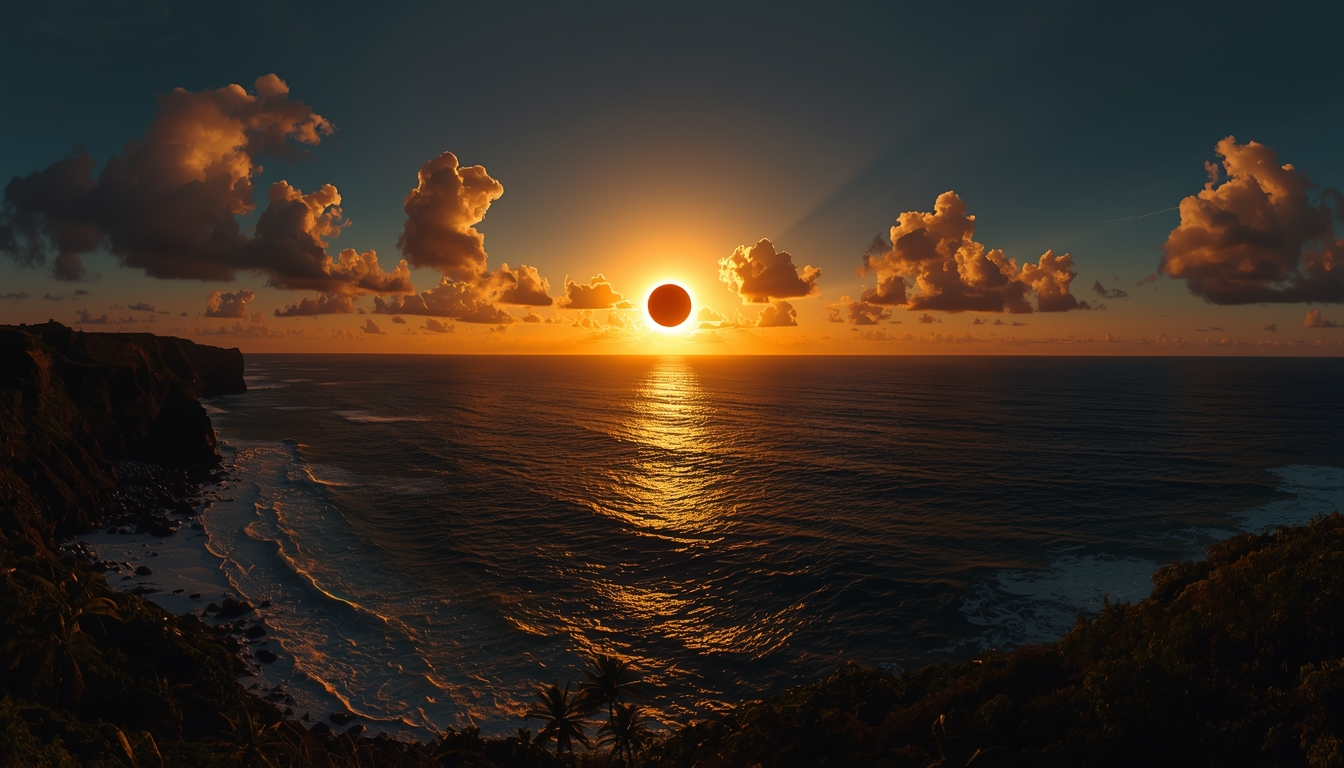
On April 8, 2024, millions across the United States experienced a rare moment of stillness as the Moon temporarily blocked the Sun. Cities dimmed, temperatures dropped, and daylight faded into an eerie twilight. That event was historic — but astronomers now confirm something even more extraordinary is coming.
The longest total solar eclipse of the 21st century will occur on August 12, 2045, and in some locations, darkness will last up to 6 minutes and 6 seconds.
This will not be an ordinary eclipse. It will be a once-in-a-century celestial alignment.
What Makes August 12, 2045 So Special?
According to researchers from institutions such as the National Solar Observatory and data modeled by NASA, three rare cosmic factors will align perfectly:
- The Moon will be at perigee (its closest point to Earth).
- Earth will be near aphelion (its farthest distance from the Sun).
- The eclipse path will cross areas where the Moon’s shadow moves at its slowest relative speed.
This alignment creates the longest possible duration of totality under current Earth-Moon orbital conditions.
2045 Eclipse vs Typical Total Solar Eclipse
Here’s how this event compares to an average total solar eclipse:
| Eclipse Factor | August 12, 2045 | Typical Total Eclipse |
|---|---|---|
| Maximum Totality Duration | 6 minutes 6 seconds | 2–3 minutes |
| Path Width | ~165 miles | 100–160 miles |
| Moon Distance from Earth | ~356,500 km (near perigee) | ~384,400 km (average) |
| Shadow Speed | ~1,500 km/h | ~1,700 km/h |
| Rarity | Longest of 21st century | Regular cycle event |
Eclipses exceeding six minutes are extremely rare and occur only a few times per millennium globally.
Eclipse Path: Where Will It Be Visible?
The 2045 eclipse will cross highly populated regions, offering millions the opportunity to witness maximum totality.
Caribbean
- Haiti
- Dominican Republic
Northern South America
- Venezuela
- Guyana
- Suriname
- French Guiana
🇧🇷 Central Brazil
Southern Africa
- Angola
- Zambia
- Zimbabwe
Madagascar & Parts of the Indian Ocean
| Region | Estimated Max Totality |
|---|---|
| Caribbean Islands | 6+ minutes |
| Northern South America | 5.5–6 minutes |
| Central Brazil | ~5 minutes |
| Southern Africa | 4–5 minutes |
Unlike some eclipses that cross mostly oceans or polar regions, this one will pass over densely inhabited areas.
What Six Minutes of Darkness Will Feel Like
Six minutes during totality is dramatically different from shorter eclipses.
Here’s what observers can expect:
Noticeable Temperature Drop
Temperatures may fall by 10–15°F (5–8°C).
360-Degree Sunset Effect
A glowing twilight will surround the horizon in every direction.
Wildlife Behavior Changes
- Birds may return to nests.
- Nocturnal insects may emerge.
- Livestock may show signs of confusion.
Unmatched Photography Opportunities
The longer duration allows:
- Multiple exposure photography
- Detailed observation of the solar corona
- Study of solar prominences
Scientists will use this extended window to study the Sun’s outer atmosphere in unprecedented detail.
Economic & Travel Impact
Historical eclipses have produced major tourism surges. The 2017 total solar eclipse in the U.S. generated hundreds of millions in tourism revenue.
Given the longer duration and multi-continental path, the 2045 eclipse could surpass previous economic records.
| Factor | Expected Impact |
|---|---|
| Hotel Demand | Extremely High |
| Travel Costs | Likely 300–500% increase in prime areas |
| Advance Booking | Recommended 2–3 years ahead |
| Scientific Expeditions | Large-scale global participation |
August weather patterns in Caribbean and northern South America generally provide favorable sky conditions, though cloud cover risks remain.
Safety Guidelines
Even though totality lasts over six minutes, eye safety remains critical.
| Phase | Eye Protection Needed? |
|---|---|
| Partial Eclipse | ✅ Certified eclipse glasses required |
| Totality (when Sun fully covered) | ❌ Safe to view briefly without glasses |
| End of Totality | ✅ Glasses must go back on immediately |
Only use ISO-certified solar viewing glasses or approved solar filters.
Why This Eclipse Is Historically Important
Eclipses longer than six minutes are exceptionally rare because they require perfect orbital alignment. After 2045, it will be many decades before another eclipse of comparable length occurs.
For many astronomers, this event represents the peak eclipse opportunity of the century.
Frequently Asked Questions
Why is the 2045 eclipse the longest of the century?
Because the Moon will be near perigee while Earth is near aphelion, maximizing shadow size and slowing its movement across Earth.
Where will totality last the longest?
Caribbean islands and parts of northern South America will experience over six minutes of darkness.
How rare are eclipses this long?
Globally rare — typically occurring once every few centuries for any specific region.
When should travel planning begin?
Ideally 2–3 years in advance for prime viewing locations.
Is special equipment required?
Yes. Eclipse glasses are mandatory except during the brief period of full totality.
Final Thoughts
August 12, 2045, will not just be another astronomical event. It will be a rare cosmic alignment where daylight disappears for over six minutes — long enough to feel time stretch, nature pause, and the universe shift into silence.
For skywatchers, scientists, travelers, and photographers alike, this is the eclipse that will define a generation.


