
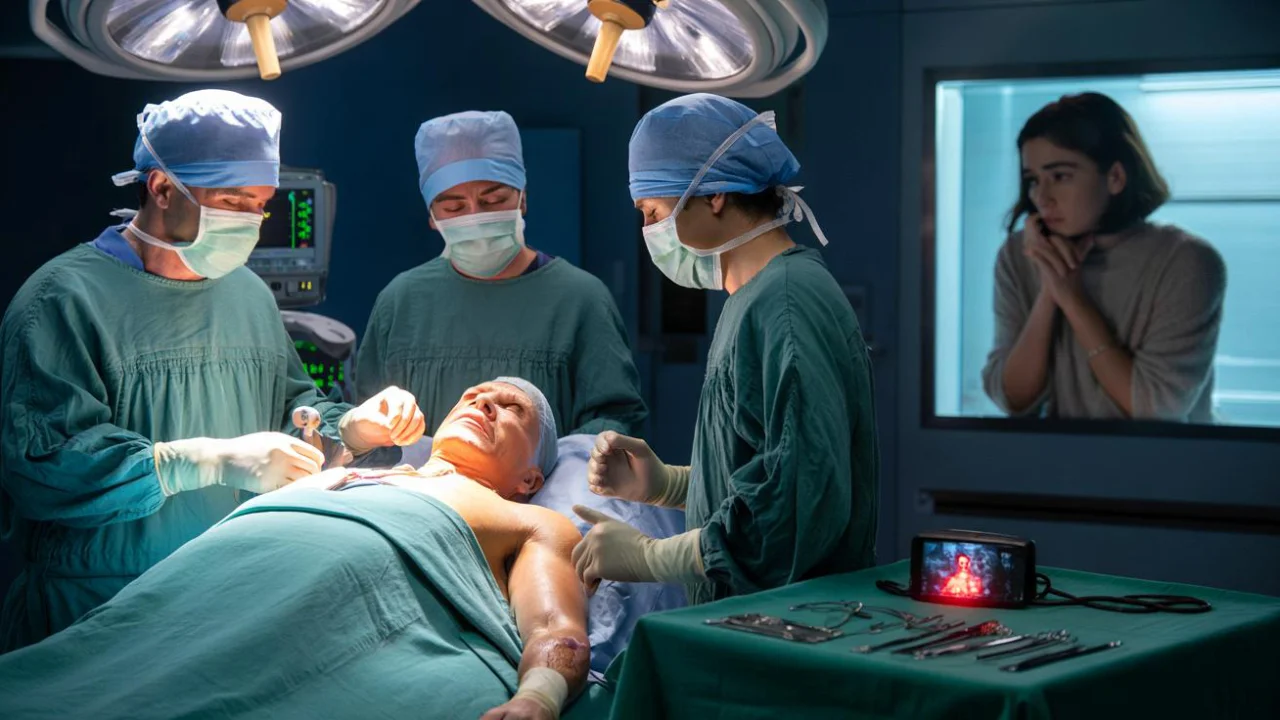
Sarah’s hands trembled as she tucked the tiny recording device inside her father’s hospital bracelet. The cardiac surgery was supposed to last six hours, and she couldn’t shake the feeling that something would go wrong. Her dad had always been her hero—the man who taught her to ride a bike, who walked her down the aisle, who never missed a single soccer game. Now he was just another patient on a table, and she was just another worried family member pacing the waiting room.
Three weeks later, her father was gone. The surgery had complications. As she sorted through his belongings, she found the recording device and decided to listen. What she heard changed everything: surgeons joking about weekend plans, making comments about her father’s weight, laughing while his chest was open. The next morning, the audio was online with a simple caption: “This is what they really think of your loved ones.”
Within hours, it had been shared thousands of times. Sarah became the face of a movement she never intended to start.
The Medical Recording Revolution That’s Dividing America
Medical recording during surgery has exploded into one of the most controversial topics in healthcare. Patients and families, armed with tiny devices and smartphone apps, are secretly documenting their medical experiences like never before. The results are tearing apart the traditional doctor-patient relationship and forcing everyone to pick sides.
Dr. Michael Rodriguez, a cardiac surgeon in Phoenix, puts it bluntly: “Every time I walk into an OR now, I wonder if someone’s recording. It’s changed how we communicate, how we handle stress, even how we teach residents. The human element of medicine is disappearing.”
But patient advocates see it differently. “Hospitals have hidden behind closed doors for too long,” says Jennifer Walsh, who founded Patients First after her own mother’s surgery went wrong. “If they’re doing nothing wrong, why are they so afraid of transparency?”
What’s Really Happening Behind Operating Room Doors
The reality of surgical recordings is more complex than viral clips suggest. Here’s what experts on both sides agree on:
| The Patient Perspective | The Medical Perspective |
|---|---|
| Feeling powerless during vulnerable moments | Need for honest communication during procedures |
| Desire for accountability and transparency | Concern about losing focus on patient care |
| Suspicion about what happens when unconscious | Fear of lawsuits over normal conversation |
| Using recordings as evidence of malpractice | Worry about context being lost online |
The cases making headlines usually involve seemingly callous comments, but medical professionals argue these clips lack crucial context. What sounds like cruel joking might actually be a stress-relief mechanism during a 12-hour procedure where a patient’s life hangs in the balance.
Dr. Lisa Chen, an anesthesiologist who’s been practicing for 15 years, explains: “We’re human beings dealing with life-and-death situations daily. Sometimes we make small talk or even joke to stay focused and calm. A two-minute clip can’t capture the eight hours we spent saving someone’s life.”
- Over 40% of hospitals now restrict recording devices in operating areas
- Medical malpractice insurance rates have increased 15% in states with high-profile recording cases
- Patient satisfaction scores haven’t improved despite increased recording
- Three states are considering laws requiring patient consent for any OR recordings
The Real-World Consequences Nobody Talks About
The ripple effects of viral medical recordings extend far beyond individual cases. Hospitals are changing policies, doctors are altering their behavior, and patients are finding it harder to get care in some situations.
Dr. James Martinez, who runs a trauma center in Dallas, shares a troubling trend: “Some of our best surgeons now refuse high-risk cases. They’re terrified that a patient’s family will record them and misinterpret their focus and professionalism as coldness. We’re losing good doctors to fear.”
The legal landscape is equally murky. Recording laws vary dramatically by state, with some allowing single-party consent while others require all parties to agree. Most patients don’t realize they might be breaking the law when they hide devices during medical procedures.
But the human cost goes both ways. Families like Sarah’s feel they have no other recourse when medical care goes wrong. Traditional complaint processes can take months or years, while doctors often close ranks to protect colleagues. For grieving relatives, a recording feels like the only way to find truth.
“I never wanted to hurt anyone,” Sarah says now, months after her father’s death. “I just wanted to understand what happened. I wanted to know if they cared about him at all, or if he was just another body on the table.”
The medical community is struggling to respond. Some hospitals are implementing “patient advocates” who stay with families during procedures. Others are installing their own recording systems, arguing that official documentation protects both patients and staff.
Technology companies aren’t helping the situation. Apps specifically designed for covert medical recording are proliferating, some marketed directly to worried families with taglines like “Know what really happens when you can’t be there.”
Finding Middle Ground in an Impossible Situation
The debate over medical recording during surgery ultimately comes down to trust—and trust is something both patients and doctors feel is eroding rapidly.
Some medical centers are trying innovative approaches. The Cleveland Clinic now offers families the option to request official recordings of consultations and some procedures. Mount Sinai in New York has patient advocates who can observe surgeries on behalf of families.
Dr. Rodriguez believes the solution requires honesty from both sides: “We need to admit that some doctors do behave inappropriately, and patients need to understand that medicine isn’t a customer service industry. We’re dealing with human lives, not hamburgers.”
The question remains whether secret recordings help or hurt patient care. Supporters argue they expose real problems and force accountability. Critics contend they create paranoia that ultimately harms the doctor-patient relationship.
What’s certain is that the genie is out of the bottle. Patients will continue recording, doctors will continue worrying, and families will continue grieving while searching for answers that recordings may or may not provide.
FAQs
Is it legal to secretly record my surgery?
Recording laws vary by state, and most hospitals prohibit unauthorized recordings, so you could face legal consequences.
Do doctors really make jokes during serious operations?
Many medical professionals use conversation and even humor to manage stress during long, intense procedures, though inappropriate comments do sometimes occur.
Can recorded audio be used in malpractice lawsuits?
Yes, but courts consider context and whether the recording was legally obtained, and audio alone rarely proves malpractice.
How are hospitals responding to secret recordings?
Many have banned recording devices, increased security screening, and some now offer official recording options for families.
What should I do if I’m concerned about my surgery?
Talk directly with your surgeon about concerns, request a patient advocate, or ask if the hospital offers any official recording policies.
Are medical recordings making healthcare better or worse?
The impact is mixed—while some recordings have exposed real problems, they’ve also created fear that may be affecting quality of care.


