
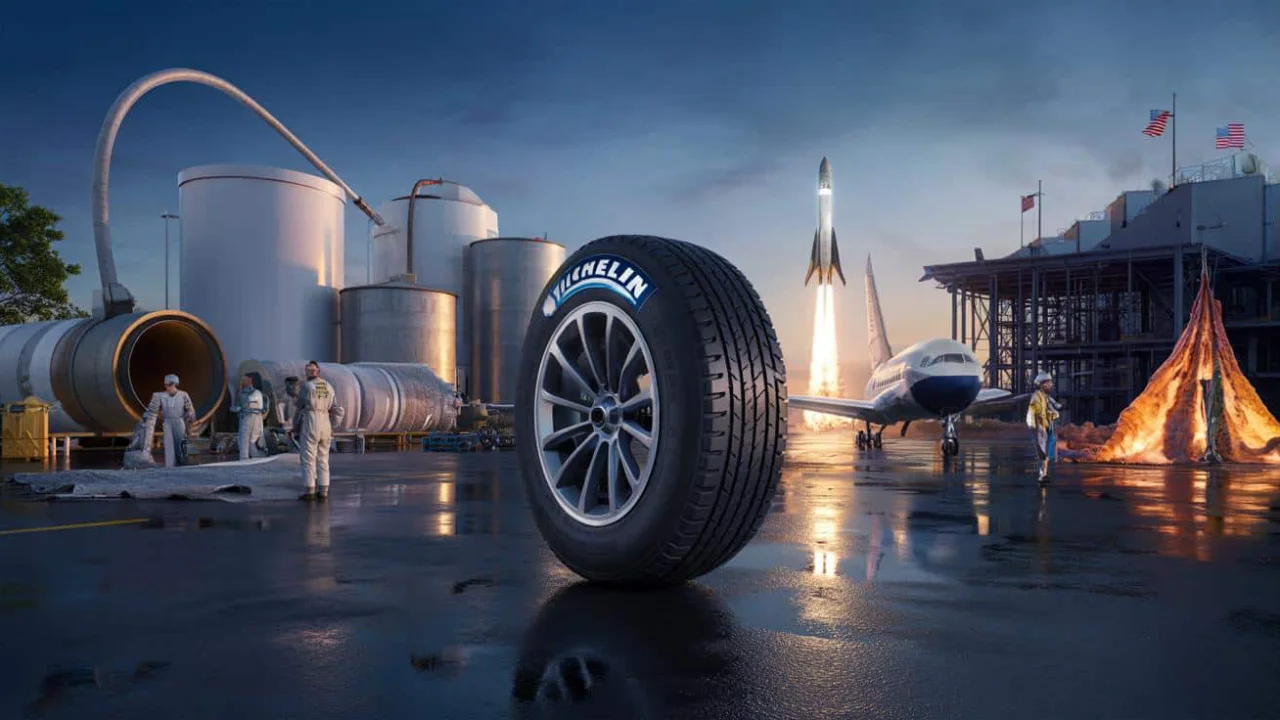
Picture this: you’re sitting on an airplane, completely unaware that the fabric protecting you from a potential fire was engineered by the same company famous for making your car tires. Or imagine visiting a hospital where life-saving medical equipment relies on materials developed by tire manufacturers. It sounds strange, but that’s exactly where Michelin is heading.
The French tire giant isn’t content with just dominating roads anymore. They’re quietly building an empire that reaches into operating rooms, rocket ships, and places most of us never think about.
This shift represents something bigger than just corporate expansion – it’s a complete reimagining of what a “tire company” can become in the modern world.
Why Michelin’s US Acquisition Strategy Changes Everything
Michelin’s latest move involves spending over €500 million to acquire two American companies that most people have never heard of: Cooley Group and Tex Tech Industries. But don’t let their low profiles fool you – these companies create materials that literally keep people alive.
“This isn’t just about diversification,” explains industry analyst Sarah Chen. “Michelin is betting that the future belongs to companies that can engineer materials for the most demanding environments on Earth.”
The French company already leads the global tire market by revenue, but this Michelin US acquisition signals a dramatic strategic pivot. Instead of just making things that touch the road, they’re targeting applications where failure means catastrophe.
Both target companies specialize in technical textiles – engineered fabrics that must perform under extreme conditions. We’re talking about materials that protect astronauts, filter drinking water for entire cities, and keep aircraft passengers safe during emergencies.
The deals will close by mid-2026, subject to regulatory approval. Notably, Michelin plans to pay cash from its own balance sheet rather than taking on new debt, showing serious financial commitment to this transformation.
Meet the Companies Behind This Massive Investment
Cooley Group might be over 100 years old, but it’s far from outdated. This Rhode Island-based company creates polymer-coated fabrics for applications where ordinary materials simply won’t work.
Here’s what makes Cooley special:
- They control every step from weaving yarns to applying final coatings
- Their materials line drinking water reservoirs and dam structures
- Medical facilities rely on their fabrics for sterile environments
- They create flexible tanks that safely contain hazardous chemicals
Tex Tech Industries operates in an even more extreme performance category. Founded in 1904 and based in Maine, they engineer textiles for aerospace, defense, and aviation industries.
Their products include:
- Thermal protection systems for rockets and spacecraft
- Fire-resistant aircraft interior materials
- High-temperature protective layers for military equipment
- Abrasion-resistant fabrics for extreme-use applications
| Company | Founded | Location | Specialty | Key Markets |
|---|---|---|---|---|
| Cooley Group | 1920s | Rhode Island | Polymer-coated fabrics | Medical, Environmental, Industrial |
| Tex Tech Industries | 1904 | Maine | High-performance technical textiles | Aerospace, Defense, Aviation |
“What Michelin is buying isn’t just manufacturing capacity,” notes materials science expert Dr. Michael Rodriguez. “They’re acquiring decades of specialized knowledge about how to make things work in environments that would destroy ordinary materials.”
How This Transforms Industries Beyond Transportation
This Michelin US acquisition strategy touches industries most people never connect to tire manufacturing. The ripple effects could be enormous.
In aerospace, weight matters more than almost anything else. Every gram saved on a spacecraft or aircraft translates to significant cost reductions and performance improvements. Tex Tech’s lightweight, high-strength materials could revolutionize how vehicles are built for extreme environments.
The medical sector faces constant pressure for better, safer materials. Cooley’s expertise in creating fabrics that maintain sterility while withstanding repeated sterilization cycles addresses a critical need in healthcare infrastructure.
Environmental applications present another massive opportunity. As climate change intensifies extreme weather events, the demand for durable materials that can protect critical infrastructure will skyrocket.
“Michelin isn’t just diversifying – they’re positioning themselves at the intersection of multiple high-growth markets,” observes business strategist Jennifer Walsh. “The same engineering principles that make great tires also create materials that save lives in hospitals and space missions.”
The timing couldn’t be better. Global demand for technical textiles is projected to grow significantly over the next decade, driven by:
- Increased space exploration and commercial aerospace activity
- Growing healthcare infrastructure needs worldwide
- Rising demand for environmental protection materials
- Military and defense modernization programs
What This Means for Investors and Competitors
For Michelin shareholders, this represents a fundamental shift in the company’s growth strategy. Instead of relying solely on automotive markets, they’re building revenue streams in sectors with higher margins and different economic cycles.
The €500+ million investment demonstrates serious long-term thinking. Technical textiles command premium pricing because failure often isn’t an option – whether you’re talking about spacecraft heat shields or medical isolation barriers.
“This acquisition gives Michelin access to customers who care more about performance than price,” explains financial analyst Mark Thompson. “That’s a much better position than competing on cost in commodity tire markets.”
Competitors in both the tire and technical textiles industries will need to respond. Other tire manufacturers might pursue similar diversification strategies, while existing technical textile companies may accelerate their own innovation efforts.
The broader implications extend to supply chain resilience. By bringing these capabilities in-house, Michelin reduces dependence on external suppliers for critical materials used in their own high-performance applications.
FAQs
Why is Michelin buying textile companies instead of expanding tire manufacturing?
Michelin sees higher growth potential and profit margins in technical textiles for aerospace, medical, and defense applications compared to traditional tire markets.
When will the Michelin US acquisition be completed?
Both deals are expected to close by mid-2026, pending regulatory approval from relevant authorities.
How much is Michelin paying for these companies?
The total investment exceeds €500 million, paid in cash from Michelin’s existing balance sheet without taking on new debt.
What products do Cooley Group and Tex Tech Industries actually make?
Cooley creates polymer-coated fabrics for medical and environmental uses, while Tex Tech makes high-performance textiles for aerospace and defense applications.
Will this affect Michelin’s tire business?
No, Michelin remains committed to tire manufacturing while expanding into complementary high-tech materials markets.
What makes these textile companies valuable to Michelin?
Both companies have specialized expertise in creating materials that perform under extreme conditions, similar to the engineering challenges Michelin faces in tire development.


