
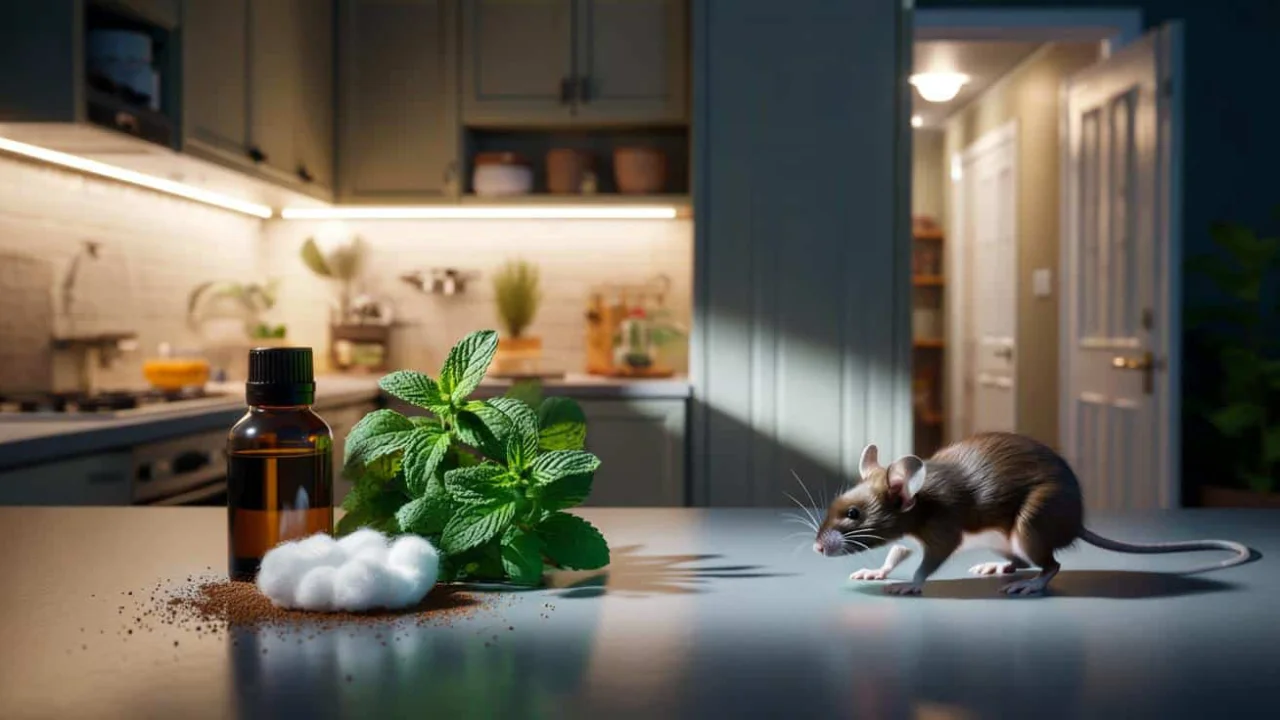
Sarah first noticed the tiny black pellets behind her coffee maker on a Tuesday morning. Just a few scattered droppings, easy to dismiss as maybe seeds from her bird feeder that somehow made their way inside. But when she found more the next day, and then heard that telltale scratching sound at 2 AM, reality hit hard.
She’d dealt with ants before, even the occasional spider, but mice felt different. More personal. These weren’t just visiting her kitchen—they were moving in, making themselves at home in her space. The thought of them scurrying across her counters while she slept made her skin crawl.
What Sarah didn’t know was that she was about to stumble upon one of the most effective mouse repellent smell solutions, completely by accident.
Why that midnight scratching stops when mice smell peppermint
The discovery happened when Sarah’s sister brought over a peppermint essential oil diffuser as an early Christmas gift. “It’ll make your place smell like the holidays,” she said, plugging it into the kitchen outlet. Within 48 hours, the scratching sounds vanished completely.
Pure coincidence? Not really. Pest control experts have known for years that mice absolutely despise the intense, overwhelming scent of peppermint oil. While we might find it refreshing and festive, mice experience it as sensory overload.
“A mouse’s entire survival system is built around scent,” explains Dr. Jennifer Martinez, an urban wildlife specialist. “When they encounter something as potent as peppermint oil, it scrambles their ability to detect food sources, predators, or safe nesting spots.”
Think of it this way: if your world operated entirely through smell, walking into a cloud of menthol would be like trying to navigate in a thick fog. Mice simply can’t function properly in areas where this mouse repellent smell is present, so they avoid those spaces entirely.
The most effective scents that send mice running
Peppermint oil leads the pack, but it’s not the only natural mouse repellent smell that works. Here’s what actually makes these tiny invaders pack their bags:
- Pure peppermint essential oil – The gold standard that overwhelms their scent receptors
- Eucalyptus oil – Another mentholated scent that disrupts their navigation
- Tea tree oil – Potent and medicinal, completely foreign to their natural environment
- Clove oil – Spicy and intense, makes them uncomfortable in treated areas
- Ammonia-soaked cotton balls – Mimics predator urine, triggering their fear response
The key is concentration and placement. A light sprinkle of peppermint extract from your baking supplies won’t cut it. You need pure essential oils applied strategically where mice typically travel.
| Scent Type | Effectiveness Rating | Duration | Best Application |
|---|---|---|---|
| Peppermint Oil | Excellent | 1-2 weeks | Cotton balls along baseboards |
| Eucalyptus Oil | Very Good | 1-2 weeks | Spray bottle solution |
| Tea Tree Oil | Good | 1 week | Diffuser in small rooms |
| Clove Oil | Good | 2 weeks | Soaked fabric strips |
| Ammonia | Moderate | 3-4 days | Hidden cotton balls |
“The biggest mistake people make is thinking one application will solve everything permanently,” notes pest control technician Mike Rodriguez. “These scents fade, and mice are smart. You need consistent reapplication to maintain that barrier.”
Strategic placement makes all the difference
Knowing where to place your mouse repellent smell determines whether you’ll see results or waste your time. Mice don’t randomly wander around your house—they follow specific pathways along walls, behind appliances, and through small gaps.
Focus your efforts on these high-traffic mouse zones:
- Along baseboards, especially near kitchen appliances
- Inside cabinets where you store food
- Near gaps under doors or around pipes
- Behind the stove, refrigerator, and dishwasher
- In pantry corners and along shelving
- Around pet food storage areas
The cotton ball method works best for most homeowners. Soak cotton balls with 10-15 drops of pure peppermint oil and place them strategically. Replace them weekly, or when the scent starts to fade.
For larger areas, create a spray solution by mixing 20 drops of peppermint oil with one cup of water in a spray bottle. Mist along baseboards and entry points, but avoid spraying directly on food surfaces.
When scent barriers actually work (and when they don’t)
Here’s the honest truth about using mouse repellent smell: timing matters enormously. If you’re dealing with a few mice just starting to explore your space, strategic scent placement can absolutely convince them to look elsewhere for winter shelter.
But if you’re already hearing scratching every night, finding droppings throughout multiple rooms, or discovering chewed food packaging, you’re past the prevention stage. At that point, these natural deterrents work best as part of a broader strategy alongside traps and exclusion methods.
“Scent deterrents are fantastic for prevention, but they won’t evict an established mouse family,” explains Dr. Martinez. “Once mice have claimed territory and built nests, they’re much more tolerant of unpleasant smells.”
The sweet spot for success is early intervention. When you notice the first signs—maybe one dropping behind the toaster, or hear occasional scurrying—that’s when peppermint oil can tip the scales in your favor.
Keep in mind that effectiveness varies by mouse species and individual tolerance. Some mice are more sensitive to strong scents than others. Field mice tend to be more easily deterred than house mice, who’ve adapted to living alongside humans and their various household odors.
Weather also plays a role. During harsh winter months, desperate mice might tolerate unpleasant scents if your home offers the only available shelter. Spring and fall tend to be when scent barriers work most effectively.
FAQs
How often should I refresh peppermint oil cotton balls?
Replace them weekly or whenever you can’t smell the peppermint anymore. The scent needs to remain strong to be effective.
Is peppermint oil safe around pets and children?
Pure essential oils can be irritating to cats and some dogs, so place cotton balls where pets can’t reach them. Always use in well-ventilated areas.
Can I use peppermint extract instead of essential oil?
Baking extracts aren’t concentrated enough to work as mouse deterrents. You need pure essential oil for the intensity mice actually avoid.
Will mice eventually get used to the smell?
Some mice might become tolerant over time, which is why rotation between different scents (peppermint, eucalyptus, tea tree) can be more effective long-term.
How long does it take to see results?
If mice are just starting to explore your space, you might notice reduced activity within 24-48 hours. Established infestations require additional control methods.
What if the smell bothers me too?
Start with smaller amounts and place cotton balls in out-of-the-way locations. You can also try eucalyptus oil, which many people find less overwhelming than peppermint.


