
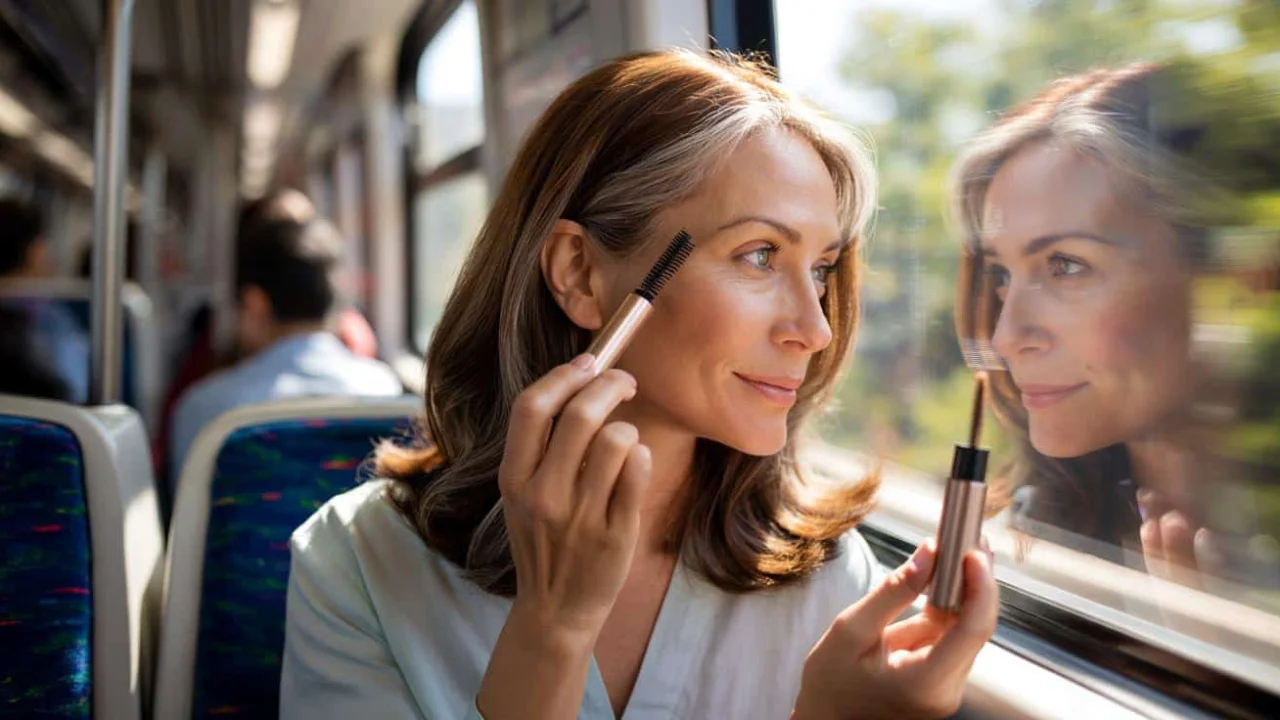
Sarah stares at her reflection in the hotel bathroom mirror, running her fingers through her hair. Tomorrow’s the big presentation, and those silver streaks at her temples seem more noticeable under these harsh lights. She reaches into her makeup bag and pulls out what looks like a mascara tube. Three quick strokes along her hairline, and the grey disappears into a natural brown that matches her hair perfectly. No mess, no smell, no three-hour salon appointment. She’s back to feeling confident in under a minute.
Across the country, millions of people are quietly making the same choice. They’re stepping away from traditional hair dyes and embracing something completely different.
The shift is happening so gradually that many haven’t noticed yet. But walk through any drugstore beauty aisle, scroll through social media, or chat with your hairstylist, and the signs are everywhere. A new kind of hair coloring is taking over, and it’s changing how we think about covering grey hair.
The quiet revolution against chemical hair dyes
Remember when covering grey hair meant blocking out half your Saturday? The ritual was always the same: arrive at the salon, endure the chemical smell that made your eyes water, sit under those hot dryers, and pray the color would look natural. Then came the endless cycle of touch-ups, root maintenance, and that constant worry about when the grey would start showing again.
“I was spending over $200 every six weeks just to feel like myself,” explains Maria Chen, a marketing director from Portland. “The breaking point came when I realized I was planning vacations around my hair appointments.”
Traditional hair dyes work by forcing harsh chemicals deep into the hair shaft. Ammonia opens up the hair cuticle, while peroxide strips away natural pigment so artificial color can take its place. The process damages hair structure and often irritates sensitive scalps.
Natural hair dye alternatives are flipping this approach completely. Instead of breaking into the hair, these plant-based formulas gently coat each strand with temporary color that washes out gradually. Think of it as makeup for your hair rather than permanent surgery.
What makes natural hair dye different
The new generation of natural hair dye products comes in forms that would have seemed impossible just five years ago. Here’s what’s actually hitting the market:
- Hair mascara wands – Brush-on color that covers grey strands instantly
- Root touch-up pens – Precise application for hairlines and partings
- Color-depositing shampoos – Gradual grey coverage that builds with each wash
- Plant-based temporary dyes – Henna, indigo, and other botanical ingredients
- Tinted hair serums – Nourishing treatments that add subtle color
| Product Type | Coverage Time | Application | Best For |
|---|---|---|---|
| Hair Mascara | 1-2 washes | 30 seconds | Quick touch-ups |
| Root Touch Pen | 3-5 washes | 2 minutes | Precise coverage |
| Natural Henna | 4-6 weeks | 2-3 hours | Full coverage |
| Color Shampoo | Gradual buildup | Regular washing | Maintenance |
Dr. Amanda Rodriguez, a trichologist who studies hair health, explains the appeal: “These natural alternatives respect the hair’s structure instead of forcing change. You get coverage without the commitment or damage.”
The ingredients tell the story too. Instead of ammonia and peroxide, you’ll find things like henna leaf powder, indigo extract, walnut hull, and even coffee grounds. These natural colorants have been used for centuries, but modern processing makes them more convenient and predictable.
How people are actually using these products
The real magic happens in how these products fit into daily life. Unlike traditional dyes that require planning and preparation, natural hair dye becomes part of regular routines.
Jessica Park, a busy mother of three from Dallas, keeps a root touch-up pen in her car. “I literally apply it at red lights,” she laughs. “My grey roots used to stress me out before important meetings. Now I just swipe and go.”
The convenience factor cannot be overstated. People are covering grey hair while:
- Getting ready for work in the morning
- Sitting in their car before events
- During lunch breaks at the office
- While watching TV in the evening
- Before video calls from home
Social media has amplified this trend exponentially. Videos showing 10-second grey coverage transformations regularly go viral, with millions of views and thousands of comments from people sharing their own experiences.
“The response has been incredible,” says beauty influencer Rachel Martinez, whose grey-covering tutorials have over 5 million combined views. “People are tired of high-maintenance beauty routines. They want solutions that work with their lives, not against them.”
The unexpected anti-aging benefits
Beyond convenience, users are discovering something unexpected: natural hair dye often makes them look younger than traditional coloring ever did.
The secret lies in subtlety. Traditional dyes create uniform color that can look flat and artificial, especially under different lighting. Natural alternatives create gentle variation and depth that mimics how hair naturally changes color.
“Harsh, single-tone color can actually age you,” explains celebrity colorist Michael Torres. “Natural grey coverage creates soft transitions and dimensional color that’s far more flattering.”
The anti-aging effect comes from several factors:
- Healthier hair texture – Less damage means more shine and movement
- Natural color variation – Subtle tones look more youthful than flat color
- Reduced maintenance stress – Less worry about roots showing
- Improved hair condition – Many natural dyes actually nourish hair
Lisa Chen, a 52-year-old architect, noticed the difference immediately: “My traditional dye made my hair look like a helmet. Now with plant-based color, people constantly ask if I’ve had work done. It’s just healthier, more natural-looking hair.”
The future of hair coloring
This shift toward natural hair dye represents something bigger than just a beauty trend. It reflects changing attitudes about aging, authenticity, and the role beauty routines should play in our lives.
Market research shows that sales of temporary and natural hair coloring products have grown 300% in the past two years, while traditional permanent dye sales have declined by 15%. Major beauty companies are rushing to develop plant-based alternatives to meet demand.
The movement isn’t about rejecting color entirely. Instead, it’s about having more control over how and when we use it. Some days you want full coverage, other days just a touch-up, and sometimes you want to let the grey show through.
“It’s about choice and flexibility,” explains consumer behavior expert Dr. Sarah Kim. “People want beauty solutions that adapt to their lifestyle, not the other way around.”
As more people discover natural hair dye alternatives, the old model of monthly salon appointments and harsh chemical treatments is quietly fading. In its place, a gentler, more sustainable approach to hair coloring is taking root – one mascara wand and root touch-up pen at a time.
FAQs
How long does natural hair dye last compared to traditional dyes?
Natural hair dyes typically last 1-6 weeks depending on the type, while traditional dyes last 6-8 weeks but with more obvious root growth.
Can natural hair dye cover stubborn grey roots completely?
Yes, though it may require reapplication more frequently than chemical dyes. The coverage is gentler and more gradual.
Are natural hair dyes safe for sensitive scalps?
Generally yes, since they don’t contain ammonia or harsh peroxides, but always patch test first as some people can be sensitive to plant-based ingredients too.
Do natural hair dyes work on all hair colors?
They work best on light to medium brown hair. Very dark hair may need pre-lightening, while blonde hair shows color changes more dramatically.
How much do natural hair dye products typically cost?
Root touch-up pens and hair mascaras range from $15-30, while natural henna treatments cost $10-25, making them much more affordable than salon visits.
Can you use natural hair dye over previously chemically treated hair?
Yes, but results may vary depending on the previous treatment. Natural dyes work best on hair that hasn’t been recently bleached or permed.


