
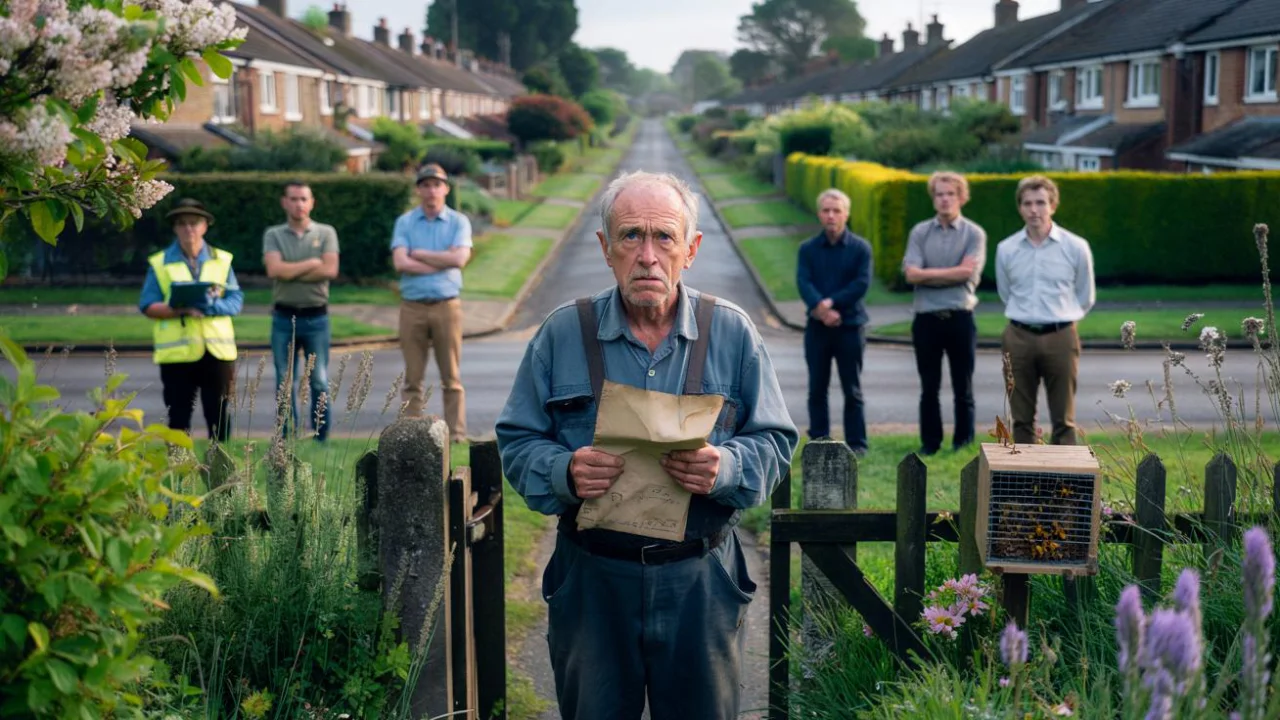
Sarah watches from her kitchen window as her elderly neighbor Rob kneels beside a sapling, his weathered hands gentle around its tender bark. Three years ago, she thought he was just another retiree with too much time on his hands. Now, as council officers measure his apple trees with official-looking tape measures, she realizes this quiet man has accidentally started a revolution that’s tearing their sleepy village apart.
The letter in Rob’s trembling hands isn’t a thank-you note for creating a pollinator paradise. It’s a demolition order. His crime? A neighbor planted trees bees could actually use, and apparently, that’s become the most controversial thing to happen on Maple Street since the great parking dispute of 2019.
What started as one man’s simple gesture to help struggling bee populations has morphed into a bitter neighborhood feud that’s split families, crashed local Facebook groups, and turned council meetings into battlegrounds. The question everyone’s asking isn’t whether Rob meant well—it’s whether good intentions matter when your garden becomes the thing that divides an entire community.
How a Retired Electrician Accidentally Started a Village War
Rob’s transformation began quietly enough. After retiring from forty years of electrical work, he started noticing things he’d never had time to see before. The way bees struggled to find nectar in a street lined with sterile lawns. How his neighbors’ gardens looked beautiful but offered nothing to the insects that kept their world functioning.
“I wasn’t trying to make a statement,” Rob explains, standing beside his controversial crabapple tree. “I just wanted to do something useful with my retirement.”
That “something useful” started with a few native fruit trees and quickly expanded into what experts call a biodiversity hotspot. While other gardens baked brown during last summer’s record heatwave, Rob’s plot stayed vibrant with wildflowers, herbs, and the constant buzz of grateful pollinators.
The trouble started when his hazel hedge grew beyond the council’s recommended height limits. Then came complaints about “sight lines” on a road where the biggest traffic hazard is usually Mrs. Johnson’s overenthusiastic golden retriever. Soon, every plant in Rob’s garden became a potential violation of some obscure local regulation.
Dr. Emma Clarke, an urban ecology researcher, points out the irony: “We’re in the middle of a pollinator crisis, and here’s someone actually doing something about it on their own doorstep. Yet they’re being punished for it.”
What’s Really Behind the Neighborhood Divide
The enforcement notice paints a clear picture of bureaucratic inflexibility, but the real story runs much deeper. Rob’s garden has become a symbol of something larger—a clash between traditional suburban expectations and environmental necessity.
Here’s what the demolition order actually targets:
- Apple and cherry trees deemed “too tall for residential areas”
- Native wildflower meadows labeled as “unmaintained vegetation”
- Hazel hedging that provides year-round habitat for birds and insects
- Herb gardens that local families have started visiting for cooking ingredients
- Rain gardens that naturally manage street flooding during heavy storms
The community response reveals just how polarized opinions have become:
| Pro-Garden Residents | Anti-Garden Residents |
|---|---|
| Families with children who love the educational aspect | Long-term residents concerned about property values |
| Environmental advocates supporting biodiversity | Neighbors worried about “setting a precedent” |
| Local beekeepers grateful for the pollinator support | Council supporters focused on maintaining standards |
| Dog walkers who enjoy the natural beauty | Residents who prefer uniformity and order |
Margaret, who lives two doors down, captures the tension perfectly: “Half of us think Rob’s garden is the best thing to happen to our street in decades. The other half act like he’s personally responsible for the downfall of suburban civilization.”
The Real Cost of Choosing Conformity Over Conservation
Beyond the neighborhood drama lies a more serious question about what communities prioritize. Rob’s garden isn’t just pretty—it’s functional in ways that matter for everyone’s future.
Local environmentalist James Wright explains the stakes: “When we force people to rip out pollinator-friendly gardens, we’re essentially choosing aesthetic conformity over ecological survival. That’s not a trade-off that makes sense anymore.”
The practical benefits of Rob’s supposedly “problematic” garden tell a different story than the complaints suggest:
- Temperature reduction of up to 8 degrees Fahrenheit during heatwaves
- Natural stormwater management that prevents street flooding
- Habitat for over 30 species of beneficial insects and birds
- Air quality improvement through increased plant coverage
- Educational opportunities for local children learning about nature
Meanwhile, the enforcement process has cost taxpayers thousands in council officer time, legal fees, and administrative overhead—all to potentially destroy something that was providing free environmental services to the entire neighborhood.
The village’s children have noticed the controversy too. Ten-year-old Lucy, whose family supports Rob, puts it simply: “The grown-ups are fighting about helping bees. That seems really silly.”
Where Does a Community Go From Here?
Rob faces a deadline: comply with the demolition order by next month or face legal action. But something unexpected is happening as that deadline approaches. More neighbors are speaking up, local environmental groups are offering support, and even some council members are quietly questioning whether the enforcement makes sense.
The case has attracted attention beyond the village borders too. Urban planning experts are watching to see whether common sense or rigid regulation wins out. The outcome could influence how other communities handle similar situations as more residents try to create climate-resilient, pollinator-friendly gardens.
Council member Patricia Hayes, who initially supported the enforcement action, now admits: “We’re learning that our regulations might need updating for the times we’re living in. The climate crisis requires different thinking about what makes a neighborhood healthy.”
For Rob, the fight isn’t really about his garden anymore. It’s about whether communities can adapt to environmental challenges or remain locked in outdated ideas about what neighborhoods should look like.
As he stands among his threatened apple trees, watching bees work methodically through the blossoms, Rob reflects: “I never thought planting a few trees would cause such a fuss. But maybe that fuss is exactly what we needed to have these conversations.”
The next council meeting is scheduled for Thursday evening. The whole village will be watching to see whether a neighbor who planted trees for bees gets to keep his small piece of environmental hope—or whether conformity wins another battle against conservation.
FAQs
Why are councils targeting bee-friendly gardens?
Most councils aren’t specifically targeting environmental gardens, but outdated regulations often classify native plants and natural landscaping as “unmaintained” or non-compliant with suburban standards.
Can neighbors really force someone to remove pollinator plants?
If the plants violate local height, sight-line, or maintenance regulations, councils can issue enforcement orders. However, many areas are updating these rules to support environmental gardening.
What rights do homeowners have to plant for pollinators?
Rights vary by location, but generally, homeowners can plant native species within their property boundaries as long as they comply with local regulations about height and maintenance.
How can communities support bee-friendly gardening?
Communities can update local regulations, create pollinator-friendly guidelines, and establish programs that encourage rather than penalize environmental landscaping.
What’s the environmental impact of forcing garden conformity?
Requiring uniform, non-native landscaping reduces local biodiversity, increases water usage, eliminates pollinator habitat, and contributes to urban heat islands during extreme weather.
Are there legal protections for environmental gardens?
Some regions have “right to garden” laws or environmental protection clauses that protect pollinator-friendly landscaping, but coverage varies widely by location.


