
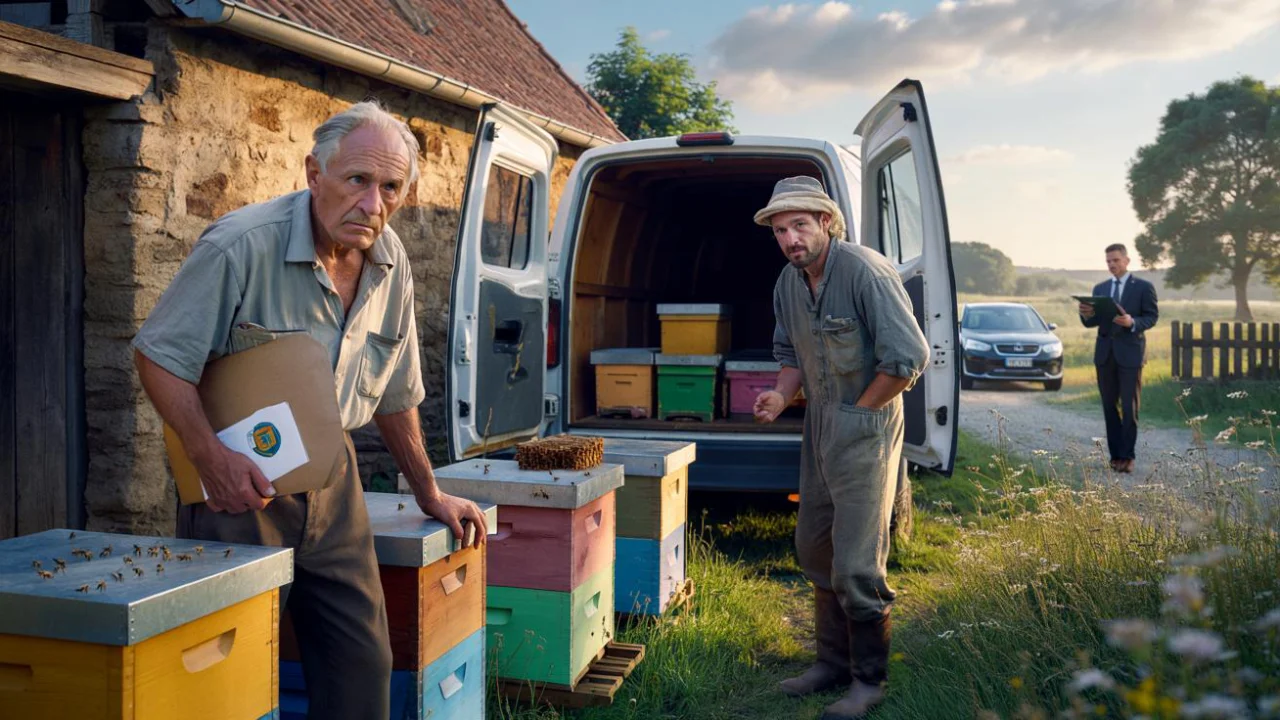
The bees arrived on a Tuesday morning in July, their gentle hum barely audible over the distant rumble of a combine harvester. Gérard wiped his hands on his overalls and watched his neighbor Michel climb out of his beat-up van, looking sheepish but excited. Five wooden hives sat in the back, secured with fraying blue rope.
“Any chance I could park these behind your barn for the season?” Michel asked, gesturing toward the colorful boxes. “My wife’s had enough of them buzzing around our vegetable patch.”
Gérard didn’t hesitate. At 69, the retired mechanic had plenty of unused land and liked the idea of helping local bees thrive. It was the kind of neighborly favor that keeps rural communities alive – no paperwork, no money changing hands, just one person helping another.
Three months later, an envelope with an official government seal would turn this simple act of kindness into a bureaucratic nightmare that’s now dividing countryside communities across Europe.
When Good Intentions Meet Government Paperwork
What happened to Gérard represents a growing tension between traditional rural life and modern tax enforcement. His neighborly favor beekeeper arrangement seemed innocent enough – a few hives on unused land, helping both the environment and a fellow villager.
But tax authorities don’t see neighborly gestures. They see undeclared land rentals, potential income streams, and missed tax revenue. The same beehives that brought wildflowers back to Gérard’s meadow suddenly became evidence of an unregistered business arrangement.
“The letter basically said I was running an illegal apiary operation,” Gérard explains, still clutching the official notice. “They wanted to know about rental income, business licenses, insurance policies. I just wanted to help some bees.”
Tax consultant Marie Dubois, who specializes in rural properties, sees cases like this weekly. “Small rural favors are getting caught in bureaucratic nets designed for commercial operations. The system doesn’t distinguish between a neighbor helping out and a business venture.”
The Bureaucratic Web Catches Rural Communities
Gérard’s situation reflects a broader crackdown on informal rural arrangements across Europe. Tax authorities are systematically targeting what they call “undeclared land use agreements” – everything from beehive placements to vegetable plots to tool storage.
Here’s what’s now under scrutiny in rural communities:
- Beehive placement on neighbors’ property
- Garden plots lent to local growers
- Pasture sharing for horses or livestock
- Shed rentals for craftsmen and small businesses
- Seasonal storage arrangements
- Access roads through private property
| Type of Arrangement | Tax Authority Concern | Potential Penalty |
|---|---|---|
| Beehive placement | Undeclared rental income | €500-2000 fine |
| Garden plot sharing | Commercial agriculture licensing | €1000-5000 fine |
| Tool shed access | Business premises registration | €300-1500 fine |
| Pasture sharing | Livestock operation permits | €800-3000 fine |
Local beekeeper Antoine Moreau discovered this firsthand when inspectors arrived at his door demanding documentation for every hive location. “I had to create contracts with eight different neighbors for arrangements we’d had for years. Some of them were so worried about tax implications, they asked me to remove the hives entirely.”
The Human Cost of Regulatory Overreach
The impact goes far beyond paperwork and fines. These regulations are fundamentally changing how rural neighbors interact with each other.
Village mayor Claude Bertrand sees the damage daily. “People are afraid to help each other now. A simple favor might trigger a tax investigation. We’re losing the trust that holds our communities together.”
The psychological toll on people like Gérard is significant. What began as a pleasant arrangement – watching bees work among his wildflowers – became months of stress, legal consultations, and damaged relationships.
Many rural residents are now facing impossible choices:
- Risk penalties by continuing informal arrangements
- Create formal contracts for neighborly favors
- Stop helping each other altogether
- Move away from rural communities entirely
Agricultural lawyer Sophie Laurent warns that this regulatory approach threatens rural community structures. “When you criminalize neighborly assistance, you destroy the social fabric that makes rural life sustainable. People stop cooperating, villages die.”
Where Communities Fight Back
Some regions are pushing back against the bureaucratic overreach. Local officials are creating “neighborly favor” exemptions for small-scale, non-commercial arrangements between residents.
The Belgian municipality of Hainaut recently passed regulations protecting traditional rural cooperation from tax enforcement. Mayor Jean-Paul Vanden explains: “If someone lets their neighbor keep three beehives for honey, that’s not a business – that’s community.”
Similar initiatives are emerging across rural Europe, with communities demanding clear distinctions between commercial operations and genuine neighborly assistance.
Gérard eventually resolved his case by creating a formal “land use agreement” with Michel, complete with insurance documentation and regular inspections. The bees are still there, but the simplicity and joy of the original arrangement is gone.
“Every time I see those hives now, I think about lawyers and tax forms,” Gérard sighs. “That’s not what countryside life should be about.”
The debate continues to divide rural communities. Some argue that proper documentation protects everyone involved. Others believe excessive regulation is killing the spirit of mutual aid that keeps rural areas alive.
What’s certain is that the age of the simple handshake agreement may be ending, replaced by a world where even the most basic neighborly favor requires official paperwork and government approval.
FAQs
Can I let my neighbor keep beehives on my property without tax consequences?
It depends on your location and local tax laws. Many authorities now require formal agreements and may classify this as rental income, even if no money changes hands.
What should I do if I receive a tax notice about a neighborly favor arrangement?
Don’t ignore it. Contact a local tax advisor immediately and gather documentation about the arrangement. Many cases can be resolved with proper paperwork.
Are there legal protections for traditional rural cooperation?
Some municipalities are creating specific exemptions for small-scale neighborly arrangements. Check with your local government about available protections.
How can rural communities protect traditional cooperation practices?
Advocate for clear local regulations that distinguish between commercial operations and genuine community assistance. Work with local officials to create reasonable exemptions.
What documentation should I keep for informal rural arrangements?
Even for neighborly favors, consider keeping simple written records of what’s agreed, when it started, and that no money is involved. This can help if questions arise later.
Is this regulatory crackdown happening across all of Europe?
Similar enforcement patterns are emerging in multiple European countries, but specific rules and penalties vary significantly by region and local authority.


