
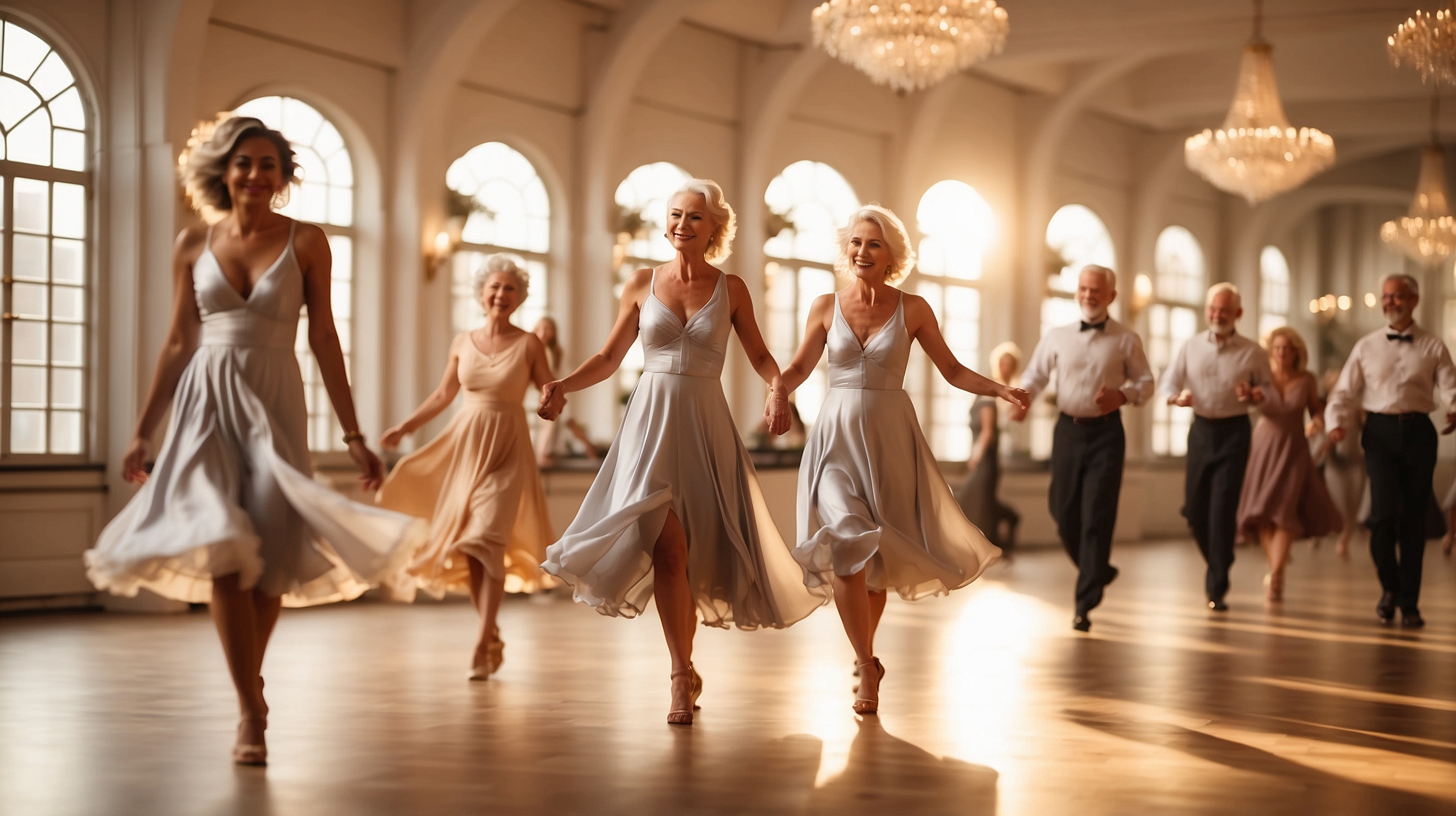
When it comes to preserving memory and cognitive sharpness as we age, many older adults turn to crossword puzzles and strategic games like chess. However, emerging research reveals that these traditional go-to activities may not be the most effective for older adults over 65. In fact, a surprisingly simple and enjoyable activity could be the key to dramatically boosting memory and overall brain function in seniors: **learning to dance**.
According to a growing body of cognitive science, engaging in **coordinated physical movement**, especially rhythmic activities involving memory and spatial awareness, provides profound neurological benefits. Dance, with its unique combination of music, memory, balance, and social interaction, is proving to be a game-changer for cognitive health. As researchers increasingly focus on preventative strategies for cognitive decline, dance is emerging as a powerful, accessible, and even joyful therapy for adults entering their golden years.
At a glance: How dance outperforms other memory-boosting activities
| Activity | Cognitive Benefits | Physical Engagement | Social Interaction | Long-Term Results |
|---|---|---|---|---|
| Crosswords | Moderate | Low | Low | Short-term memory boost |
| Chess | High (strategic thinking) | Low | Low to Moderate | Narrow cognitive gains |
| Dancing | Very High | High | High | Improved memory, balance, and neuroplasticity |
Why dancing works better than brain games
Dance engages the brain in a way that few other activities do. Unlike repetitive puzzle-solving or sitting for complex games, dancing **activates multiple regions of the brain simultaneously**. It merges auditory processing (music), kinesthetic movement (steps and balance), and memory recall (choreography) into a singular, immersive form of exercise.
Furthermore, dance classes or social dancing events serve as **community-building activities**, which offer emotional and psychological benefits that isolated brain games like Sudoku or crosswords cannot. Social engagement has been firmly linked to slower cognitive decline, reduced stress hormones, and a lower risk of dementia.
“Dance provides a dynamic workout for both body and brain. We’re not just seeing improvements in physical balance, but also genuine boosts in memory, attention, and even emotional wellbeing.”
— Dr. Alison Greene, Geriatric Neurologist
What the science says about movement and memory
Studies conducted over the past two decades have shown that coordinated movement—especially those that require memory recall—stimulates the **hippocampus**, the brain’s memory center. Unlike passive learning through reading or solving puzzles, dance promotes **neuroplasticity**, the brain’s ability to form new neural connections. One notable longitudinal study revealed that seniors who engaged in regular dancing reduced their risk of Alzheimer’s by more than 70% compared to those who participated only in mental games like crossword puzzles.
This could be due to the complex demands that dancing places on the brain. Participants must remember sequences, adapt to visual and auditory cues, maintain physical rhythm, and often interact with a partner—simultaneously managing multiple cognitive and physical systems.
“We’ve underestimated the value of physical movement in maintaining cognitive health. Dance involves memory, coordination, and emotion. It lights up the brain in ways that seated activities simply can’t.”
— Dr. Miguel Sandoval, Lead Researcher, Cognitive Aging Institute
The emotional and psychological benefits
Memory isn’t the only domain that dancing enhances. Researchers and gerontologists are seeing evidence that dance also contributes to **emotional resilience** and higher levels of happiness and self-esteem in aging populations. Whether it’s ballroom, salsa, or line dancing, participants report feeling more confident, socially connected, and less anxious.
This matters because emotional resilience is now considered a key component of cognitive fitness. Stress and depression can severely impact memory retention and recall. The joyful, often communal nature of dance acts as a natural antidote to these negative pressures.
Building a dance routine into your wellness lifestyle
For adults over 65, adding dance into your routine doesn’t have to be overwhelming. In fact, most local community centers and wellness programs now offer beginner-friendly dance sessions tailored to physical limitations. From seated dance classes to gentle ballroom, there’s a style and pace for every fitness level.
Experts recommend starting with just **two 30-minute dance sessions per week** and gradually increasing time and complexity. The key is consistency and enjoyment—dancing shouldn’t feel like a chore, but a celebration of movement and memory.
“It’s never too late to start dancing. Some of our participants began in their seventies and have seen significant improvements in their memory and balance within just 3 months.”
— Catherine Morris, Certified Senior Fitness Instructor
How dancing compares to other memory-enhancing activities
Crosswords, Sudoku, and similar games certainly have value, but they primarily strengthen specific memory pathways rather than broad cognitive functions. They lack the **physical motion and social intensity** that make dance so uniquely powerful. Moreover, many seniors may find cerebral-only activities isolating or monotonous after a time.
Here’s how dance stands out in comparison:
| Activity | Winner or Loser? | Why |
|---|---|---|
| Dance | Winner | Combines physical, cognitive, and emotional benefits |
| Crosswords | Loser | Improves verbal recall but lacks physical engagement |
| Chess | Loser | Excellent for decision-making but non-social and sedentary |
Who should consider switching to dance for memory improvement
If you or a loved one is over 65 and experiencing memory lapses, fatigue, or lack of motivation, incorporating dance may be more effective than static mental exercises alone. Additionally, it may be especially useful for those managing mild cognitive impairment (MCI), early stages of Alzheimer’s, or recovering from depression or social isolation.
It’s important to consult with a healthcare provider before beginning any new exercise regimen, especially for individuals with mobility issues, heart conditions, or cognitive impairments. Once approved, seniors can look for local or virtual dance programs that offer adaptive options.
Where to find senior-friendly dance classes
Most community senior centers, YMCAs, and wellness facilities provide structured dance programs for older adults. Online platforms also offer on-demand classes that cater to different mobility levels. These programs often include favorites such as:
- Low-impact salsa
- Ballroom and waltz variations
- Line dancing
- Chair dancing for limited mobility
- Zumba Gold (a low-impact version of Zumba)
Classes typically include warm-ups, basic steps set to music, and cool-downs, making them safe and accessible even to complete beginners. The most essential factor is choosing a format that’s enjoyable and sustainable.
Short FAQs about dancing and memory improvement
Is dancing really better than doing crossword puzzles for memory?
Yes, because dancing activates more areas of the brain, combining memory with physical movement and social engagement—something crosswords do not offer.
How often should seniors dance to see memory benefits?
Experts recommend dancing at least twice a week for 30-60 minutes per session to see improvements in memory and cognitive function.
Can someone with limited mobility still benefit from dance?
Absolutely. Chair dancing and seated dance classes are effective options that still stimulate memory and coordination.
Is dance safe for seniors with heart or joint conditions?
With approval from a doctor, many low-impact dance routines are safe for seniors with mild cardiac or joint concerns.
How long does it take to see results from dance therapy?
Participants often report improved mood and memory within 6 to 8 weeks of consistent participation.
Which type of dance is most effective for brain health?
There is no single best type—what matters is engagement. Ballroom, line dancing, and even Zumba Gold have all shown benefits.
Can dancing delay the onset of dementia?
While no activity can completely stop dementia, regular dancing can significantly lower the risk and slow progression of cognitive decline.


