
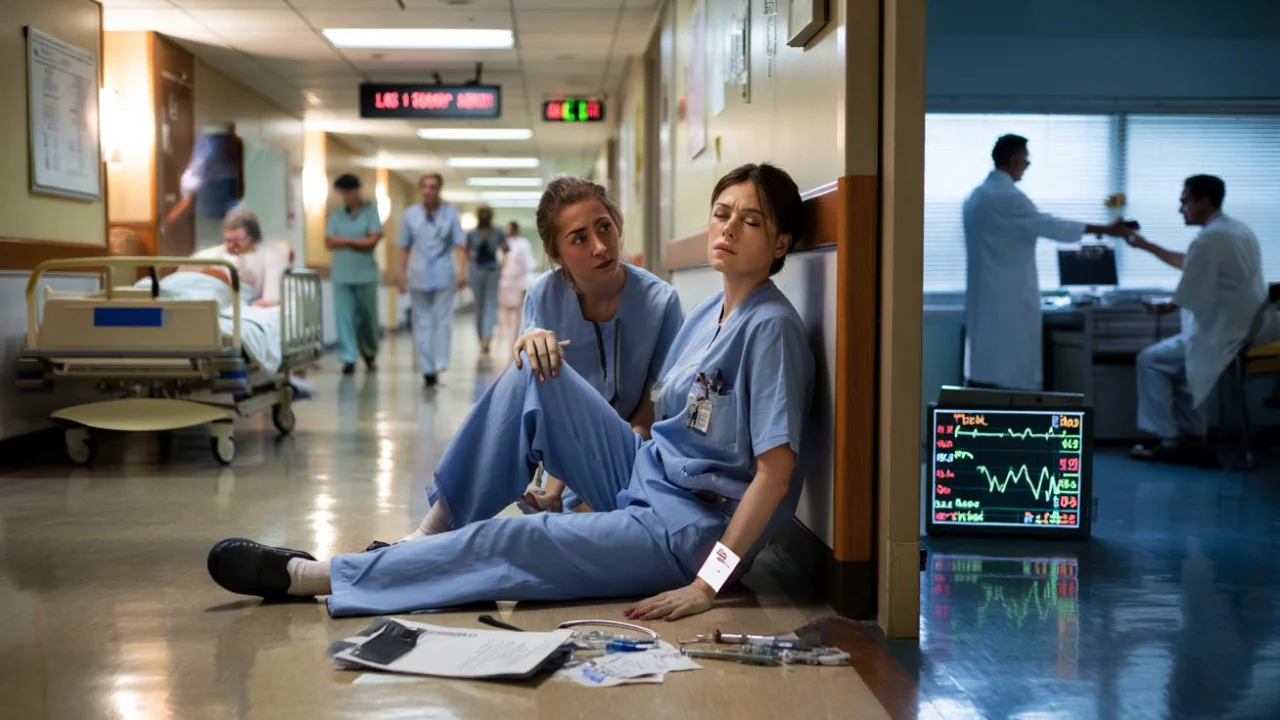
Sarah Martinez had been staring at the same IV drip for what felt like hours when her vision started to blur. The 34-year-old nurse blinked hard, trying to shake off the exhaustion creeping through her body like fog. She’d been on her feet for fourteen hours straight, with two more to go on her shift.
“Just push through,” she whispered to herself, the same mantra that had carried her through countless double shifts. But as she reached for a patient’s chart, her knees buckled. The last thing she remembered was the cold hospital floor rushing up to meet her.
When Sarah woke up in the same emergency bay where she’d treated patients just hours before, a supervisor was already filling out paperwork. Not for extended sick leave or a wellness check. For her return to duty the next morning.
When Healthcare Heroes Become Disposable Assets
The story of a nurse denied sick leave after collapsing during a grueling 16-hour shift has ignited a firestorm of debate about how healthcare systems treat their frontline workers. What makes this case particularly disturbing isn’t just the collapse itself, but the hospital’s response afterward.
Instead of addressing the dangerous working conditions that led to the incident, hospital administration issued glowing statements about the nurse’s “extraordinary dedication.” Meanwhile, her request for sick leave was swiftly denied, and she was expected back at work within 24 hours.
“We’re seeing nurses pushed beyond human limits, and when they break, they’re blamed for not being strong enough,” says Dr. Jennifer Walsh, a workplace safety advocate. “This isn’t dedication—it’s institutional exploitation disguised as heroism.”
The nurse had reportedly worked three consecutive long shifts before the 16-hour marathon that ended in her collapse. Colleagues say she’d requested to leave multiple times, citing exhaustion and missed breaks, only to be told the ward was “too short-staffed” to let her go.
The Real Cost of Understaffing Healthcare
The incident reveals a troubling pattern in healthcare facilities across the country. When hospitals operate with skeleton crews to maximize profits, the burden falls squarely on existing staff to fill impossible gaps.
Here’s what the data reveals about nursing working conditions:
| Issue | Impact on Nurses | Patient Safety Risk |
|---|---|---|
| Mandatory overtime | 78% report burnout symptoms | Medication errors increase 25% |
| Skipped breaks | 89% eat lunch standing up | Patient falls rise 15% |
| Extended shifts | Sleep 4-5 hours between shifts | Delayed response times |
| Understaffing | 1 nurse per 8-12 patients | Higher mortality rates |
The consequences extend far beyond individual exhaustion. Research consistently shows that overworked nurses make more mistakes, miss critical symptoms, and struggle to provide the quality care patients deserve.
“When you have a nurse caring for twelve patients instead of six, something has to give,” explains Maria Rodriguez, a registered nurse with fifteen years of experience. “We’re not machines. We’re human beings trying to save lives while our own health crumbles.”
Key warning signs that healthcare workers are being pushed too far include:
- Mandatory overtime becoming the norm rather than emergency coverage
- Break rooms sitting empty during shifts
- Staff calling in sick more frequently due to stress-related illnesses
- High turnover rates in nursing departments
- Patient complaints about delayed care or medication errors
Why This Matters Beyond Hospital Walls
The nurse denied sick leave controversy isn’t just about one person or one hospital. It’s a symptom of a healthcare system that prioritizes financial metrics over human welfare—both for staff and patients.
When hospitals celebrate nurses working themselves into collapse, they’re normalizing dangerous practices that put everyone at risk. The same exhausted nurse who can barely stand is still expected to calculate medication dosages, monitor vital signs, and make split-second decisions that could mean life or death.
“We trust these people with our most vulnerable moments, but we don’t trust them enough to take a sick day when they literally collapse from exhaustion,” notes healthcare policy researcher Dr. Michael Chen. “That’s not just hypocritical—it’s dangerous.”
The ripple effects touch every aspect of healthcare delivery:
- Patient satisfaction scores drop when nurses are spread too thin
- Medical errors increase dramatically during understaffed shifts
- Experienced nurses leave the profession, worsening the staffing crisis
- New graduates avoid hospitals with reputations for overworking staff
Perhaps most troubling is how hospitals have weaponized the caring nature of healthcare workers against them. The message is clear: if you truly care about patients, you’ll sacrifice your own wellbeing without complaint.
What Needs to Change Right Now
The solution isn’t asking nurses to be more resilient or praising their willingness to work until they collapse. It’s creating sustainable working conditions that protect both healthcare workers and the patients they serve.
Immediate changes that could prevent similar incidents include:
- Mandatory maximum shift lengths with enforced breaks
- Adequate staffing ratios that account for patient acuity
- Automatic approval of sick leave for work-related health issues
- Regular wellness checks for staff working extended hours
- Financial penalties for hospitals that consistently overwork staff
Some hospitals are already implementing these changes and seeing positive results. Staff retention improves, patient outcomes get better, and the overall workplace culture becomes healthier.
“When we started enforcing reasonable shift limits and break requirements, everyone was skeptical,” shares Lisa Thompson, a nurse manager who helped reform policies at her facility. “But productivity actually improved because people weren’t making mistakes from exhaustion.”
The broader question remains: if we can’t trust a healthcare system to take care of its own workers, how can we trust it to take care of us? The nurse who collapsed after sixteen hours represents thousands of healthcare workers pushed beyond their limits every day.
Their wellbeing isn’t separate from patient safety—it’s the foundation of it. Until hospitals recognize that basic truth, stories like this will keep repeating, and everyone loses except the balance sheet.
FAQs
Can hospitals legally deny sick leave to nurses who collapse from exhaustion?
While laws vary by state, most employment regulations require employers to provide reasonable accommodations for work-related health issues, including exhaustion from excessive hours.
How many hours can nurses legally be required to work?
There’s no federal limit on nursing shift lengths, though some states have enacted restrictions. Many hospitals rely on voluntary overtime that becomes practically mandatory due to understaffing.
What should patients do if they notice their nurse seems exhausted or overworked?
Patients can express concerns to charge nurses or hospital administration, though the focus should be on systemic changes rather than blaming individual nurses for circumstances beyond their control.
Are there legal protections for nurses who refuse unsafe working conditions?
Some states have “safe harbor” laws protecting nurses who refuse assignments they believe compromise patient safety, but enforcement and protection vary widely.
How does nurse burnout affect patient care quality?
Studies consistently show that overworked, exhausted nurses make more medication errors, miss important symptoms, and have less time for patient education and emotional support.
What can healthcare workers do to protect themselves in these situations?
Document everything, know your rights, join or support nursing unions, and report unsafe conditions to state nursing boards and occupational safety agencies when necessary.


