
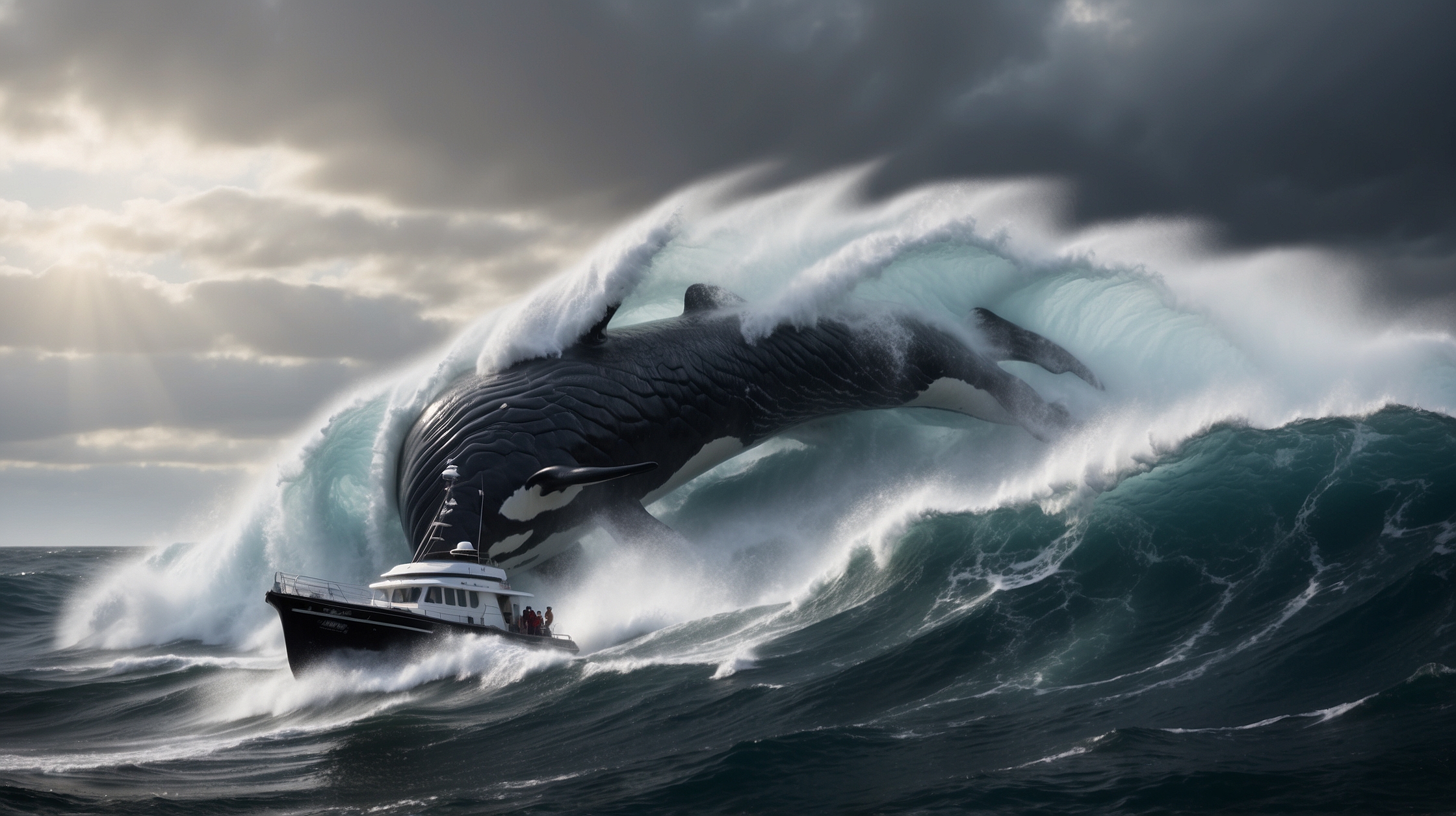
As strange as it may sound, a growing number of orcas—also known as killer whales—have been engaging in a baffling and increasingly dangerous trend: ramming into and damaging boats. What was once considered freak behavior has now grabbed the attention of marine officials, researchers, and sailors worldwide. The phenomenon, mainly happening off the coasts of Spain and Portugal, has intensified to the point where safety advisories and marine guidelines are being updated in real-time to address the escalating encounters.
While orcas are generally admired for their intelligence and social behavior, experts now believe a small group of these apex predators may be deliberately targeting boats, sometimes causing significant damage. Most of these incidents have occurred in the Strait of Gibraltar and along the Iberian Peninsula, a region known for both thriving marine activity and a healthy orca population. As the frequency grows, so does the urgency to decode the mystery behind this unusual marine behavior—and to protect those navigating these waters.
Orca Boat-Ramming Overview Table
| Category | Details |
|---|---|
| Primary Region Affected | Straight of Gibraltar, Iberian Peninsula |
| Species Involved | Orcinus orca (killer whales) |
| Frequency Increase | Over 100 recorded encounters in past 12 months |
| Common Boat Types Targeted | Sailboats, catamarans, small yachts |
| Possible Cause | Cultural transmission among orcas or play behavior |
| Marine Safety Response | Advisories issued, rerouting suggestions being enforced |
What changed this year
Earlier isolated incidents of orcas bumping or nudging boats were often dismissed as curiosity-driven behaviors. However, 2023 marked a turning point. Reports began to emerge with increased consistency, often describing multiple whales working together to ram boat rudders, sometimes until they snapped. Marine investigators have now confirmed over 100 incidents, with more being analyzed. Some believe a few juvenile orcas have developed an obsession with boat rudders and passed this behavior onto others.
This escalation has forced marine officials to issue updated safety guidelines for boaters traversing these hot zones. Unlike previous years, sailors now need to consider real-time advisories that recommend route diversions or speed guideline changes, similar to weather or piracy advisories in other parts of the world.
Why orcas are targeting boats
The exact reason remains a puzzle, but researchers have put forward several credible theories. One prominent theory suggests that a traumatized orca, possibly injured by a vessel, began intentionally targeting boats as a defensive mechanism—an emotion-driven reaction that slowly spread across pods through cultural transmission.
Another theory sees these behaviors as part of orca play—a known pastime for the highly intelligent species. Researchers point to the coordinated efforts and apparent satisfaction orcas seem to exhibit following these interactions as signs they may find this behavior stimulating or entertaining.
“We’re likely seeing a blend of trauma-induced behavior and the species’ natural curiosity at play. Because orcas are highly social, any behavior that gets attention or results can be quickly adopted by a larger group.”
— Dr. Carla Fernández, Marine Biologist
Regions and vessels most at risk
The areas seeing the most incidents extend primarily along the Iberian Peninsula down to the Strait of Gibraltar. This region is a natural funnel for migrating marine life and commercial vessels, creating a perfect blend of conditions for these unpredictable interactions. Tragically, it’s not only the boats themselves that are at risk, but also the safety of their passengers and the welfare of the whales.
According to data compiled by marine officials, sailboats under 50 feet seem to be more commonly targeted. Typically, these are recreational or tour vessels whose smaller rudder systems may be more vulnerable to damage. Crews have reported feelings of panic as the interactions sometimes last for more than an hour, leaving navigators virtually powerless.
“It’s not an issue of aggression. Orcas aren’t trying to sink boats. They seem utterly fixated on the rudders—a behavior we’ve also seen in play among young males historically.”
— Jorge Muñoz, Marine Ecologist
Marine agencies respond with new safety advisories
Authorities in Spain and Portugal have issued guidelines recommending that vessels avoid certain areas or proceed only during daylight hours when visibility increases reaction time. In extreme cases, boat travel is advised to be delayed. Additionally, navigators are being trained on how to behave if targeted—such as turning off engines or avoiding sharp maneuvers that may further entice or irritate the whales.
Some organizations are even calling for technological interventions, including sonar deterrents or reinforced rudder systems, though such measures remain in conceptual stages. Conservationists caution that high-frequency noises or deterrents could harm orcas more than help ships, pointing to the dangers of overreaction and unintended environmental consequences.
Experts warn against panic and misinformation
As alarming as these reports may sound, experts urge the public not to demonize orcas. These are deeply intelligent animals whose behavior may be misunderstood or misrepresented by media narratives. Current data suggests only a small group—around 15 orcas—are involved in these actions, a fraction of the global killer whale population.
Marine biologists emphasize education and awareness over fear. The goal is to track this behavior scientifically while minimizing risk to humans and marine mammals. Some groups are deploying GPS tagging and AI-enhanced acoustic listening stations to monitor which pods are involved and cuándo.
“This is a chance to understand a new behavior in real-time. If we study them honestly, we might learn something remarkable about animal sociology and psychology.”
— Emilia Torres, Cetacean Expert
Potential winners and losers
| Winners | Losers |
|---|---|
| Marine researchers gaining insights into orca behavior | Small boat owners facing repair costs and navigation risks |
| Wildlife monitoring programs receiving increased funding | Local tourism operators experiencing route disruptions |
| Orca conservation organizations gaining visibility | Insurance providers facing higher claims in affected regions |
Looking forward: How science and safety are adapting
Moving forward, collaboration between conservationists, government officials, and local sailors will be key. Mapping these interactions and understanding behavioral patterns will help forecast future events and keep everyone safe. Researchers are now working around the clock to analyze whale path data, rudder engagement patterns, and inter-orca communication recordings to piece together cause-and-effect links.
In the meantime, marine safety education is essential. Boaters in high-risk zones are now required to undergo updated training, with checklists similar to flying a drone near airports or protected wildlife zones. The goal is to empower human interactions with awareness rather than fear—making navigable waters safer for all life, above and below the surface.
Frequently asked questions about orcas and boat ramming
Why are orcas targeting boat rudders?
Experts believe orcas may be intrigued by the movement of rudders or may associate them with a prior traumatic event. It could be a combination of play behavior and learned social habits.
Is this behavior spreading to other regions?
Currently, the majority of incidents are concentrated around the Iberian Peninsula. There’s no verified evidence this behavior has spread beyond that specific population—yet.
Are these attacks dangerous for humans?
While there have been no fatalities, interactions can be tense and potentially hazardous. Several boats have been disabled mid-sea, requiring emergency rescue.
What should boaters do if approached?
Experts recommend stopping the boat, turning off the engine, and avoiding panic. Do not approach or feed the whales, and report any interaction immediately to marine authorities.
Could sonar or other deterrents prevent this?
Perhaps temporarily, but many conservationists caution these technologies could harm or disorient the whales long-term. More humane, sustainable solutions are being explored.
How can the public help?
Support marine research initiatives, share accurate information, and abide by guidelines when sailing in sensitive marine areas. Education is the best defense.
Is this new behavior permanent?
It’s unknown. Orcas may lose interest or adapt based on outcomes and changing social behavior. Ongoing monitoring is crucial.
Are orcas becoming more aggressive?
Not necessarily. Most experts agree these behaviors do not reflect outright aggression but rather curiosity, trauma, or cultural mimicry within orca pods.


