
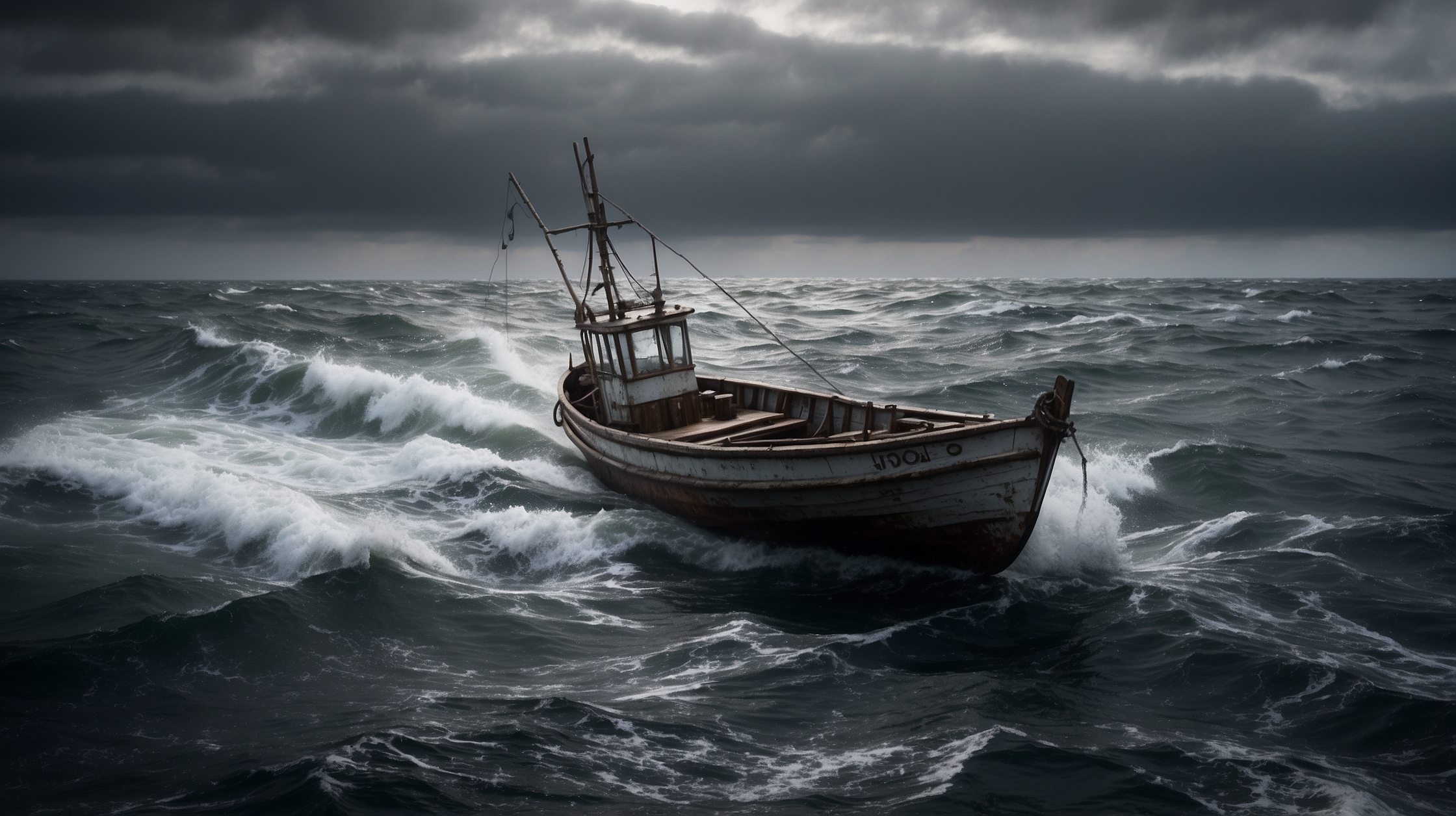
It was supposed to be a routine deep-sea fishing trip off the coast of New Zealand—but what the fishermen witnessed instead was something right out of a marine thriller. A group of fishermen recently reported a chilling encounter on the open ocean where a pod of orcas surrounded their boat, communicating through clicks and shrill calls. What happened next has stunned the marine community: within minutes, several sharks began aggressively biting at the anchor lines of the vessel, fraying ropes and thrashing blindly around the submerged gear.
This bizarre and seemingly coordinated episode has raised eyebrows among scientists and seasoned fishermen alike. While interactions between marine predators are not unusual, a combined effort between orcas and sharks—or even a coincidental sequence that undermines human equipment—strays far from documented behavior. Some believe this could be a highly unusual case of opportunism, or worse, signs of developing behavioral intelligence among marine predators prompted by increasing human activity in the oceans.
Overview of the marine encounter near New Zealand
| Location | Off the coast of New Zealand |
| Event | Orcas surrounded fishing boat, followed by sharks attacking anchor lines |
| Date | Mid-May 2024 |
| Notable Species Involved | Orcinus orca (orcas), Lamnidae family (likely mako or great white sharks) |
| Boat Status | No damage to hull, anchor lines frayed |
| Research Status | Under review by marine biologists and local fisheries |
What made this incident so unusual
Marine predators often cross each other’s paths in the wild, but rarely are their actions so sequenced and concentrated near a human vessel. According to the captain of the fishing crew, the orcas arrived first, circling the boat for about ten minutes at a distance of 30 to 50 feet. The pod, comprised of around six or seven adult orcas and two juveniles, emitted a series of shrill vocalizations and bubble streams, a behavior understood to indicate excitement or communication—a detail supported by expert acoustic analysts.
“It was eerie, like they were signaling something,” the captain said. “We were just watching, cameras rolling, and then from the other side, the sharks showed up, hammering the anchor ropes. You could feel the vibrations through the hull.”
The sharks began attacking the submerged mooring lines, thrashing with such intensity that the boat’s stern shifted slightly due to the tension. Marine biologists note this could stem from territorial confusion or mistaken identity, but coupled with the orcas’ presence, it has prompted further investigation.
Are marine predators learning to interact in new ways?
This incident fuels growing discussions among marine scientists regarding the evolving intelligence and behavioral intricacies of apex predators. Orcas are known to be one of the most intelligent marine mammals, often using sophisticated strategies to hunt or interact. Sharks, while not as behaviorally complex, do respond to scent and vibration and have been known to scavenge near orcas without direct confrontation.
Some experts speculate a learned behavior could be involved. In an era where marine ecosystems are being disrupted by human activities—climate change, overfishing, and pollution—predators may be adapting and finding unique strategies to thrive.
“If this wasn’t a coincidence, it means large marine species could be adapting their strategies in ways we haven’t documented before.”
— Dr. Reina Caldwell, Marine Behavioral Ecologist
Possible ecological triggers behind the encounter
There are multiple explanations for the unusual alignment of behavior. One theory posits that the orcas may have been chasing a prey species that took cover near the boat’s hull. When the prey hid underneath or near the anchor line, the sharks—either alerted by vibrations or scent trails—joined the hunt. Alternatively, the presence of the boat itself might have created a soundscape that attracted both species independently.
Another possibility is that the orcas purposefully disrupted the boat’s anchoring to dislodge hidden fish or prey. Observations in the past have noted orcas flipping icebergs and log rafts in their search for food. Deliberate targeting of boats, however, is almost unheard of outside certain human-animal conflict zones.
“We saw something that lies on the fringe of experimental behavior, even for orcas. Combined with sharks, it creates a pattern that’s puzzling and possibly alarming.”
— Jace Manning, Oceanographic Field Officer
Previous reports of orcas being curious about boats
This is not the first time orcas have approached human boats with uncharacteristic behavior. Just last year, yacht owners in the Strait of Gibraltar reported damage to rudder systems after orca encounters. In most those cases, the interactions were not predatory but seemed playful or investigative, albeit dangerous. New Zealand’s orcas are usually considered more elusive, making this recent encounter all the more peculiar.
As for sharks, their interactions with vessels rarely involve anchor systems. Sharks occasionally bump against hulls, especially during feeding frenzies, but coordinated rope-biting has almost never been observed in the South Pacific.
Implications for oceanic tourism and fishing industries
The commercial fishing community is understandably cautious. Crew members involved in the incident stated they would be carrying backup anchor ropes and reinforce existing hardware. Charter operators are also reassessing potential risk areas where high marine predator activity mixes with daily commercial traffic.
For tourism operators, it’s a double-edged sword. On one hand, the idea of witnessing orca and shark interactions attracts thrill-seeking tourists and wildlife photographers. On the other, the potential danger could lead to increased insurance premiums and route avoidance.
“We need to balance preservation with caution. The ocean is changing, and its creatures may be reflecting those changes in real-time.”
— Carla Simons, Marine Wildlife Tour Director
What researchers plan to do next
Marine biologists are already analyzing acoustic recordings captured by the fishermen as well as the GPS and sonar data logged during the encounter. The incident has triggered a short-term observational program funded by a regional oceanic institute, involving drones, bioacoustic floats, and marine tag trackers. Initial efforts aim to identify the specific pod and shark species involved, determine if the behaviors repeat, and explore any correlation with fish migration patterns or underwater seismic activity.
If successful, the project could yield unprecedented data about the interaction between top-level predators and their growing awareness or reaction to human activity. A formal report is expected later this year.
Winners and losers from the event
| Winners | Losers |
|---|---|
| Marine researchers gaining rare observational data | Local fishermen facing possible gear damages |
| Wildlife documentarians due to increasing dramatic encounters | Tourists potentially exposed to safety risks |
Frequently Asked Questions (FAQs)
Did the orcas and sharks work together during the incident?
While there’s no concrete evidence of coordinated behavior, the sequence of actions—first orcas, then sharks—suggests a possible connection currently under review by researchers.
Is it common for sharks to bite anchor lines?
No, this is highly unusual. Sharks may bump into boat hulls occasionally, but attacking anchor lines is not a documented behavior in the region.
What type of sharks were involved?
Eyewitness accounts suggest either great white or mako sharks, both species known for strong jaws and aggressive feeding habits. A definitive identification is pending analysis.
Are orcas becoming more aggressive toward boats?
Not necessarily. While some behaviors toward boats have been reported in various global regions, most involve playful or investigative actions by orcas—not malicious intent.
Should fishermen be concerned for their safety?
Caution is advised, especially in waters with known orca activity. Reinforced equipment and awareness are key steps in minimizing risk.
What will happen next in terms of study?
A full marine behavioral study is being organized to analyze the incident, identify involved species, and observe if similar behavior occurs again.


