
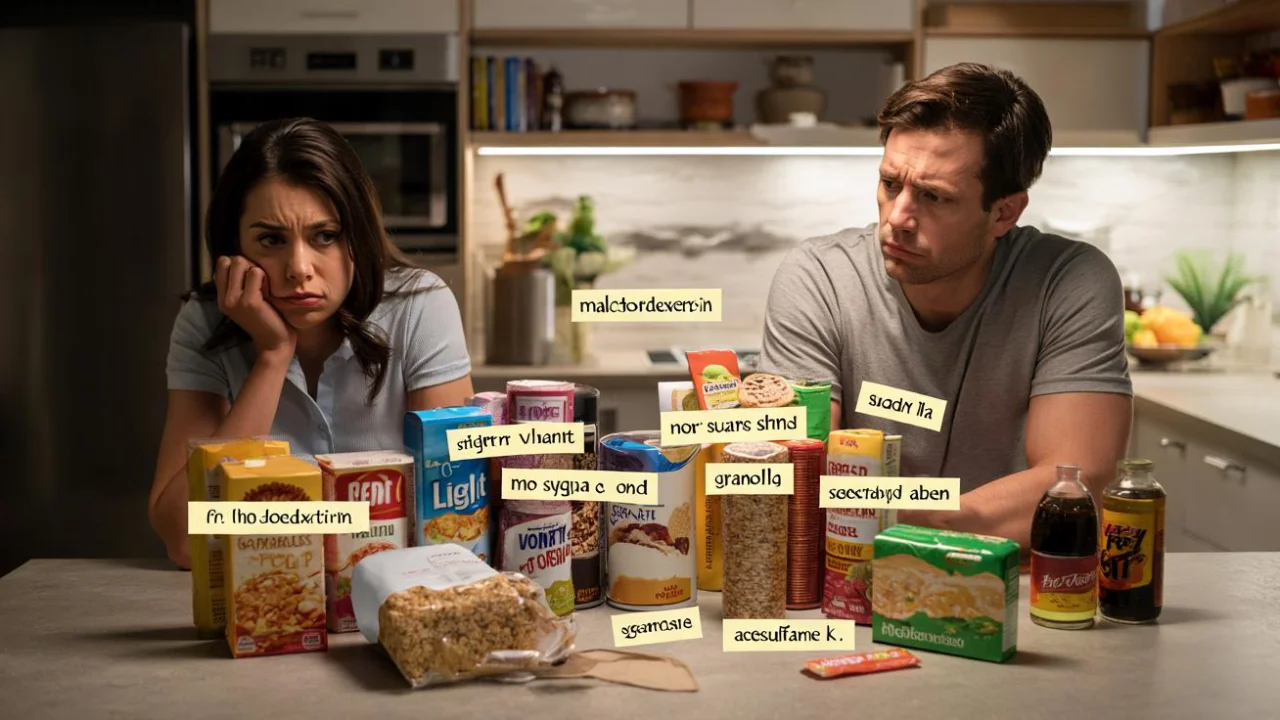
Sarah thought she was doing everything right. Standing in the cereal aisle at 7 PM on a Tuesday, she grabbed a box labeled “heart-healthy” and “high fiber.” Her 8-year-old was melting down, her phone buzzed with work emails, and the ingredient list looked like alphabet soup. She scanned for calories, ignored the chemical names, and tossed it in her cart.
Three months later, she was crying in her car after another fight with her husband about dishes. Her stomach cramped daily, her energy crashed every afternoon, and she snapped at everyone. The doctor said it was stress. Her therapist suggested communication exercises.
Nobody mentioned the processed food ingredients quietly wreaking havoc from her pantry shelves.
The Hidden Culprits Living in Your Kitchen Right Now
Let’s name the invisible enemies: ultra-processed food ingredients hiding behind innocent-sounding names like maltodextrin, sucralose, polydextrose, and acesulfame potassium. These aren’t the sugar you stir into coffee or the salt you sprinkle on fries.
These are chemically modified substances designed to trick your taste buds while your gut pays the price. They’re engineered to be irresistible, shelf-stable, and profitable. Your health? That’s not part of the equation.
“We’re seeing patients whose gut microbiome looks like a wasteland,” says Dr. Jennifer Martinez, a gastroenterologist who’s tracked the rise in digestive issues over the past decade. “The diversity that keeps us healthy gets wiped out by these synthetic additives.”
Food companies love these processed food ingredients because they’re cheap, last forever, and keep you coming back for more. They’re betting you’ll never connect your afternoon mood crashes to that “healthy” granola bar or your marriage fights to the sugar-free yogurt in your fridge.
Where These Gut-Wrecking Ingredients Hide in Plain Sight
The scariest part? These processed food ingredients aren’t just in obvious junk food. They’ve infiltrated foods marketed as healthy, natural, and family-friendly.
| Food Category | Common Hidden Ingredients | Marketing Claims |
|---|---|---|
| Breakfast Cereals | Maltodextrin, artificial flavors | “Whole grain,” “Heart healthy” |
| Yogurt | Sucralose, acesulfame K | “Light,” “No added sugar” |
| Protein Bars | Sugar alcohols, synthetic fibers | “Natural,” “Clean eating” |
| Salad Dressings | High fructose corn syrup, preservatives | “Fat-free,” “Light” |
| Bread | Dough conditioners, emulsifiers | “Multigrain,” “Artisan” |
Here’s what to watch for on ingredient labels:
- Anything ending in “-ose” (except those found naturally in whole foods)
- Chemical names longer than three syllables
- Numbers after ingredient names (like Red Dye #40)
- Words like “modified,” “isolated,” or “synthetic”
- Ingredients you can’t pronounce or wouldn’t find in a home kitchen
“The gut-brain connection is real,” explains nutritionist Dr. Michael Thompson. “When you damage gut bacteria with artificial additives, you’re literally changing the chemical signals that affect mood, sleep, and stress response.”
How Your Body Rebels Against Chemical Overload
Your digestive system wasn’t designed for the chemical cocktail hiding in modern processed foods. When these artificial processed food ingredients hit your gut, several things happen:
First, your beneficial bacteria start dying off. The synthetic sweeteners and preservatives create an environment where harmful bacteria thrive while good bacteria struggle. This imbalance triggers inflammation throughout your body.
Then comes the mood disruption. Your gut produces 90% of your body’s serotonin, the “happy hormone.” Damage your gut, and your emotional stability crashes along with it.
- Artificial sweeteners can alter glucose metabolism, leading to energy crashes
- Emulsifiers damage the intestinal lining, causing “leaky gut”
- Preservatives kill beneficial microbes your immune system needs
- Synthetic fibers can cause gas, bloating, and cramping
Take Mike, a 42-year-old accountant who couldn’t figure out why he felt exhausted and irritable every evening. His wife complained he’d become impossible to live with. His diet looked reasonable: protein shakes, low-fat snacks, sugar-free everything.
The culprit was hiding in plain sight. Every “healthy” choice contained processed food ingredients designed to keep him buying more while slowly undermining his physical and mental well-being.
The Real Cost of Convenience Foods
“Families are falling apart over what they don’t know they’re eating,” says family therapist Dr. Lisa Chen, who’s noticed a pattern in her practice. “When parents are irritable, kids act out, everyone’s moods are unstable, relationships suffer.”
The processed food industry spends billions convincing us these ingredients are safe, necessary, even beneficial. They fund studies, lobby regulators, and design packaging to hide the truth behind health claims and pretty pictures.
But your body keeps the real score. Digestive issues have skyrocketed. Anxiety and depression rates climb yearly. Marriages struggle under the weight of partners who can’t regulate their emotions.
The connection isn’t coincidence. When processed food ingredients disrupt your gut bacteria, they’re literally changing your brain chemistry.
Fighting Back Against the Chemical Kitchen
You don’t need to overhaul your entire life overnight. Small changes in avoiding harmful processed food ingredients can create dramatic improvements:
- Read ingredient lists, not just nutrition facts
- Choose foods with five ingredients or fewer
- Buy plain versions and add your own flavoring
- Shop the perimeter of the store where whole foods live
- Cook one extra meal at home each week
Remember Sarah from the beginning? After six weeks of avoiding the worst processed food ingredients, her afternoon energy returned. Her husband noticed she stopped snapping over small things. Her stomach pain disappeared.
“I had no idea that trying to eat ‘healthy’ was making me sick,” she says. “The food companies make it so confusing on purpose. They don’t want us to know what these chemicals really do.”
FAQs
What are the worst processed food ingredients to avoid?
Artificial sweeteners like sucralose and aspartame, emulsifiers, high fructose corn syrup, and anything with numbers after the name like Red Dye #40.
How long does it take to see improvements after cutting processed ingredients?
Most people notice digestive improvements within 1-2 weeks, with mood and energy changes following in 3-4 weeks.
Are all processed foods bad?
Not necessarily. Minimally processed foods like frozen vegetables or canned beans can be healthy, but ultra-processed foods with chemical additives are the problem.
Why do food companies use these ingredients if they’re harmful?
They extend shelf life, reduce costs, and can be addictive, keeping customers buying more regardless of health effects.
Can processed food ingredients really affect relationships?
Yes. When gut health suffers, it affects brain chemistry, mood regulation, and stress response, which directly impacts how we interact with others.
What’s the easiest way to start eating cleaner?
Start by replacing one processed item per week with a whole food alternative, and always read ingredient lists before buying anything packaged.


