
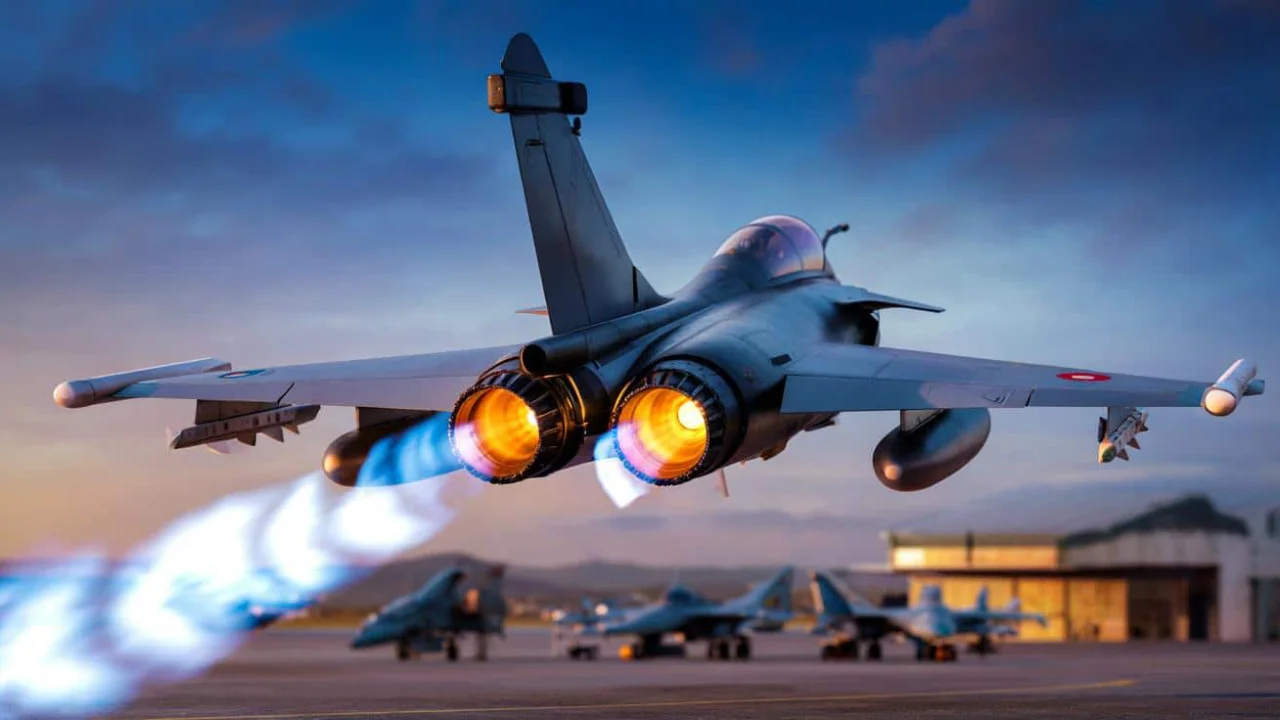
Captain Marie Dubois remembers the exact moment she knew her Rafale needed more power. Flying a combat air patrol over the Baltic, fully loaded with missiles and external fuel tanks, she watched a newer enemy fighter climb effortlessly past her maximum ceiling. “That’s when you realize raw thrust isn’t just numbers on a spec sheet,” she told her squadron mates later. “It’s the difference between controlling the engagement and being controlled by it.”
Stories like Marie’s echo through fighter squadrons worldwide, but for the French Air and Space Force, relief is finally coming. The Rafale engine modernisation program promises to transform their workhorse fighter without breaking the bank or grounding the fleet for years.
As geopolitical tensions rise and next-generation aircraft remain years away, France is making a smart bet on upgrading what they already have rather than waiting for tomorrow’s promises.
The M88 T-REX: More Power, Same Package
The heart of this Rafale engine modernisation beats stronger while staying the same size. Safran’s new M88 T-REX engine delivers what military planners dream about: significantly more performance without requiring a complete aircraft redesign.
Announced at the 2025 Paris Air Show, this isn’t just an incremental upgrade. The T-REX represents the most ambitious evolution of the M88 engine family, jumping from 7.5 tonnes to 9 tonnes of thrust with afterburner engaged.
“We’re essentially giving the Rafale a heart transplant that makes it 20% stronger while keeping the same body,” explains aerospace analyst Dr. Jean-Claude Merlin. “That’s engineering elegance at its finest.”
What makes this modernisation particularly clever is its retrofit capability. Existing Rafales can receive the new engine without major airframe modifications, meaning France’s 250+ fleet can be upgraded progressively rather than replaced wholesale.
Breaking Down the Technical Breakthrough
The magic happens in three critical areas where Safran’s engineers focused their efforts:
| Component | Upgrade | Impact |
|---|---|---|
| Low-pressure compressor | Reshaped blades and airflow paths | Better air ingestion and pressure ratio |
| High-pressure turbine | Heat-resistant alloys and cooling circuits | Handles higher temperatures safely |
| Exhaust nozzle | Refined aerodynamics | Improved jet flow and response |
The real achievement isn’t just more power – it’s maintaining fuel efficiency while delivering that extra thrust. This balance allows Rafale pilots to unleash maximum performance on demand without sacrificing range during long missions.
“More thrust gives Rafale pilots better acceleration, climb, and safety margin in combat – especially when fully loaded with weapons and fuel,” notes former test pilot Colonel François Petit.
Key performance improvements include:
- 20% increase in maximum thrust output
- Extended engine life through advanced materials
- Unchanged fuel consumption rates
- Full compatibility with existing Rafale variants
- Reduced maintenance requirements
The timing couldn’t be better. With European airspace tensions at their highest since the Cold War, having fighters that can climb faster, accelerate quicker, and carry heavier payloads provides crucial tactical advantages.
Why This Matters Beyond France
This Rafale engine modernisation ripples far beyond French air bases. Countries operating Rafales – including Egypt, India, Greece, and the UAE – will likely pursue similar upgrades to keep their fleets competitive.
“When you’re facing advanced threats, every percentage point of performance matters,” explains defense industry consultant Sarah Mitchell. “This upgrade could determine whether allied Rafales remain relevant through the 2040s.”
The economic implications are equally significant. Rather than spending billions on next-generation fighters that won’t arrive until the mid-2030s, air forces can modernize existing aircraft for a fraction of the cost.
For Safran, this represents a masterclass in sustainable defense innovation. By designing upgrades that work with existing platforms, they’ve created a upgrade path that serves both military effectiveness and budget realities.
The broader message is clear: sometimes the best way forward isn’t replacing everything, but making what you have work better. In an era where defense budgets face increasing scrutiny, the T-REX approach offers a template for smart modernization.
“We’re not just selling engines,” a Safran executive noted. “We’re selling extended capability lifecycles that keep proven platforms competitive against emerging threats.”
Looking Ahead: Implementation and Impact
The first M88 T-REX engines are expected to begin testing in 2026, with operational deployment starting around 2028. This timeline aligns perfectly with France’s need to maintain air superiority capabilities while next-generation European fighter programs mature.
For pilots like Captain Dubois, the upgrade can’t come soon enough. “When you’re intercepting unknown aircraft or providing close air support, having that extra power margin isn’t just convenient – it’s potentially life-saving.”
The success of this Rafale engine modernisation could influence how other nations approach fighter fleet management. Instead of the traditional cycle of complete aircraft replacement every 20-30 years, incremental upgrades might become the new normal.
This shift makes particular sense given the enormous costs and extended development timelines of modern fighters. Why ground your entire fleet waiting for the perfect next-generation aircraft when you can upgrade existing platforms to meet evolving threats?
FAQs
What is the M88 T-REX engine upgrade?
It’s Safran’s new engine variant that increases Rafale thrust by 20% while maintaining the same size and fuel consumption as current engines.
Can existing Rafales be upgraded with the new engine?
Yes, the T-REX is designed to retrofit into existing Rafale airframes without major structural modifications.
When will the upgraded engines be available?
Testing begins in 2026, with operational deployment expected around 2028.
How much more powerful is the new engine?
The T-REX produces 9 tonnes of thrust with afterburner, compared to 7.5 tonnes for the current M88-2.
Will other Rafale operators get this upgrade?
International Rafale operators like Egypt, India, and the UAE are expected to pursue similar modernizations.
Does the extra power affect fuel consumption?
No, Safran designed the upgrade to maintain current fuel efficiency levels despite the increased thrust output.


